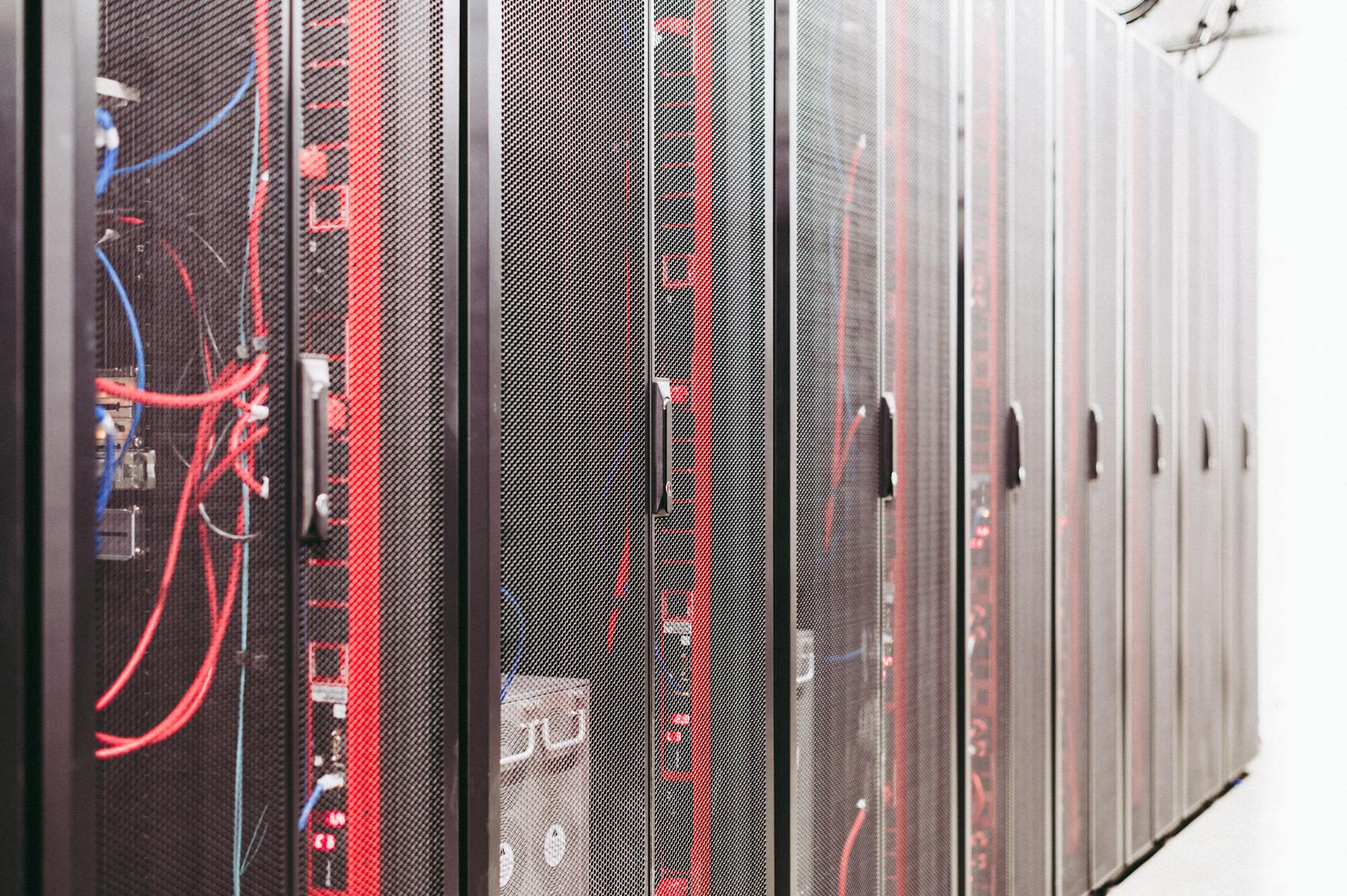
When talking about the physical cost of artificial intelligence, the conversation almost always turns to energy. Ever-larger data centers, new power plants, grids under pressure. It is a fundamental part of the problem, but it is not the only one.
MIT Technology Review summarized the point effectively: powering AI is also an architectural problem. Having more electricity is not enough if a significant portion of that power is consumed moving data, cooling components, and compensating for bottlenecks designed for another generation of computing.
The chip does not work alone
A GPU can be extremely efficient at computing, but it remains embedded inside a system. It must receive data from memory, communicate with other GPUs, exchange information with storage and the network, and be powered and cooled. Every step adds power consumption and complexity.
That is why the AI battle is no longer fought solely over the fastest processor. Interconnects, high-bandwidth memory, advanced packaging, and cooling systems have become just as strategic as the chip itself.
An ultra-powerful accelerator that spends too much time waiting for data is like a race car engine stuck in traffic.
Memory has become an energy resource
A growing share of industry attention is focused precisely on the distance between compute and memory. Continuously moving large amounts of information costs energy. The larger models grow, the more significant that movement becomes.
The answer lies in memory located closer to the processor, higher bandwidth, new packaging systems, and architectures designed to avoid unnecessary transfers. The principle is simple: if we cannot drastically reduce the mathematical workload, we can at least shorten the journey data must travel.
Cooling is computing, too
In an AI data center, heat dissipation is not an ancillary function. It determines how much power can be concentrated in a rack and, consequently, how much compute capacity can be installed in the same space. Liquid systems, power distribution, and building design become part of the computing architecture.
This is why major infrastructure projects are now conceived almost as a single organism: chips, networking, power, water, climate control, and software must all be optimized together.
More power does not fix an inefficient system
The political temptation is to treat AI demand as a simple equation: more models equal more data centers, more data centers equal more power plants. But building power capacity takes time, land, and capital. Reducing consumption per unit of work can be just as important.
This explains why semiconductor companies, cloud operators, and infrastructure manufacturers are converging on the same problem. Efficiency is no longer merely an environmental virtue: it is a prerequisite for scaling.
The next revolution could be invisible
Users will see faster models and more capable services. Behind the scenes, however, a crucial part of the progress could come from innovations that no one sees: fewer copies of the same data, faster interconnects, closer memory, denser racks, more efficient power delivery.
AI certainly needs electricity. But the amount of electricity required will also depend on how good we are at building the machines that turn it into intelligence.


