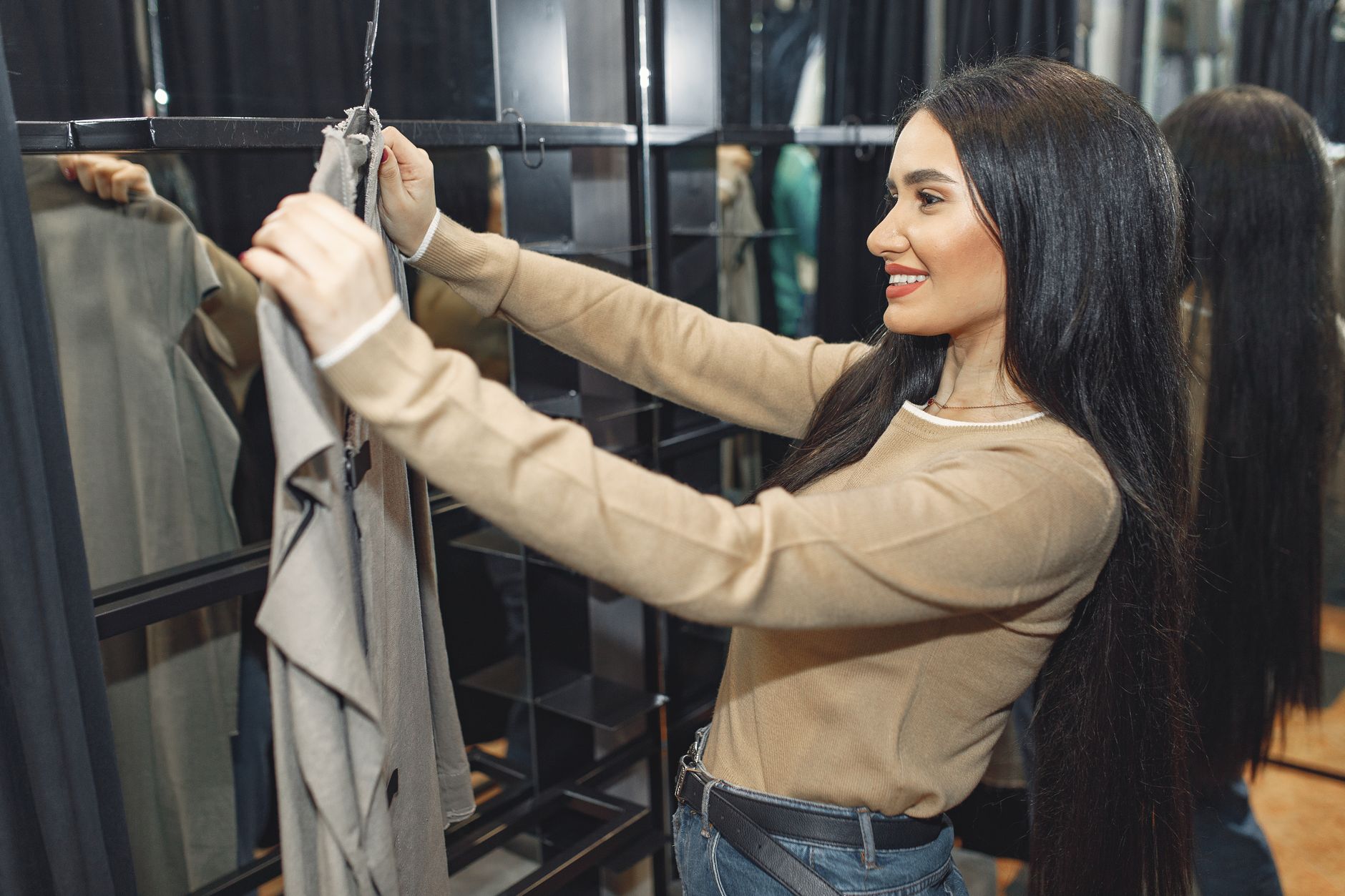
In online fashion retail, seeing a single garment worn is rarely enough to resolve the hesitation preceding a purchase. A blazer might work in product photography and lose balance once paired with a skirt, a pair of shoes, or an accessory. Anne Klein is attempting to shift virtual try-on onto precisely this ground: not the isolated simulation of an outfit, but the construction of a complete look based on products actually available in its assortment.
The US brand has launched a beta collaboration with Lumesa, a New York startup founded by Manvitha Mallela and Malavika Reddy. On the Anne Klein website, while browsing certain items, the “Build a Look” feature allows users to generate a proposal composed of garments and accessories from the brand: tops, pants or skirts, dresses, footwear, and watches are combined into a single image, with layering intended to deliver the effect of a worn outfit rather than a collaged catalog.
It is a detail that changes the nature of the service. Virtual fitting rooms have been present in retail for years, in their simplest forms as two-dimensional previews and more recently through augmented reality mirrors. However, many solutions continue to display the garment as a silhouette overlaid on a person, or focus on a single product category. Lumesa, on the other hand, attempts to make the brand's entire wardrobe navigable, seeking to simulate the sequence of fittings and outfit changes that occurs in a store.
From single product to brand grammar
The platform can use an artificial intelligence-generated model or a digital avatar of the shopper. In the second case, the user uploads their own photograph to the site. There is also an option to select a plus-size AI model or a digital twin consistent with that body type. The system also allows users to view multiple looks and animate the image, making it possible to observe how the garments appear to drape on the body.
At the center is not just the customization of the figure, but the interpretation of Anne Klein's visual identity. To produce the images, Lumesa trains its models on the brand's inventory and its distinctive elements: lines, styling, garment details, and the ways they are paired. In a professional photo shoot, even an untucked shirt or an open jacket helps define a recognizable image. The startup's stated ambition is to bring even these minute decisions into the digital experience.
For a brand that thrives on coordinated sets, workwear, accessories, and footwear, offering an entire look holds clear commercial value. It can facilitate cross-selling, but above all, it restores the context of use that traditional product pages tend to strip away. Customers are not just asked to decide whether they like a blouse: they can evaluate how that blouse fits into a silhouette, an occasion, and a concrete combination.
Anne Klein's choice is therefore indicative of a broader direction for fashion e-commerce. Generated images are not intended as outright replacements for editorial photography or spec sheets, but rather as an added layer between merchandising and personal styling advice. If browsing a website becomes the curation of a wardrobe, the catalog ceases to be a mere sequence of SKUs and takes on a role closer to a fitting room or a consultation with a sales assistant.
A test, not a promise of fit
However, the technology is still in beta—an essential caveat to keep in mind to avoid attributing capabilities to the project that have not yet been demonstrated. A credible image, even an animated one, does not equate to an accurate prediction of size or fit. Fabric drape, clinging across different areas of the body, and the behavior of tailored construction depend on variables that digital visualization can only partially represent.
The same goes for the promise of inclusivity. The ability to select a plus-size model or use a personal photo expands options compared to systems built around a single standardized body. It remains to be seen, in practice, how well the output maintains consistency and accuracy across different body types, garments, and combinations. Inclusivity does not automatically equate to the presence of a menu option: it depends on the quality of representation and the actual breadth of the assortment.
Then there are the operational considerations that accompany any fitting room based on personal images. For those opting for an individual avatar, the experience requires uploading a photograph. The information available at launch does not detail retention periods, processing, or the eventual deletion of uploaded files. For users, this will be just as relevant as the aesthetic quality of the result, because the advantage of a personalized try-on inevitably hinges on trust in the digital journey.
The relationship with traditional photography also warrants attention. In fashion and luxury, imagery does not merely document a product: it establishes a hierarchy, creates desire, and protects a tone of voice. A look generator that is useful but visually inconsistent can undermine that work. Lumesa claims to target results that match the standards of a professional photo shoot; for Anne Klein, the test will therefore also measure the resilience of its brand language in an environment where images are created in real time.
The value of the experience will depend on continuity
The trial arrives as virtual try-on seeks renewed legitimacy after years of promises that often remained confined to demo-level gimmicks. The difference, in this case, lies in the continuity of the journey: from a product page to a coordinated recommendation, from a generic model to an image that can take on the user’s likeness, from a static pose to a short animation. None of these steps is unprecedented on its own; the challenge is integrating them without slowing down the purchase or turning browsing into a complicated chore.
For Anne Klein, the project can also provide insights into how customers assemble their purchases: which categories are paired together, which outfits receive the most attention, and whether an accessory genuinely influences the decision when viewed alongside clothing. These are not data points made public by the brand, nor results already available from the beta, but they represent the kind of information that an experience like this can potentially generate—explaining companies' interest in these tools.
The next concrete step will be seeing whether the test remains an experimental feature or is rolled out across a broader portion of the website and catalog. Much will depend on the system's ability to do something seemingly simple yet difficult to automate: displaying existing garments in plausible combinations, recognizable as Anne Klein and reliable enough to support a purchasing decision. In the meantime, “Build a Look” highlights a shift already visible in digital retail: generative AI is being called upon less to invent imaginary clothes and more to make what a brand actually has to sell browsable, personal, and contextual.


