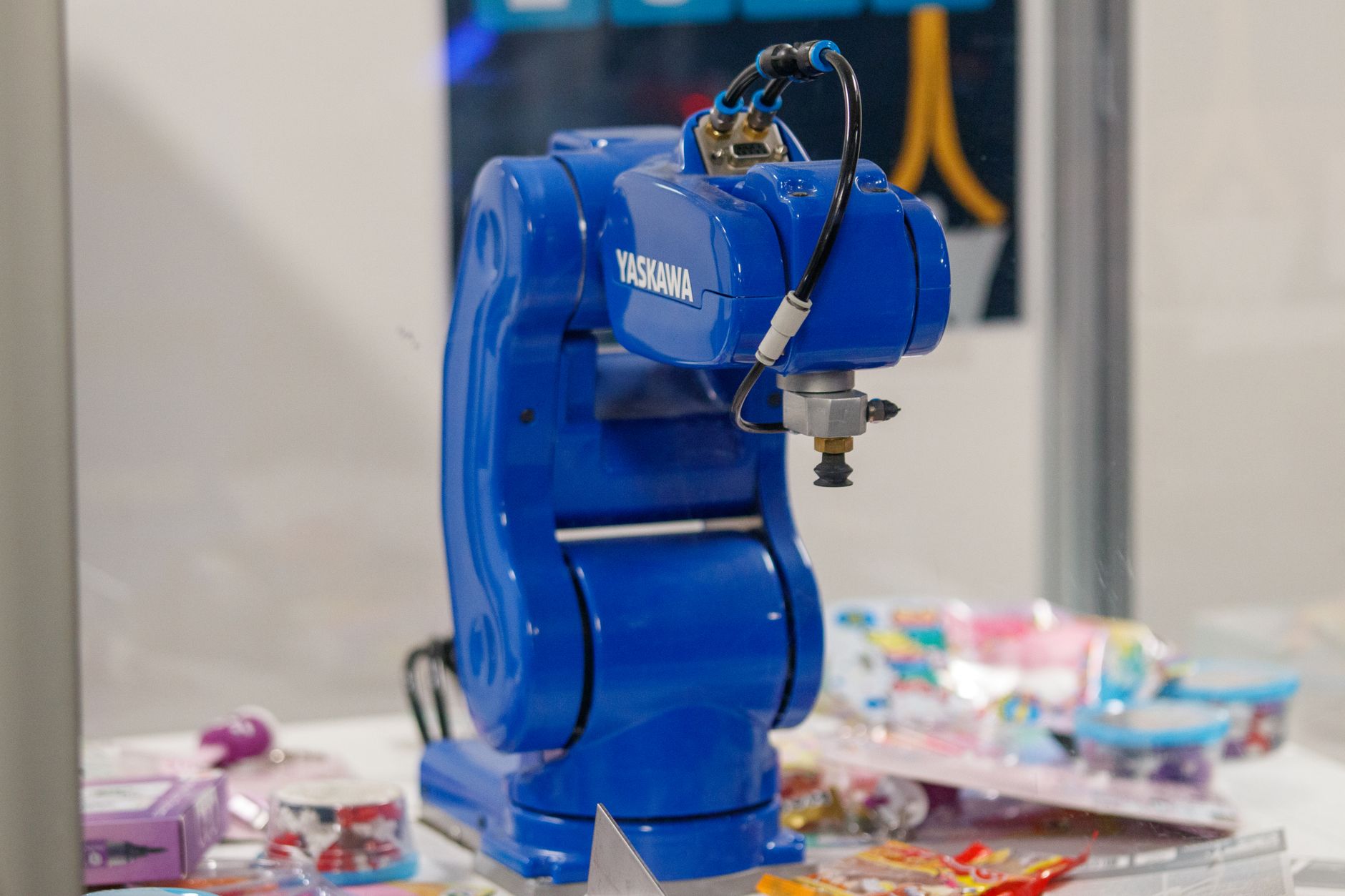
The most interesting news in Arm’s latest flurry of announcements isn't a single chip. It is the idea that agentic artificial intelligence needs a common platform spanning smartphones, data centers, cars, and robots. Arm is trying to occupy that exact space.
On September 8, during Arm Everywhere China, the company simultaneously introduced a new mobile platform, a new generation of Neoverse infrastructure for the cloud, a physical AI program involving more than 80 companies, and a software portal designed not only for human developers but also for AI agents writing and optimizing code. It is an unusually broad update because it doesn't target a specific segment: it addresses almost every environment where AI will have to run.
Arm's thesis is simple: when AI ceases to be merely a text-generating model and becomes a system that maintains context, uses applications, calls tools, coordinates other models, and acts in the real world, the hardware equation changes. It is no longer enough to ask which accelerator yields the most tokens per second. One must understand how CPUs, GPUs, memory, networking, sensors, and software work together while an agent runs continuously for minutes, hours, or days.
The smartphone becomes an agent machine
The most immediate part for consumers is CSS for Mobile 2, the new compute platform Arm is offering to chip and device manufacturers. At its core is the C2 cluster, which combines C2-Ultra, C2-Pro, and two SME2 units, alongside the new Mali G2-Ultra NX GPU.
Arm claims that C2-Ultra delivers up to 1.7 times the AI performance of its C1-Ultra predecessor, up to 15% higher single-threaded performance, and up to 38% lower power consumption at equivalent performance. Doubling SME2 capacity, according to the company, can accelerate certain recent small language models by up to 70%. These are vendor-provided figures that will need verification on commercial devices, but they clearly point to the target: shifting more inference and orchestration directly onto the phone.
The GPU tells the same story from another angle. Mali G2-Ultra NX is the first Mali GPU with dedicated neural accelerators integrated into the graphics pipeline. The goal is not merely running generative models, but leveraging neural networks to reconstruct details, increase resolution, enhance rendering, and make gaming more efficient. Arm claims up to four times the performance per watt in neural graphics and up to 14% higher performance in traditional gaming compared to the previous generation.
Yet the point is not to turn every smartphone into a mini data center. It is to reduce the distance between what the agent needs to do and where the data resides. If part of the reasoning, speech recognition, vision, or context management can take place on-device, latency and network dependence drop, and in some cases, control over personal data also increases.
Why the CPU is becoming central again in the AI era
Over the past three years, the AI infrastructure narrative has been almost entirely dominated by GPUs. Arm is trying to shift attention to a less sensational but crucial fact: agents do not just perform matrix multiplications.
An agent must query databases, open files, manage memory, execute code, call APIs, coordinate multiple accelerators, and await responses from external services. Many of these tasks are CPU-intensive. The more AI becomes a workflow and the less it resembles a single inference run, the more the orchestration workload grows.
This is where Neoverse CSS N4 comes in. Arm presents it as its most configurable compute subsystem for the data center: up to 128 cores per die, support for LPDDR6 memory, and PCIe Gen 7. Compared to Neoverse CSS N3, the company claims up to twice the performance, up to 1.25 times the performance per watt, and up to 1.75 times the memory bandwidth.
Neoverse CSS is not necessarily an off-the-shelf chip that customers buy as is. It is an integrated foundation that enables cloud operators and semiconductor manufacturers to build differentiated silicon while cutting down on integration work. It is precisely the kind of product that gains importance as hyperscalers demand custom chips for specific workloads.
Arm also offers a different route with AGI CPU, a more turnkey product for agentic workloads. The company cites OpenAI, Meta, Cloudflare, Oracle, SAP, Lenovo, Supermicro, and Verda among the companies developing solutions around the platform. Additionally, Google Cloud uses Axion instances for agent sandboxes, while Microsoft is deploying Cobalt within its own infrastructure.
Arm isn't just selling CPUs: it is selling continuity
Here lies the most strategic part. Arm is already present in 99% of smartphones and claims that over 350 billion chips based on its architecture have shipped over time. This means millions of developers are already familiar with the Arm software environment, and a massive portion of mobile computing already runs on its foundation.
If the same architecture gains ground in data centers, vehicles, and robotics, it creates a continuity advantage: a model or software component can be optimized across a broader chain of devices without completely switching ecosystems.
It is not a technical monopoly, nor does it eliminate x86, RISC-V, proprietary GPUs, or specialized accelerators. Physical AI will inevitably be heterogeneous. But Arm wants to be the common layer beneath that heterogeneity: the CPU that orchestrates, the instruction set on which parts of the model run, the software bridging tools, and the benchmark around which partners integrate the rest.
Physical AI is the most ambitious piece
Arm has also extended the Total Design program to physical AI, bringing together more than 80 companies including AWS, ECARX, Hugging Face, Liquid AI, NXP, PlusAI, PSYONIC, QNX, Qwen, Siemens, and Unitree Robotics. The idea is to reduce fragmentation across models, sensors, software, real-time systems, hardware, and digital twins.
Robots and autonomous vehicles are much harder to standardize than a smartphone. They must perceive the environment, react within predictable timeframes, respect power constraints, and, above all, not fail in hazardous ways. For this reason, Arm is also proposing a Robotics Capability Framework: a structure that attempts to create a common language to describe robots' capability levels.
The framework ranges from reactive systems to increasingly context-aware, cognitive, and self-improving systems. Arm presents it as a starting point, not as an established standard already imposed on the industry. The stated analogy is with the SAE levels of driving automation: creating a shared vocabulary to reduce ambiguity among manufacturers, suppliers, customers, and regulators.
It is a far more political move than it might seem. Whoever succeeds in defining the categories an industry uses to describe its capabilities also influences how that industry designs products, measures performance, and discusses safety.
The new developer can be an agent
The other key announcement is Arm AI Portal. The platform gathers optimized models, performance data, code samples, and deployment workflows. At launch, it includes models such as Qwen, Gemma, and YOLO, and supports runtimes like ExecuTorch, LiteRT, and ONNX Runtime.
The conceptual novelty is that the portal is designed to be queried by machines as well. Arm makes resources and information available to coding agents via MCP too, allowing an agent to search for the right model, compare memory and latency, and identify an optimized version for a specific hardware target.
It is a detail that foreshadows a bigger shift. Until now, hardware manufacturers have documented their chips with human developers in mind, who read manuals and benchmarks. If a growing share of software is written or optimized by agents, documentation itself must become machine-readable. The catalog, the benchmark, and the deployment path turn into inputs for other AI systems.
Arm claims an ecosystem of over 22 million developers. Its bet is that, in the next cycle, that audience will be joined by millions of software agents making technical decisions alongside or in place of humans.
The risk: a platform that is too broad may lose focus
There is an important caveat, however. Bringing smartphones, servers, and robots under the same narrative does not mean their needs are identical. A phone optimizes for battery life and thermals. A server optimizes for throughput, density, and total cost of ownership. A robot must meet requirements for latency, safety, determinism, and physical reliability.
Arm can provide common foundations, but real value will depend on how well partners can differentiate on top of them. In mobile, moreover, the claimed performance gains have yet to appear in commercial chips and shipping products. In cloud, Arm's advance is real, but competition remains intense. In robotics, the Robotics Capability Framework is still an early proposal, and it is by no means certain that the industry will converge around a single classification.
It is also important to distinguish between marketing figures and verified results. The percentage performance gains published with C2 and Neoverse come from Arm; until there are independent implementations and benchmarks on real silicon, they should be read as vendor targets and measurements, not universal truths.
The real game is becoming invisible
Arm's strategy works if, paradoxically, Arm becomes less and less visible to the end user. No one chooses an AI assistant because it uses Neoverse CSS N4. No one buys a robot because it adheres to Total Design. But if that architecture makes it easier to build products, more efficient to run them, and simpler to move software between cloud and edge, it becomes infrastructure.
It is the same position Arm carved out in smartphones: it is rarely the brand on the box, but it is almost always inside the box. Now it is trying to replicate the playbook in agentic and physical AI.
The real stake, therefore, is not selling a faster CPU in 2027. It is becoming the common denominator of a world where agents live simultaneously in the cloud, in the phone, and in the machines around us.
If that vision comes to pass, the next big artificial intelligence platform might not be a model. It might be the invisible architecture that enables thousands of models, agents, and devices to move across different environments without starting from scratch every time.
Sources
- Arm — CSS for Mobile 2, C2 CPU and Mali G2-Ultra NX, September 8, 2026
- Arm — Neoverse CSS N4 and AGI CPU, September 8, 2026
- Arm — Total Design for Physical AI and Robotics Capability Framework, September 8, 2026
- Arm — Arm AI Portal, September 8, 2026
- Arm Investor Relations — data on the Arm ecosystem and shipped chips
- Investor’s Business Daily — Arm extends AI reach from data centers to edge devices, September 9, 2026


