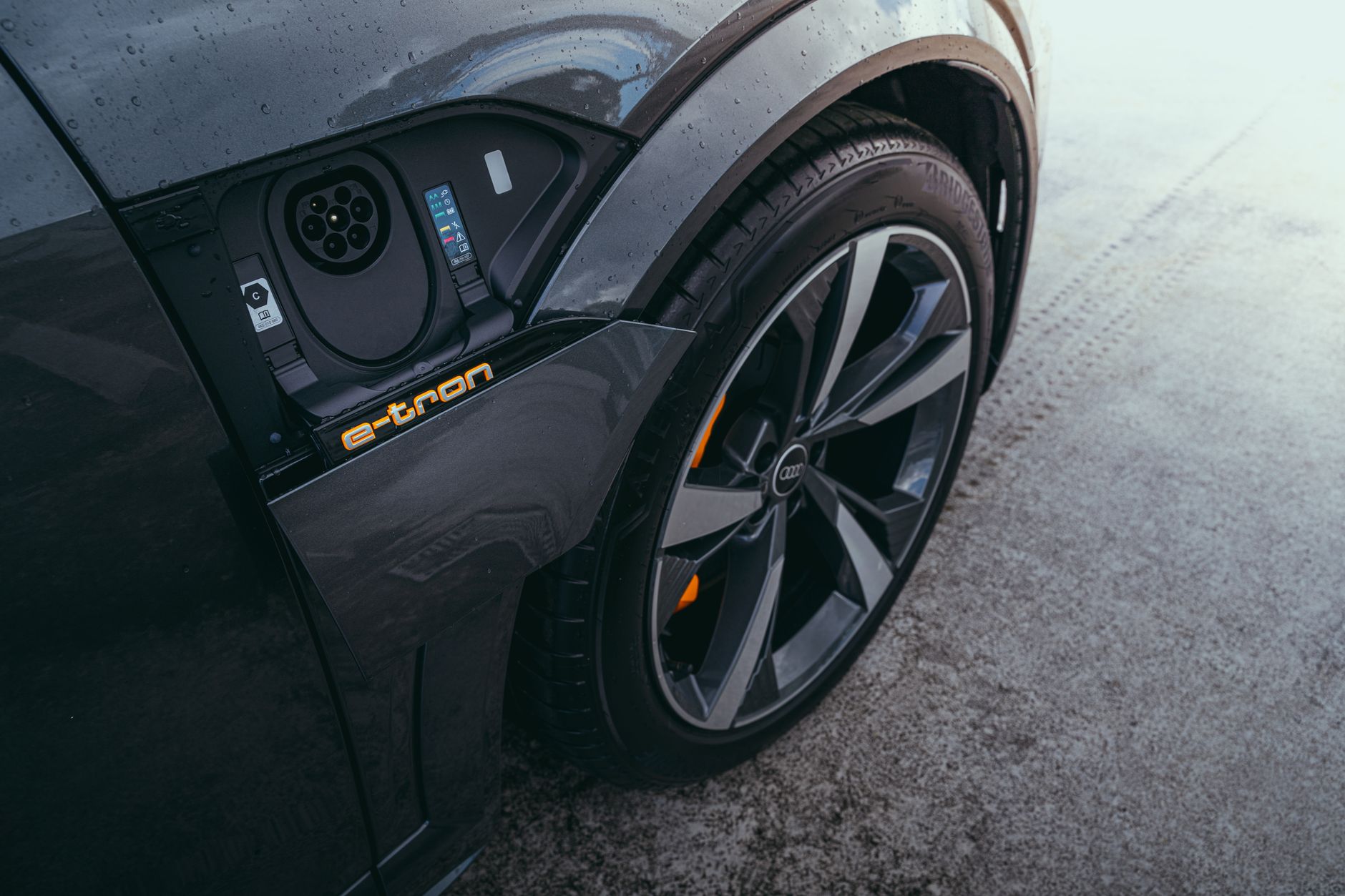
The A2 name returns to Audi's lineup, but with a profoundly different meaning compared to the small MPV that, between 1999 and 2005, pioneered an aluminum body on a large scale. The new Audi A2 e-tron is a compact five-door electric hatchback, developed for the European market and built around a clear priority: travelling as far as possible on every available kilowatt-hour.
Deliveries are scheduled to begin in December 2026, while orders are already open in Germany with a starting price of 38,200 euros. Audi does not plan a North American launch; a choice that primarily clarifies the commercial scope of the operation. The A2 e-tron was conceived to meet European demand for compact EVs rather than as a global model, in a segment where costs, real-world range, and daily practicality matter more than the pursuit of absolute performance.
Efficiency replaces aluminum
The original A2 became an industrial benchmark for its use of the aluminum Audi Space Frame, a solution that was rare at the time on a relatively affordable car. The new generation does not replicate that recipe: instead, it uses the Volkswagen Group's MEB architecture, predominantly made of steel. It is a familiar platform, designed for battery electric vehicles and geared toward economies of scale, rather than extreme weight reduction.
As a result, the A2 e-tron approaches or exceeds two metric tons across all declared configurations, with an indicative weight between 1,928 and 2,018 kg. Audi chose a different route to cut energy consumption: aerodynamics, drag management, and powertrain calibration. The announced drag coefficient is 0.24, aided by a sloping rear profile, an integrated spoiler, a largely faired underbody, optimized wheels, and small movable elements inside the wheel arches that reduce the gap between the tire and outer cladding.
The door handles follow the same logic. They are touch-sensitive electric controls, shaped to avoid unnecessarily disrupting airflow along the flanks. These details cannot transform range on their own, but in a project dedicated to energy efficiency, every mitigated loss contributes to the final result, especially at highway speeds where aerodynamics becomes decisive.
Audi also highlights the use of 300 components made from recycled steel, aluminium, and plastics. It is a figure that points to efforts across the materials supply chain, without altering a fundamental reality of the segment: an electric compact with a substantial battery capacity remains a heavy vehicle. The promise of the A2 e-tron is therefore not that of an ultralight city car, but rather an automobile seeking to offset weight and dimensions through overall efficiency.
Four power outputs and three batteries
The lineup will be entirely rear-wheel drive, featuring a permanent-magnet electric motor mounted on the rear axle and a single-speed transmission. At the entry level sits a 125 hp and 350 Nm version, paired with a 51 kWh lithium-iron-phosphate battery: Audi claims up to 423 km on the WLTP cycle and an equivalent consumption of 153 mpg-e under the metric reported for the European market.
The next tier up retains an LFP battery, expanded to 61 kWh, and increases output to 188 hp, maintaining 350 Nm of torque. This configuration is positioned as the most efficient in the family, with a WLTP range of 515 km and a claimed rating of 164 mpg-e. The figure should be interpreted with caution: mpg-e equivalents and the WLTP cycle cannot be directly mapped onto EPA ratings used in the United States, which are generally more stringent. Still, the technical objective is evident: Audi aims to position the A2 e-tron among its most frugal electric models.
For those prioritising driving distance, the go-to offering will be the 228 hp model featuring an 84 kWh nickel-manganese-cobalt pack. Homologated range reaches 645 km WLTP. At the top of the range is a 322 hp and 545 Nm variant: it accepts a minimal trade-off in range, reaching 629 km WLTP, while stepping up performance with a claimed 0–100 km/h time of 5.7 seconds. Across the entire range, Audi quotes WLTP range figures between 423 and 645 km and a 0–100 km/h acceleration spread between 5.7 and 8.8 seconds.
The decision to offer different battery chemistries is far from marginal. LFP batteries keep costs down and curb reliance on certain raw materials, while the higher-capacity NMC pack serves to boost the range of top-spec versions. It is a segmentation that is now widespread across the electric car industry, but here it is applied to a vehicle explicitly aimed at covering a very broad spectrum: from an entry point into premium electric mobility to ranges that, at least on WLTP paper, cut down the frequency of stops on long road trips.
A compact also conceived as a home energy reserve
The A2 e-tron will be able to power electrical devices via onboard sockets and an adapter connected to the charging port. In Germany, Austria, and Switzerland, the feature set goes even further: with a compatible DC wallbox, the car will be able to transfer power back to the home grid through its Vehicle-to-Home, or V2H, functionality.
Limited geographical availability is just as important as the feature itself. V2H relies on infrastructure, local regulations, and home system compatibility, so purchasing the vehicle is not enough on its own to automatically enable it. Where the system is supported, however, a traction battery can become a usable reserve for the home—for instance, during peak electricity tariff hours or when managing rooftop solar generation. For Audi, this is a tangible factor setting the A2 e-tron apart from the simple logic of range alone.
Inside, the car features generously sized displays and Softwrap fabric upholstery on the dashboard and door panels. A less conventional element is the Fidlock magnetic system, used to attach accessories such as cup holders, charging cable bags, and tether points. Audi presents this as a first for a premium manufacturer. An acoustic windscreen comes as standard, while acoustic glass for the front doors remains optional.
Compact segment dimensions, improved space for rear passengers
The A2 e-tron measures roughly 4.32 metres in length, 1.79 in width, and between 1.55 and 1.58 in height, with a 2.77-metre wheelbase. To benchmark it in the market, one only needs to compare it to the Kia EV3, one of the closest references in terms of size: the Audi is slightly longer and narrower, but features a longer wheelbase. This choice is expected to benefit rear passenger space.
The flip side is a less capacious luggage compartment with the seats in use compared to the Kia; folding down the backrest, however, increases the claimed total space. It is a compromise consistent with the car’s positioning: not a small electric vehicle intended solely for the city, but a compact five-seater that tries to retain family usability without escalating to the dimensions and costs of an SUV.
For Gruppo Volkswagen, the new A2 also represents a test of engineering discipline on MEB. The platform is already widespread and does not bring with it the novelty effect of an all-new architecture; the competitive edge must therefore be sought in the ability to extract efficiency, roominess, and energy content from it. The original A2 was a bold experiment, but commercially difficult to sustain. Its electric successor chooses a more conventional industrial base and aims to make the A2 name more compatible with production volumes.
It remains to be seen how the WLTP figures will translate into real-world use, especially in winter and on the motorway, and what the price of the 84 kWh or 322 CV configurations will be. The German entry-level price list offers an initial benchmark, but competitiveness will depend on trim levels, charging equipment, and conditions across individual European markets. For now, Audi has set the direction: a premium compact electric car that focuses on kilometres per kilowatt-hour, rather than acceleration as its primary selling point.