Bluecore Energy has raised $50 million in an oversubscribed seed round led by Silverton Partners just two months after emerging from stealth with a $10 million pre-seed. The startup founded by Kofi Asante aims to build small modular nuclear reactors on barges, positioning them near ports and coastal infrastructure and distributing electricity via onshore connections.
The idea is radical, but not yet an authorized commercial product. Bluecore has initiated formal discussions with the Nuclear Regulatory Commission and the U.S. Coast Guard, and the design must go through a review and certification process. The distinction is critical: raising capital and building prototypes is not equivalent to having permission to operate a floating nuclear power plant.
Why put a reactor on a barge
Traditional nuclear power plants require massive civil engineering works, lengthy construction processes, and a permanent site. Bluecore argues that a floating platform can be built in a more controlled environment and then deployed wherever needed, cutting down some of the construction site complexity.
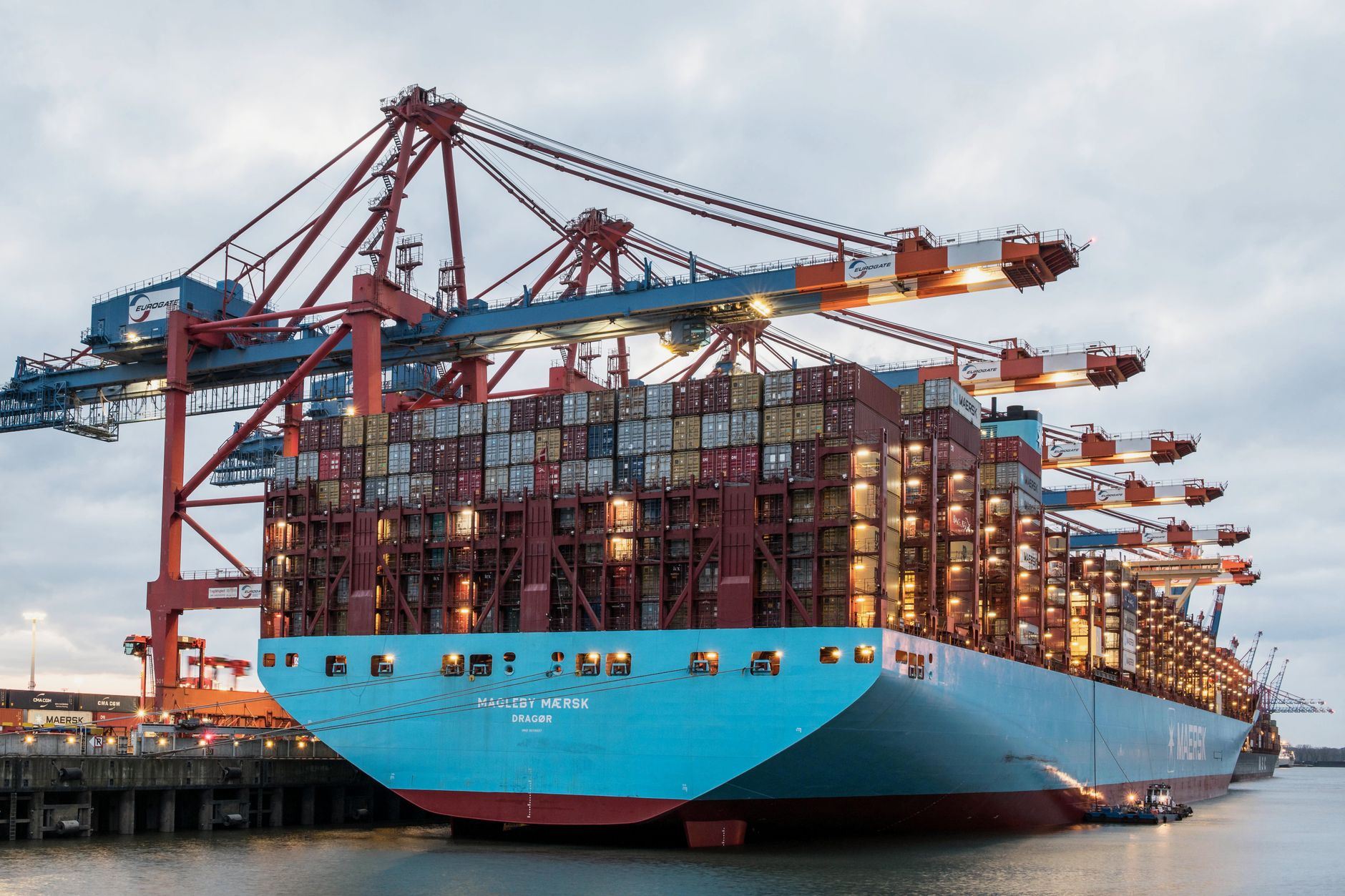
Ports are natural customers because they concentrate electrical demand, industries, ships, and infrastructure, and they often already feature access to major power lines and industrial space.
Naval nuclear power is not automatically a civilian precedent
Asante cites decades of U.S. Navy experience with shipboard reactors as proof that mobile nuclear technology is not science fiction. It is a useful reference point, but one that should be treated with caution. Naval reactors operate under a military framework, with highly specialized personnel and requirements very different from those of a commercial civilian installation.
Bluecore will have to demonstrate safety, physical security, fuel management, emergency response, and compatibility with port environments frequented by civilians.
AI demand turns energy into a tech problem
The startup claims interest from ports, communities, and data centers. The surge in power consumption from AI clusters is driving tech operators to seek continuous, low-emission energy sources. Nuclear provides steady generation, but large-scale plants require timelines incompatible with many data center roadmaps.
Small reactors promise modularity, but the industry has yet to prove competitive costs and timelines at scale. Bluecore introduces another variable: mobility.
Capital is also needed for regulation
A significant portion of the 50 million will fund regulatory work, product development, fuel, and hiring. In nuclear tech, the licensing pathway is not a secondary hurdle: it is a core part of the product.
Investors must therefore fund years of engineering before seeing significant revenue. The exceptionally large seed round reflects the capital-intensive nature of the sector.
The supply chain could be the real bottleneck
Bluecore cites component and fuel availability among its primary challenges. Nuclear projects require qualified materials and suppliers, and the resurgence of interest in SMRs is creating simultaneous demand on a supply chain unaccustomed to high volumes.
The team includes alumni from SpaceX, Rivian, and Toyota and aims to apply faster industrial manufacturing practices. But nuclear cannot simply import the speed of software or automotive: component certification remains far more stringent.
The sea creates advantages and new risks
A barge can leverage water for cooling and move between sites. However, it is exposed to corrosion, weather conditions, collisions, maritime security, and port infrastructure constraints. Every logistical advantage introduces new requirements.
The Coast Guard is involved precisely because the project is not solely nuclear. It is also a vessel or maritime platform with navigation and security implications.
The Port of Long Beach is a strategic symbol
Bluecore is based in one of the largest American ports. Decarbonizing ports means electrifying cranes, trucks, berthed ships, and neighboring industries. The amount of energy required can be massive.
If a compact, continuous power source could be deployed without taking up vast areas of land, it would have an edge. That “if” remains very large, however, until the design clears technical, regulatory, and economic reviews.
The seed round buys time to prove feasibility
The new funding is not proof that floating power plants will work commercially. It is capital to reach the point where that question can be evaluated with real data and actual permits.
The difference between an energy startup and a software startup lies right here: a convincing prototype is not enough. Bluecore must navigate physics, supply chain, regulation, and public trust. If it succeeds, the ability to shift nuclear capacity to where demand grows would be a remarkable transformation; if it fails, the market will at least have clarified how much of the concept was technology and how much was narrative.