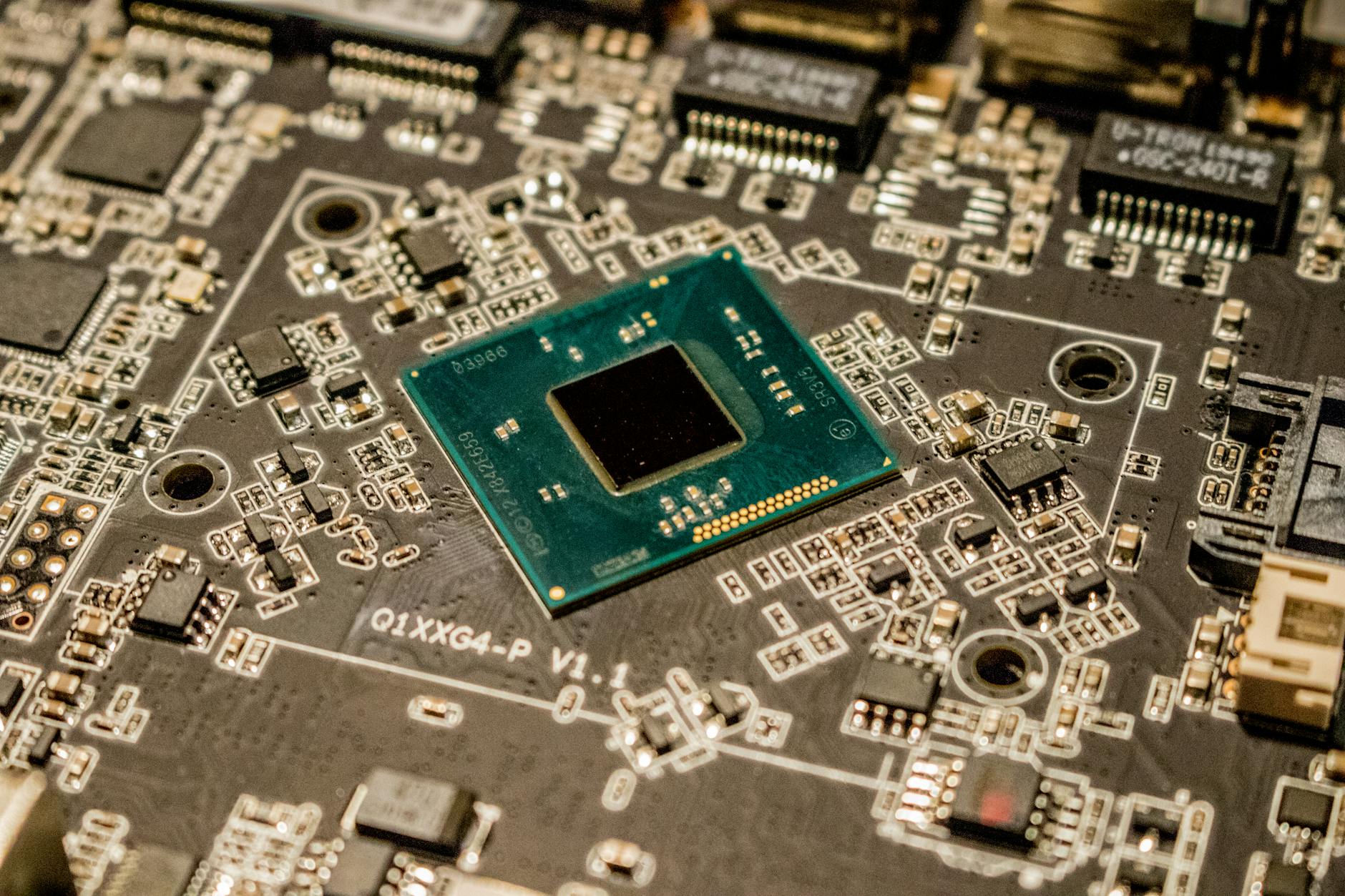
The tech war between the United States and China is often framed around the chips Beijing can or cannot buy. But the real bottleneck lies even further upstream: the machines required to produce those chips.
According to the Financial Times, Huawei has become one of the primary drivers of China’s push to develop a domestic supply chain for advanced semiconductor manufacturing equipment. A central front involves deep ultraviolet, DUV, lithography—an essential technology for transferring microscopic circuits onto silicon wafers.
Why lithography matters so much
Manufacturing an advanced processor requires hundreds of industrial steps, but lithography is one of the most critical. The machines project extremely small patterns onto the wafer, enabling the fabrication of increasingly dense transistors.
In the most advanced segment, the global leader is ASML, a Dutch company holding a virtually unique position in EUV, extreme ultraviolet, systems. But even the most sophisticated DUV machines remain critical and can be used, through multi-patterning techniques, to produce advanced chips, albeit at higher cost and complexity.
Huawei does not want to rely solely on chipmakers
The noteworthy point is that Huawei is not stopping at chip design or purchasing fab capacity. Through its own investment arms and industrial partnerships, it is backing Chinese companies developing components and equipment required by semiconductor fabrication plants.
The Financial Times highlights Shanghai Yuliangsheng in particular, which is involved in developing an advanced DUV machine reportedly undergoing testing at Chinese manufacturers and on production lines linked to Huawei.
This approach follows a precise logic: if a single critical piece of equipment remains controlled by Western suppliers, export restrictions can shut down the entire supply chain. Semiconductor sovereignty therefore requires not only design and fabs, but optics, light sources, control software, materials, and metrology tools.
The technology gap has not disappeared
Chinese progress does not mean ASML is about to be replaced. According to available information, domestic DUV machines still lag behind the most advanced Western systems in throughput and precision, and are not yet deployed on a large scale.
Two particularly challenging areas are projection optics and high-power light sources. These are components in which companies like Zeiss and Cymer have accumulated decades of know-how, intellectual property, and manufacturing capacity.
Sanctions can slow down and accelerate at the same time
American and allied restrictions aim to curb China’s capacity to manufacture advanced semiconductors. In the short term, they make it harder to purchase chips, machines, and components. But they also create an enormous incentive to replace every foreign element in the chain.
This does not mean China can rapidly close every gap. Some technologies require years of development and a network of specialized suppliers. It does mean, however, that the Chinese domestic market provides local manufacturers with virtually guaranteed demand: if a Western component is unavailable, even a less efficient domestic alternative can become strategically valuable.
The DUV case shows the race is not just about 2 nanometers
The semiconductor industry’s narrative tends to focus on the leading-edge nodes. In reality, a massive share of the digital economy relies on less sophisticated chips: automotive, industrial applications, telecommunications, consumer appliances, infrastructure, and defense.
Building a domestic foundation of reliable DUV equipment can therefore deliver substantial value even before matching the performance of cutting-edge systems. It allows for reduced vulnerability across a large volume of manufacturing while building up industrial expertise.
The real competition spans the entire chain
The semiconductor showdown between the United States and China can no longer be viewed as a simple contest between Nvidia and Huawei. It is a competition between industrial ecosystems.
Whoever controls chip design, EDA software, lithography, materials, advanced packaging, memory, and manufacturing capacity can influence the entire artificial intelligence economy. That is why a lithography machine that seems far removed from the end consumer can wield immense geopolitical weight.
China still faces several critical gaps. But the direction is clear: it is not looking for a temporary workaround to bypass restrictions. It wants to make bypassing them increasingly unnecessary.


