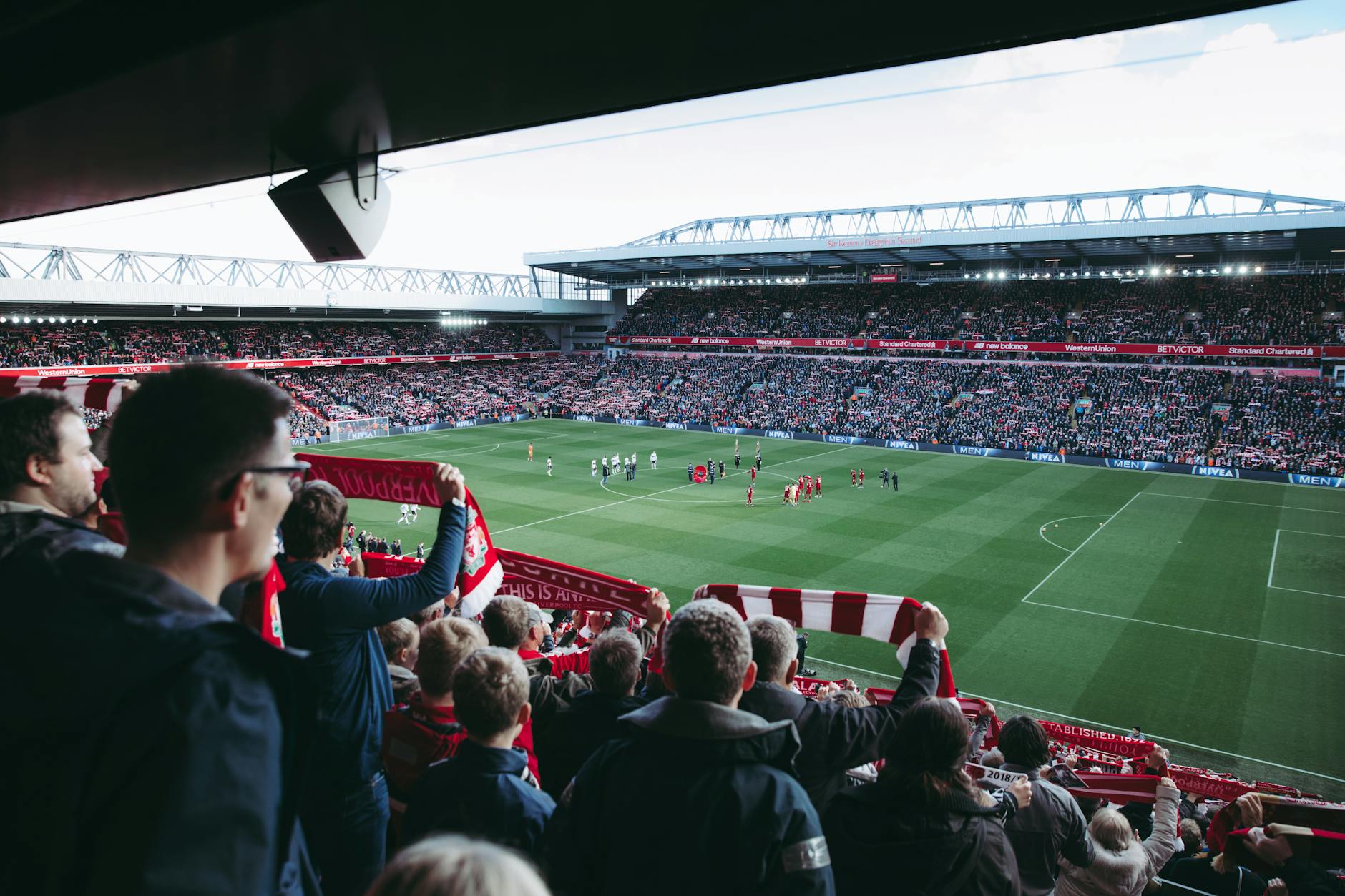
Manchester City chose the pitch to respond to the first, inevitable wave of protests following the Premier League verdict. At Anfield, in their clash with Liverpool, Enzo Maresca's side won 3-0 to reclaim the top of the league, preserving their perfect start to the season. It was the champions' first fixture since the decision that found the club responsible for more than one hundred serious breaches of league regulations: 114, according to what emerged from the proceedings.
The match could not be separated from its context. Manchester City have appealed and continue to deny all charges, but the verdict turned one of the Premier League's marquee fixtures into an occasion carrying added weight. Liverpool fans made their stance clear from the moment their opponents arrived and then inside the stadium, displaying banners and directing chants at the Manchester club. The sporting response, however, was emphatic: after managing an opening stretch in a hostile atmosphere, City found space and goals in the second half.
Erling Haaland opened the scoring, Jérémy Doku doubled the lead, and Rayan Cherki rounded off the victory. Three goals that also highlight the turning point caused by the dismissal of Ryan Gravenberch, who remained on the pitch until the second half before receiving a red card. From that point on, Liverpool, already hampered by an incomplete squad, could no longer compete. For City, it was not merely a statement win: the victory restores them to the summit of the table and prevents the legal proceedings from impacting, at least in the short term, the trajectory of their season.
Anfield, the rivalry's most exposed stage
The reaction from the Anfield crowd was largely predictable. Liverpool and Manchester City have defined a decisive chapter of the Premier League's recent era, and clashes between the two sides have often amounted to direct title showdowns. The period of the alleged violations against City covers the years from 2009 to 2018, predating some of the most famous duels between Pep Guardiola and Jürgen Klopp. Yet, for a section of the Reds' fanbase, the foundation built by City during those years remains impossible to separate from the present.
In the stands, banners appeared accusing the visiting club of damaging the competition, while chants echoed throughout the warm-up and the match. The City team bus arrived via an alternative route, avoiding the area where hostility had concentrated outside the ground. Nothing, however, could shield the team from the atmosphere inside the stadium. For a club accustomed to handling peak sporting pressure, this represents a new persistent factor: the ruling potentially turns every away match into something like this.
The result at Anfield does not heal that rift, nor does it marginalise it. If anything, it demonstrates that the squad managed to separate the noise surrounding the club from their performance on the pitch. This is a significant aspect, as City must defend their competitive position in an environment where scrutiny from rival clubs and their fans will inevitably be harsher. A reputation is not restored in ninety minutes, but the team prevented their first test following the verdict from turning into a setback in the standings.
A Liverpool side short of options and personnel
Liverpool came into the match still unbeaten under Andoni Iraola, but facing concrete availability issues. Alexander Isak, Cody Gakpo, and Dominik Szoboszlai were sidelined through injury—major absences for a squad that needed rotation and attacking quality against an opponent of this calibre. The home side initially absorbed the pressure of the match, buoyed by the crowd's energy, yet failed to find the opening to steer the contest in their favour.
Gravenberch's sending-off shifted the scale of difficulty. Down to ten men against a City side capable of stretching the pitch and exploiting their forwards' pace, Liverpool gradually lost control and territory. Haaland, Doku, and Cherki capitalised on the advantage, leaving no room for a comeback. The final 3-0 scoreline is harsh in its scale and timing, but it must also be viewed in light of a lineup stripped of three key figures and subsequently forced to play a decisive stretch of the game with a man down.
For Iraola, the defeat ends the season's unbeaten run and provides a harsh measure of the depth required by the Premier League. The schedule and injuries can quickly alter the perception of a positive start: against City, especially when the game breaks open, squad deficiencies become instantly visible. Liverpool will need to recover players and stability, as the race at the top leaves little room for results of this magnitude in head-to-head clashes.
The verdict remains off the scoresheet, not out of the league
The most immediate consequence of the disciplinary ruling is not a change to the scoreline at Anfield, but a shift in the atmosphere surrounding Manchester City. The club has appealed the verdict and denies the allegations; the appeal process will therefore be critical to understanding whether and how the situation will yield further repercussions. For now, what the pitch confirms is a team that keeps winning and has responded with a remarkably solid display under the most delicate circumstances possible.
For the Premier League, however, the matter is not confined to a single match. The competition's credibility also hinges on its ability to enforce its rules and manage a case involving one of its primary financial and sporting protagonists. The rivalry between fanbases, already fierce, risks being fueled by the proceedings for a long time: at Anfield, the protest took an explicit form, but there is no reason to believe it will remain an isolated incident.
City will therefore have to operate on two parallel tracks. On one side is the season, having reclaimed top spot with a winning run to defend. On the other is the legal battle, which moves forward following the appeal and keeps uncertainty open regarding the ultimate consequences. The 3-0 at Liverpool resolves none of the issues off the pitch. However, it establishes one key fact: on the first night when the verdict could have weighed directly on the squad's response, Manchester City showed no willingness to give ground.


