The antitrust lawsuit targeting Samsung, SK hynix, and Micron in the DRAM memory market is moving forward. The federal court for the Northern District of California has entirely rejected the three companies' bid to dismiss a class action brought by US consumers and small businesses. This is a preliminary step, not a final ruling: the facts alleged by the plaintiffs will have to be proven at trial. However, for Judge Noël Wise, the framework presented in the complaint is detailed enough to make the existence of an anticompetitive agreement plausible.
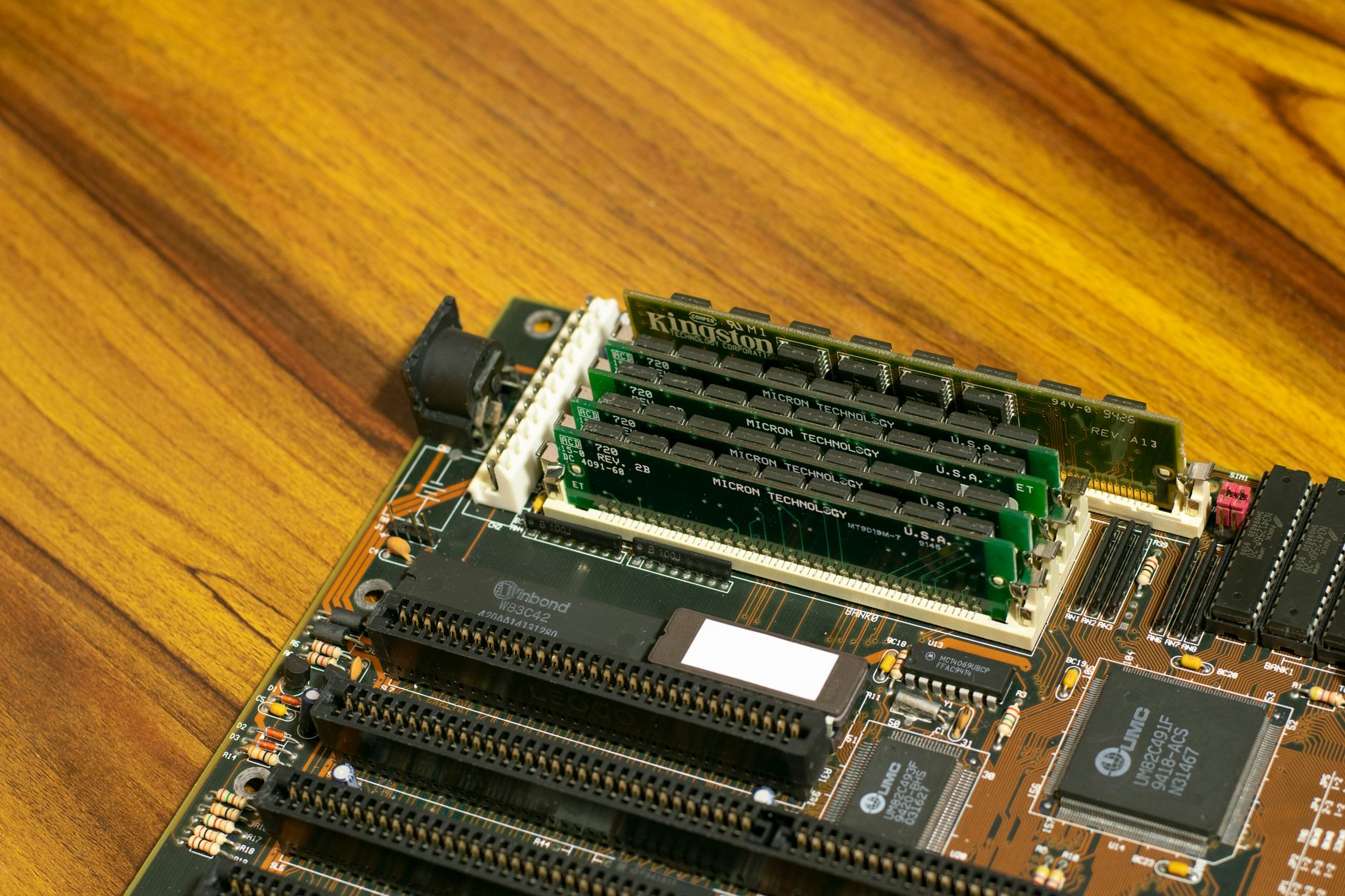
At the center of the dispute is conventional DRAM, the memory family used in PCs, smartphones, servers, and numerous other electronic devices, including DDR5 solutions. According to the plaintiffs, the three manufacturers allegedly restricted supply starting in late 2022 and then shifted production capacity toward HBM, the high-bandwidth memory demanded by accelerators for advanced computing. The alleged outcome is tighter availability of standard DRAM and sharply rising prices.
The companies controlled more than 91% of global DRAM revenues in the third quarter of 2025, according to the lawsuit. In such a concentrated market, decisions regarding production, new facilities, and wafer capacity allocation can directly impact the costs of components purchased by hardware makers and, in turn, the end prices of computers, servers, and other equipment.
Why the lawsuit was not dismissed
Samsung, SK hynix, and Micron had argued that the new lawsuit essentially rehashed a case that had already been dismissed in the past. This refers to the litigation known as DRAM II, concerning alleged supply restrictions between 2016 and 2018: in 2022, the Ninth Circuit Court of Appeals upheld the dismissal of those proceedings.
However, Judge Wise ruled that the circumstances outlined in the new complaint are distinct and, taken together, sufficient to survive the motion to dismiss stage. This does not mean that collusion has been proven, nor that the companies' economic explanations have already been ruled out. Rather, it means the plaintiffs have detailed elements that warrant discovery, document production, and further judicial examination.
These elements include cuts to traditional DRAM production, the reallocation of lines and resources toward HBM, the scaling back of DDR4 DRAM, and the absence of announcements regarding significant capacity expansion for commodity memory despite rising prices. The filing also cites long-term agreements on HBM, a reluctance to make similar commitments for conventional DRAM, facility delays, customer selection practices deemed similar, and the closure of the Crucial business by Micron.
The ruling's most incisive phrasing concerns the way the companies allegedly made their commercial decisions: “hawks flying in formation”. It is an image used by the court to describe a convergence that, in light of the other circumstantial evidence invoked by the plaintiffs, cannot be readily dismissed as mere parallel conduct among competitors.
Rising prices and capacity shifted toward HBM
HBM memory has become a strategic asset in the data center supply chain because it is paired with the GPUs and accelerators used to train and run artificial intelligence models. Compared to DDR5, it requires a significantly higher volume of wafers for each gigabyte produced. Investing in HBM can therefore absorb capacity that could otherwise be used for other types of DRAM, at a time when demand for advanced computing infrastructure remains high.
That industrial choice, on its own, does not prove any wrongdoing. A manufacturer can legitimately pursue the most profitable segments and respond to customer demand. The legal crux is whether three dominant competitors acted independently, each assessing its own interests, or whether there was an agreement to restrict the supply of standard DRAM. In the United States, this distinction is critical for the application of Section 1 of the Sherman Act, the federal statute against anticompetitive agreements.
The plaintiffs estimate that the price of conventional DRAM surged by 171.8% over the course of a year leading up to the third quarter of 2025, and by 697% over 18 months. These figures reflect allegations, not findings by the court. The court noted that the price trajectory, coupled with the absence of any significant capacity expansion for conventional products, may help make the plaintiffs' theory plausible when considered alongside the other contested conduct.
However, the ruling does not uphold every argument put forward by the plaintiffs. Wise gave no weight to statements directed at investors regarding so-called supply discipline, viewing them as too similar to elements already deemed insufficient in the previous lawsuit. The judge also ruled out the notion that the mere presence of executives at industry conferences could serve as circumstantial evidence, given the lack of details regarding information exchanged or agreements struck on those occasions. Even the three-player structure of the market is treated as a neutral factor, rather than standalone proof of collusion.
A case that remains to be proven
The lawsuit was filed on June 25, 2026, by 17 consumers and small businesses from five US states. The order stipulates that Samsung, SK hynix, and Micron must formally respond by December 7, 2026; the initial case management conference is scheduled for January 12, 2027. From here on, any subsequent discovery phase will be particularly critical: internal communications, capacity data, contracts, and allocation decisions could shed light on whether concrete evidence of coordination exists.
For the companies, the denial of the motion does not equate to liability, nor does it automatically result in damages. The threshold to survive an initial motion to dismiss is significantly lower than what is required to prevail on the merits. The defense will be able to argue that the shift toward HBM and the cautious approach to capital expenditures in commodity DRAM were driven by demand dynamics, historically volatile memory cycles, and industrial constraints in chip manufacturing.
However, the case affects a sector already marked by antitrust precedents. The DRAM market has a long history of investigations and proceedings over collusive practices, and this very context is among the factors the judge considered when evaluating the plausibility of the current complaint. The trial phase that has just opened will reveal whether the parallel conduct among the three major manufacturers had a competitive justification or if there was coordinated direction behind it.
In the meantime, the proceeding brings under scrutiny a side effect of the race for artificial intelligence infrastructure: HBM is a more specialized and profitable memory, but its expansion can reshape the DRAM supply balance for the rest of the electronics industry. For hardware buyers, the issue is not just how fast the AI segment will grow, but whether capacity allocated to mass-market products will return to growing sufficiently and competitively.


