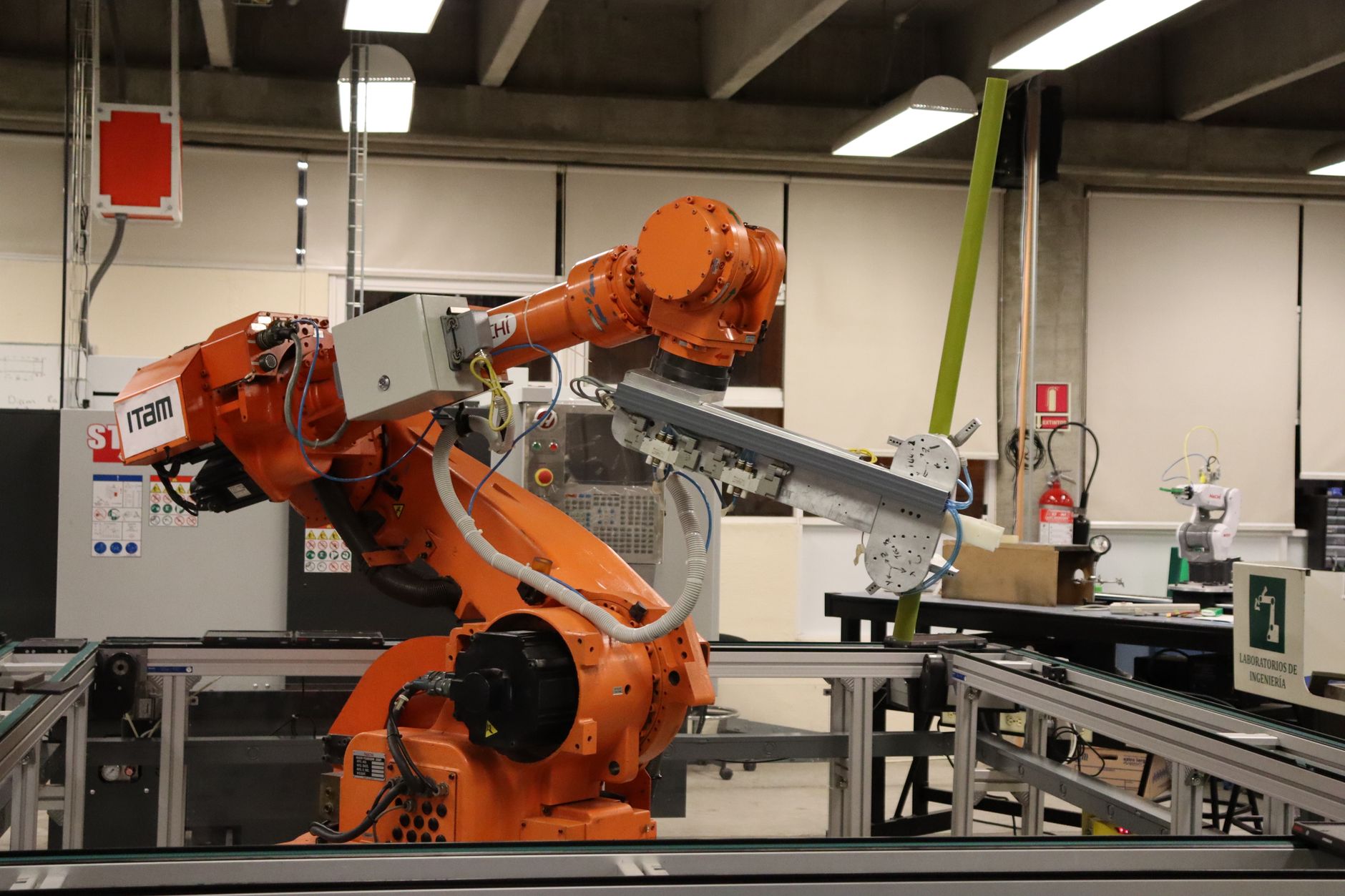
Europe has spent years chasing Silicon Valley on large language models, but the next artificial intelligence race could be fought on turf where the continent holds a less obvious advantage: factories, automation, industrial engineering, and robotics. It is in this context that the project by the former head of robotics at Mistral AI takes on significance; according to Sifted, they are preparing a new startup and seeking around €200 million in funding.
A raise of this size, if completed, would be unusual for a newly founded company. But building physical AI demands vastly different capital compared to a software application: it requires robots, sensors, laboratories, simulators, real-world data, and a hardware supply chain capable of producing reliable machines.
From language to movement
Generative models learned to manipulate text, images, and code because the internet provides a massive amount of data. For a robot, the situation is different. It must understand space, friction, weight, deformation, sensor errors, and the physical consequences of its actions. A seemingly simple command like picking up a glass contains a sequence of decisions that does not exist in the digital world.
Physical AI seeks to connect general models to perception and control systems, enabling a robot to adapt to tasks that are not individually programmed. This is the promise behind the investments made by Nvidia, Google DeepMind, Tesla, and numerous robotics startups.
Why Europe might stand a chance
In consumer software, the United States commands platforms, capital, and distribution that are hard to match. In industrial automation, however, Europe boasts a network of manufacturing companies, machine builders, and system integrators that could become a massive testing ground for intelligent robots.
Germany, France, and Italy have supply chains where a machine capable of learning new operations could generate value without immediately having to achieve the general autonomy of a humanoid. An arm that cuts reconfiguration times on a production line can be commercially compelling even if it cannot cook or fold laundry.
The 200 million reflects the cost of the real world
A software startup can roll out a new version to millions of users in just a few hours. A robot has to be built, shipped, maintained, and certified. Any failure can halt a line or cause damage. That is why the required capital grows so quickly.
The size of the round being sought suggests that the new company does not intend to limit itself to a lightweight software layer. The market is shifting toward more vertically integrated teams capable of controlling models, data, and at least part of the hardware.
The robotics data problem
Data scarcity is perhaps the main hurdle facing general-purpose robotics. There is no web equivalent containing billions of examples of robotic hands manipulating every conceivable object. Companies are therefore combining human teleoperation, simulation, video, and synthetic data.
The competitive edge may stem not so much from the initial model, but from the loop through which each deployed robot gathers experience and improves subsequent ones. It is a dynamic similar to what made vehicle fleets valuable in autonomous driving.
No need to wait for the perfect humanoid robot
The physical AI narrative is dominated by humanoids because they are easy to showcase. But the market could develop through far more specialized forms. Warehouses, laboratories, logistics, and manufacturing offer relatively structured environments where autonomy can yield returns before reaching private homes.
For a European startup, this can be a strategic choice: build reusable intelligence and apply it to machines designed for concrete industrial problems, rather than immediately competing in the race for the universal domestic robot.
AI’s new frontier has no “undo” button
When a chatbot gets a sentence wrong, the cost is often limited. When a robot miscalculates a trajectory, the mistake becomes physical. Safety, verifiability, and control will therefore have to grow in step with model capabilities.
It is this combination of advanced software and industrial discipline that makes robotics a viable European play. If the new project born out of the Mistral ecosystem really manages to raise hundreds of millions, it will above all be proof that investors are beginning to consider AI no longer just as something that lives on a screen, but as a system destined to enter factories and machines.


