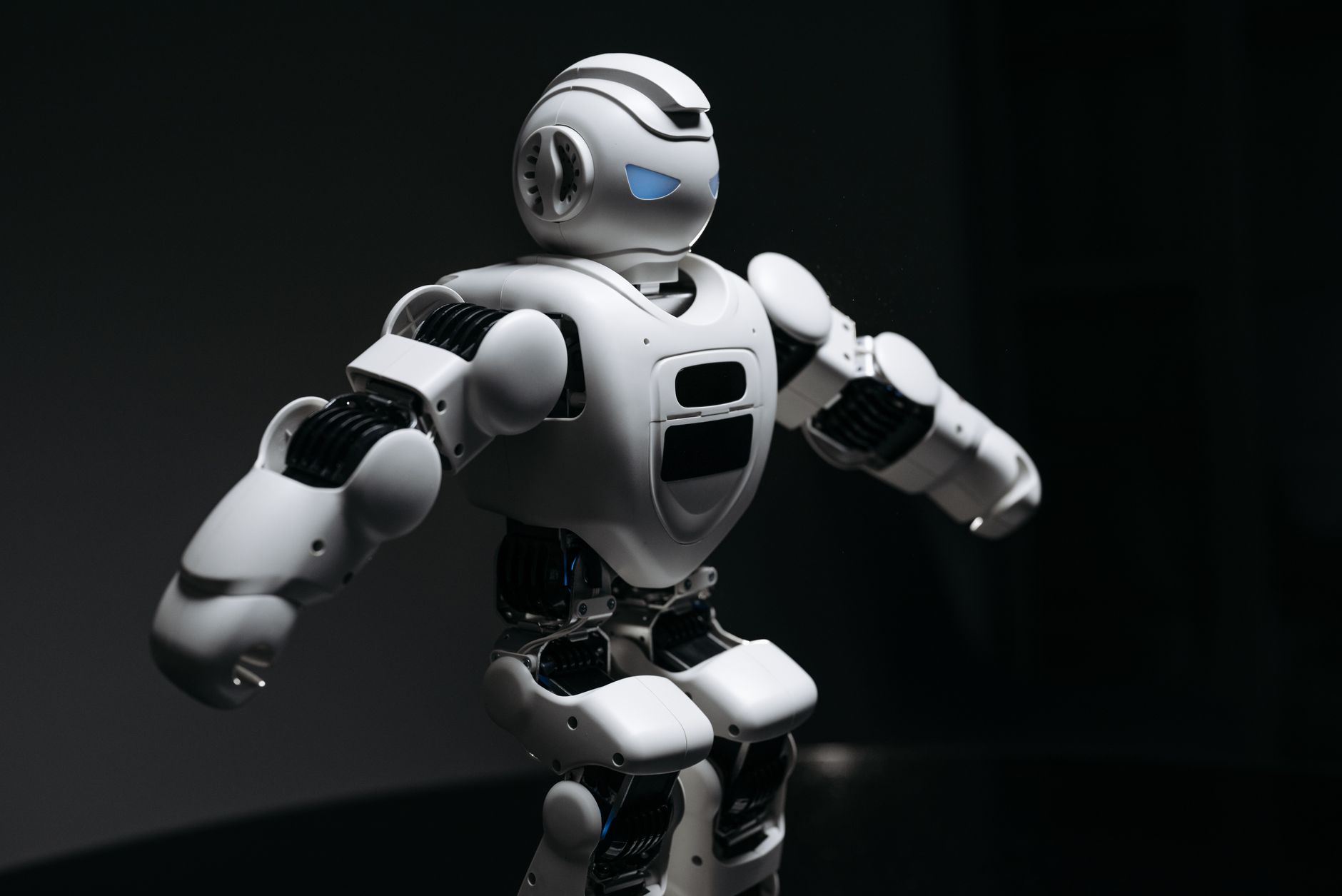
Google has begun rolling out Gemini 4 Argon, its new artificial intelligence model that the company presents as its high-end leap in reasoning, coding, and handling complex tasks. The announcement's significance extends beyond chatbot use: DeepMind explicitly places Argon on its robotics roadmap, a field where the ability to interpret instructions, plan a sequence of actions, and work with information from the physical world becomes decisive.
Availability, however, is selective for now. Gemini 4 Argon is coming to the Gemini app and AI Mode in Google Search for Google AI Pro and Google AI Ultra subscribers; developers, on the other hand, can access it via the Gemini API and through Antigravity, Google's agentic development platform. There is currently no indication of an expansion to free users or the Plus plan.
The move marks Google's first major frontier release since Gemini 3, which arrived in late 2025. In the meantime, competition from OpenAI and Anthropic has raised the bar for models targeting professional tasks and software agents. Argon is Google's answer to reclaiming center stage in this race, not merely promising smoother responses, but seeking to put the model to work in environments where errors, ambiguity, and redundant steps carry more weight than in an ordinary conversation.
From chat to environments where AI must act
When Google connects Argon with robotics, it is not simply a matter of having a robot chat with a human. In embodied AI research, the model must be able to bridge natural language goals, environmental perception, operational constraints, and planning. This is a far more delicate step than text generation: a system can write a plausible explanation of a procedure, but a robot must execute actions compatible with what it observes and the machine's limitations.
Information released by Google describes Argon as a model designed for complex problems in fields such as software engineering, finance, writing, cybersecurity, and coding. Robotics fits into this framework as a highly complex application domain, where reasoning must help organize tasks and manage workflows. Based on the initial public rollout, no consumer product has been announced that turns Gemini into a universal controller for domestic or industrial robots.
It is an important distinction. Mass access is actually handled through apps, Search, and developer tools, rather than through a catalog of compatible physical machines. DeepMind's work on robotics therefore points to a technological and research direction, while concrete adoption will depend on integrations built by robot manufacturers, available data, control systems, and, above all, the safety procedures required in each environment.
Google promises fewer boilerplate phrases and greater operational continuity
Among the capabilities claimed for Argon is a reduction in hesitations, repetitions, and formulaic responses. Josh Woodward, Vice President of Product for Gemini and Google Labs, also highlighted faster speeds in the Gemini app and the ability to receive parts of the response while longer requests are being processed. For those using a model in programming or operational workflows, the potential benefit is not merely aesthetic: a less sprawling response can make it easier to verify the steps, instructions, and decisions proposed by the system.
Google also claims that Argon achieves competitive performance on benchmarks covering, among others, coding, science, cybersecurity, finance, and law. Artificial Analysis, an AI evaluation firm, awards it a score on par with GPT-6 Astra on its Intelligence Index, with a lower cost per task during the promotional phase. As with any composite benchmark, however, the metric alone is not enough to establish which model is preferable for every project: prompts, connected tools, token usage, and the level of human oversight required will always vary.
According to the company, the model is already being used internally by Google to identify and patch vulnerabilities, debug Wing’s physics simulator, and reduce the burden on the infrastructure handling YouTube comments. These examples help illustrate the chosen positioning: Argon is presented as a component for extensive technical processes, rather than just an assistant for one-off requests.
Lower costs may expand experimentation, but only for a limited time
Google has set an introductory price of $2 per million input tokens and $10 per million output tokens. The rate is valid through November 30, after which it will double. Pricing is one of the launch's central pillars: the company aims to make Argon competitive against rival frontier models, especially for developers building products that require high call volumes to the model.
However, this comparison should be viewed with caution. The unit cost of tokens does not automatically equate to the total cost of a task. Two models may consume vastly different amounts of compute to reach a result, and a robotic or agentic system introduces additional expenses: external tools, simulations, data, verifications, hardware, and supervision. For enterprises, the decisive benchmark will remain the balance between reliability, speed, and overall workflow spend.
The barrier to entry is also significant. In the United States, Google AI Pro costs $20 per month, while Google AI Ultra starts at at least $100 per month. Subscribers to these plans can test Argon in the app and in Search, but availability does not equate to unlimited access, nor does it replace the expertise needed to evaluate the model’s output.
A rollout preceded by targeted safety testing
Prior to the broader rollout, Argon had been shared with a select group of entities—including governments and trusted partners with advanced cybersecurity needs—under the Fairwind Program. This step is consistent with standard practice for high-capability models: testing them first in controlled environments, in part to determine whether they could facilitate malicious activity or make cyberattacks more effective.
This issue takes on added weight when the discussion turns to robotics. A model that helps plan or interpret an environment cannot be judged solely on its linguistic quality. Clear limits on permitted actions, human verification during sensitive phases, and testing carried out under real-world conditions are essential. The capabilities claimed by Google do not eliminate these requirements, nor do they alone prove that Argon is ready for every physical scenario.
In the coming months, developer adoption will primarily reveal where Gemini 4 Argon can deliver a tangible advantage. Its integration into the Gemini app, AI Mode, and API tools gives it broad distribution; meanwhile, DeepMind's reference to robotics signals an ambition to bring the same model to applications where software, reasoning, and the physical world converge. For Google, it is a resurgence in the frontier model market. For product builders, it is a new option to be measured against real-world use cases, not a promise to be taken on faith.