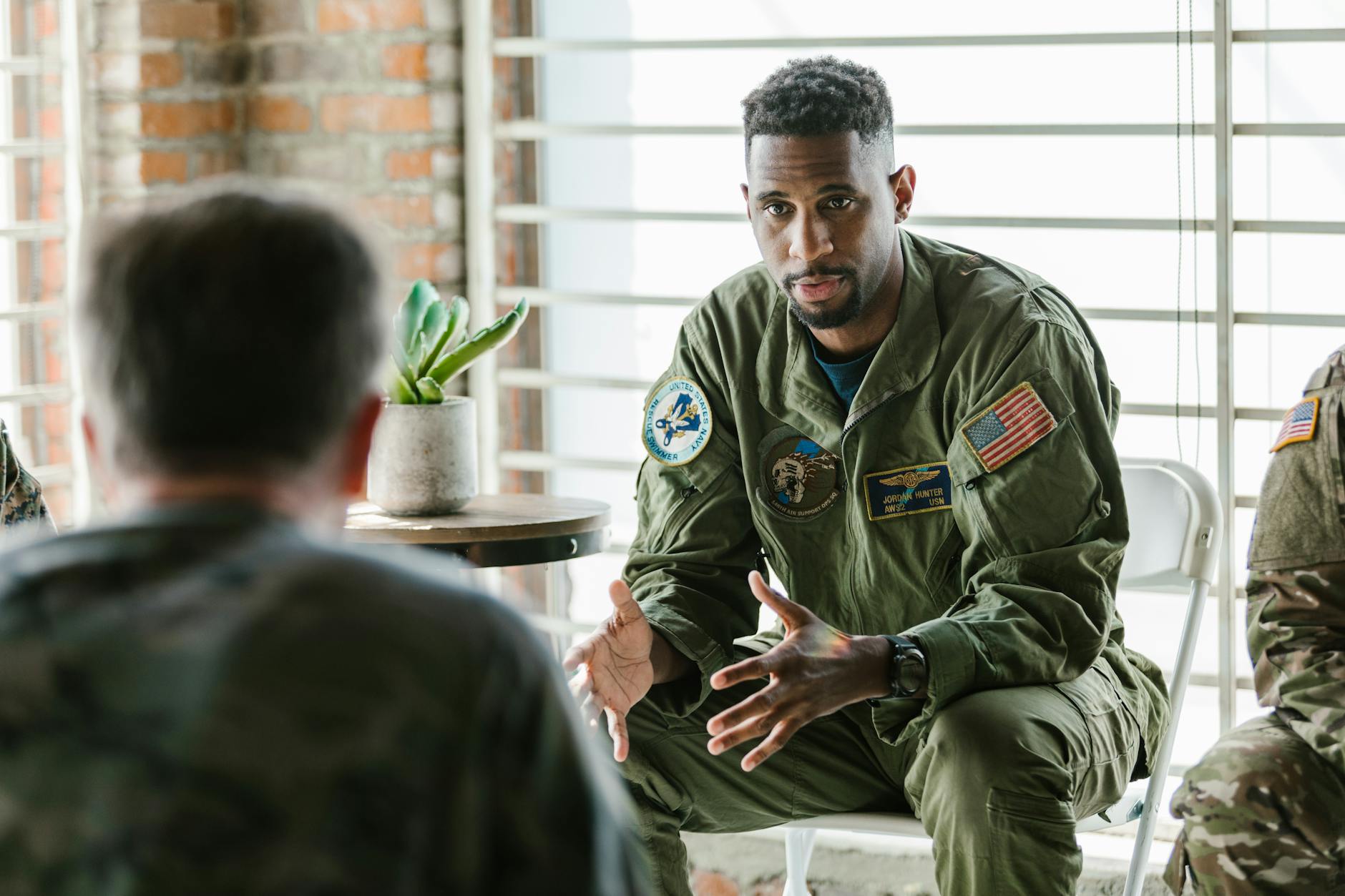
Google is preparing a training day dedicated to veteran entrepreneurs and military spouses in the United States, focusing on the practical use of artificial intelligence in small businesses. The event is scheduled for Monday, November 9, at 1:00 PM Eastern Time (7:00 PM in Italy) and will be streamed for free on YouTube as part of National Veterans Small Business Week.
Now in its third edition, the initiative is organized by Grow with Google alongside American Corporate Partners (ACP) and Blue Star Families. The announced agenda combines a hands-on AI session, an entrepreneur's testimonial, and a live Q&A segment. Those who register can also request a one-on-one, 30-minute virtual coaching session with a Grow with Google coach, offered after the event.
The news is not about the launch of a new model or software feature. Rather, it serves as an example of how Google is trying to broaden the user base for generative tools: not just developers, large organizations, or digital professionals, but also local businesses with limited resources and very concrete needs. Gemini is highlighted in the initiative's materials as a starting point for building skills applicable to business management.
While the target audience is limited to the US market, the underlying topic has broader relevance. For a microbusiness, adopting an AI-powered assistant does not necessarily mean overhauling processes from scratch or investing in complex infrastructure. It can simply mean drafting copy, organizing ideas, polishing customer communications, setting up a marketing plan, or speeding up repetitive tasks. The true value of events like this lies in their ability to separate sustainable use cases from the vague promises that have characterized the generative AI boom.
An entrepreneurial audience with real weight in the local economy
According to data reported by Google, 1.6 million veteran entrepreneurs operate in the United States, collectively employing more than 3.3 million workers. It is a significant segment for local economies, made up of businesses that vary widely in sector and size. In this context, digital training serves a dual purpose: facilitating the launch or management of a business after military service and bridging the gap between rapidly evolving tools and those without in-house technical teams.
American Corporate Partners works on mentoring and career transitions for veterans and military spouses, while Blue Star Families is an organization that supports military community families. Their presence signals that the event is not designed as a simple product presentation. Google positions it within its Grow with Google program, which has offered digital skills pathways to workers, businesses, and communities for years.
The livestream will include the story of Adam Baker, founder and CEO of SodaPup, a veteran-owned pet toy company. Google has not disclosed which aspects of his experience will be covered, nor has it published a detailed technical agenda. It is therefore premature to attribute specific results linked to Gemini or other AI tools to the SodaPup case. His talk will likely serve to ground the training in a real-world entrepreneurial journey, rather than leaving it at the abstract level of features.
From demonstration to daily work
The most compelling part of the format is the subsequent coaching. Livestream demonstrations are useful for presenting the capabilities and limits of a service, but they rarely resolve the doubts that arise when actually trying to adopt a tool in one's own workflow. A 30-minute one-on-one session is not equivalent to ongoing consulting and cannot single-handedly turn a business into an AI-first organization. However, it can help translate a general lesson into a more focused, practical need.
It is also the point where responsible adoption becomes essential. Businesses using generative systems must verify content, data, and model-generated outputs; they should not entrust sensitive decisions to AI without oversight, nor should they feed confidential information into a chatbot without knowing the applicable processing terms. The event announcement does not detail modules on privacy, security, or regulatory compliance. It therefore remains to be seen how much space these aspects will be given during the livestream and in any coaching sessions.
For smaller businesses, moreover, the hurdle is not merely technical. AI can save time on certain tasks, but it requires clear instructions, the ability to evaluate responses, and a willingness to revise established procedures. Quickly generated marketing copy that goes unchecked can be inaccurate, poorly suited to the target audience, or off-brand. A useful answer from an assistant can also depend on the quality of the context provided by the user. Training makes sense if it bridges this gap between the demo effect and repeatable, everyday work.
A piece of the race for AI adoption
Google is promoting Gemini at a time when access to generative tools is increasingly straightforward, while the ability to use them effectively remains uneven. Free workshops and partnerships with community organizations serve as a lever to familiarize groups that might not spontaneously seek out AI courses with the product. For the company, the move also has an ecosystem dimension: building skills around its services can influence future adoption just as much as adding new features.
The November 9 program does not announce financial incentives, free premium access, or dedicated integrations for veteran-owned businesses. Nor are there any commitments regarding hiring or funding. Its scope should therefore be seen for what it is: a free educational event, with an opportunity for one-on-one guidance, aimed at a specific community. Registration takes place via the page designated by Google for National Veterans Small Business Week 2026.
The most measurable outcome will only emerge after the live event: how many people participate, which use cases are actually addressed, and whether coaching helps the businesses involved sustain the use of the tools beyond the initial phase. Google has not released attendance targets or projected impact data. For now, the initiative points in a clear direction: AI competition is relying less and less solely on models and increasingly on training those who must integrate them into day-to-day operations.


