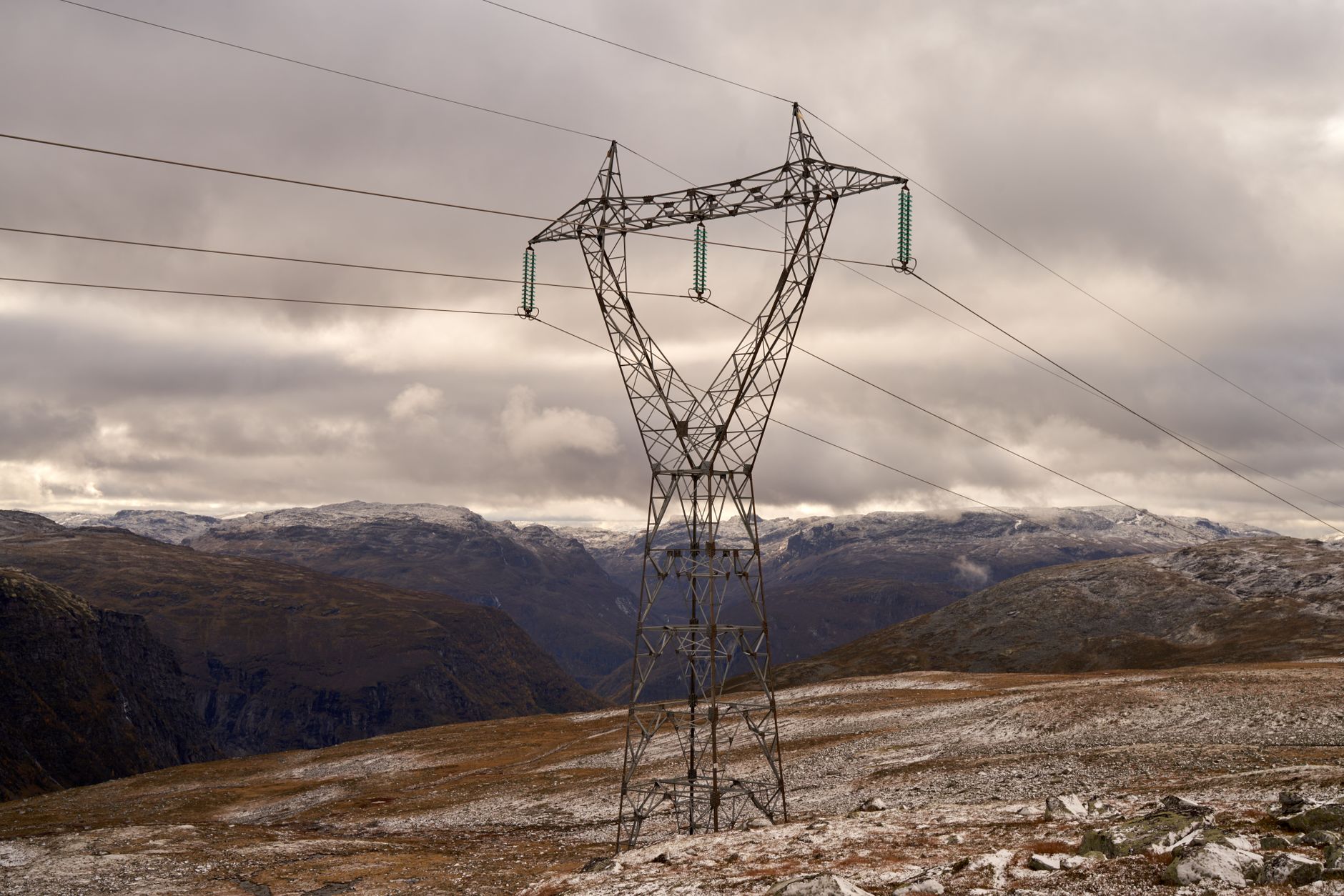
For years, the artificial intelligence race has been framed as a competition between increasingly large models, ever-more-expensive chips, and increasingly powerful data centers. Today's news from Finland shows that this narrative is no longer sufficient. Google has announced a 13-billion-euro investment in the country between 2027 and 2028—the largest single European investment ever announced by the company—while simultaneously signing a 22-year energy agreement with Fortum that will cover up to 50% of the capacity of the Loviisa nuclear power plant. This is not just about building new servers: Google is seeking to secure, with horizons extending to mid-century, the power needed to run them.
The plan covers Hamina, where Google has operated one of its European data centers for fifteen years, as well as Kajaani, Muhos, and Vaala, three locations in northern and central Finland that will join the group's new digital infrastructure. The investment spans data centers, networking, energy, and local partnerships, and according to estimates released by Google, during the initial construction phase in 2027 and 2028 it is projected to support over 37,000 jobs in the Finnish economy and contribute 3.6 billion euros annually to GDP. These are projections developed as part of the company's project rather than realized economic outcomes, but they demonstrate the scale at which Big Tech now operates when choosing where to site computing capacity for AI.
The core of the deal is not the data center, but the nuclear power plant
The most significant part of the announcement is arguably the one signed by Fortum. Google has signed a Power Purchase Agreement, a long-term electricity procurement contract, that will accompany the operational lifetime extension of the Loviisa plant through 2050. The PPA will begin in 2028 with a smaller share and scale progressively to cover 50% of the facility's capacity between 2030 and 2049. Loviisa operates two 507-megawatt reactors, commissioned in 1977 and 1980, and generates roughly 8 terawatt-hours of electricity per year, accounting for around 10% of Finnish output.
Fortum had already secured operational license extensions through 2050 in 2023, but actually keeping the plant running requires an investment program estimated at approximately one billion euros. According to the company, roughly 700 million euros in capital expenditure and 80% of the individual projects required to continue operations were still awaiting final decisions. The contract with Google provides what a power plant values above all else when planning twenty years of investment: predictable revenue.
Fortum states that the agreement will financially underpin the entire extension program as well as an additional 10-megawatt power uprate, on top of the 38 megawatts already planned for 2028. The economic impact estimated by the company, once the PPA reaches 50% of capacity, is an increase of approximately 1.4 percentage points in the group's comparable return on net capital. It is a financial detail, but it clarifies the structure of the deal: Google is not simply purchasing electricity at a fixed price, it is helping make the continuation of a nuclear asset investable where its economic trajectory might otherwise have been more uncertain.
AI is turning electricity consumers into industrial policy players
In the past, a large industrial consumer bought electricity because they needed it. Today, some AI operators are beginning to directly influence which power plants are built, extended, or kept running. The difference is substantial, because a data center can require hundreds of megawatts continuously and future growth is difficult to compress: once servers are installed, electricity demand becomes a physical requirement of compute capacity.
That is why Google and Fortum have paired the PPA with a memorandum of understanding extending beyond Loviisa, covering new nuclear, renewable capacity, flexibility systems, and energy portfolio management. The two companies intend to explore economic models for potential new reactors at Loviisa and evaluate Fortum's energy sites for future Google infrastructure. This remains an exploratory phase, and there is currently no decision to construct new reactors, but the fact that a tech company and a utility are jointly discussing the potential development of new nuclear capacity speaks volumes about how the market is changing.
In short, AI is no longer merely a consumer of existing energy infrastructure. It is becoming an entity that finances it, shapes its direction, and, indirectly, makes it politically necessary.
Why Finland
Finland has several characteristics that make it uniquely suited to this transition. Its power grid is already among the least carbon-intensive in Europe: according to Statistics Finland, 95% of the electricity generated in the country in 2024 came from fossil-free sources, including nuclear, wind, hydro, solar, and renewable fuels. Nuclear remains the single most important source, while wind has expanded rapidly in recent years. Furthermore, low temperatures help cut cooling costs, and the country boasts a robust electrical grid alongside substantial potential for new renewable generation.
Google is already familiar with this ecosystem. In 2011, it converted an old paper mill in Hamina into a data center, and over the years introduced solutions such as seawater cooling and excess heat recovery. The new expansion, however, shifts the scale of the challenge. Having a single efficient facility is no longer enough: the addition of large amounts of new demand must be planned without creating permanent strains on the grid or on prices.
Fingrid, the Finnish transmission system operator, explained in August that electricity consumption growth is set to accelerate precisely due to data centers and industrial electrical facilities. In mid-August, data center projects alone that had already signed grid connection agreements reached nearly 5 gigawatts of projected final capacity. This is a massive figure when compared to the size of the national system, and it helps explain why the energy issue cannot be treated as a mere side effect of digitalization.
Google attempts to answer the toughest criticism: not shifting the cost onto the grid
The expansion of data centers is becoming politically controversial in many countries because a new facility brings not only investment and jobs: it can absorb grid capacity, increase demand during peak hours, and force the system to build new infrastructure. Fortum itself observes that in Northern Europe, the debate over data centers has become increasingly polarized between the economic benefits of digitalization and concerns over consumption, grid capacity, and the actual value left to local communities.
Google structured its Finnish announcement specifically to address this criticism. Alongside nuclear power, the company says it plans to add new onshore wind capacity and has contracted a 94-megawatt battery storage system near the new Kajaani data center. Fortum will optimize the operation of the battery, which will help support grid stability and step in when renewable generation is lower or demand is higher.
The battery alone does not offset the consumption of a large AI campus, and a nuclear PPA does not automatically render any increase in demand harmless. It would therefore be a mistake to treat the announcement as definitive proof of sustainability. The value of the deal lies instead in its structure: Google is seeking to pair the growth of computing capacity with new generation and flexibility contracts, rather than approaching the grid simply as a consumer demanding more megawatts.
The Loviisa deal shows how central nuclear power has become once again for Big Tech
For tech companies, nuclear power has a characteristic that wind and solar lack on their own: it generates electricity continuously and predictably, a feature that is especially crucial for infrastructure required to run around the clock. This does not mean nuclear replaces renewables; in the model Google outlines for Finland, these technologies are used together, combining stable generation, new wind capacity, and storage systems.
The issue becomes even more intriguing when considering the duration of the contract. Twenty-two years is an almost inconceivable horizon for the software market, where a platform can become dominant and then disappear within a decade, but it is normal in the energy sector. Google is thus entering a mode of planning that forces a tech company to think like a utility or a heavy industry player: long-term investments, tied-up capital, permitting, regulatory risk, and relationships with local communities and governments.
It is one of the paradoxes of the current phase of artificial intelligence. The end product seems increasingly immaterial—an assistant answering a query, a model generating code, a search anticipating what we want to know—yet behind that lightness grows an intensely physical apparatus made of power plants, cables, transformers, batteries, land, water, and transmission grids.
The 13 billion is not just a tech investment
Google calls the plan its largest single investment in Europe. The 13 billion projected over the next two years will cover digital infrastructure and partnerships across the four Finnish sites, while an additional 31 million will go to local communities in Hamina, Kajaani, Muhos, and Vaala over the next four years. The company plans AI training programs for over 4,400 workers and pathways for 100 students aiming for future careers in data centers.
These figures should be read with an important distinction in mind. Capital invested in infrastructure does not automatically translate into an identical boost to GDP, and corporate employment estimates often include direct, indirect, and induced effects. Still, an investment of this scale can reshape the industrial geography of a relatively small country, especially when spread across multiple locations and accompanied by grid upgrades, power, and training.
For Helsinki, the stakes are about turning an energy advantage into an industrial advantage. If Finland can generate relatively clean, abundant electricity, it can export it through cables or use it domestically to attract energy-intensive, high-value-added industries. Data centers represent one of the most extreme forms of this second strategy: instead of exporting electrons, energy is used to produce computing power.
The new European competition could be a race for megawatts
The Finnish case highlights a challenge Europe will have to address swiftly. The continent seeks to build digital sovereignty, attract AI investment, and reduce its reliance on the United States and Asia, yet its ability to do so also hinges on power availability, grid connection speed, and the capacity to permit new facilities. A country with world-class universities and tax incentives but lacking available megawatts can become less competitive than one offering low-cost power and shorter connection lead times.
This represents a shift in industrial policy. Attracting a semiconductor fab demands ultrapure water, power, and a specialized supply chain; attracting massive AI campuses requires, above all, electricity, fiber, land, and a grid capable of absorbing new loads quickly. Data center siting will increasingly follow this physical geography, not merely tax geography.
Finland starts with an edge thanks to an electricity mix that is already heavily decarbonized, but success will hinge on the ability to expand both generation and the grid at the same time. Fingrid has made clear that new demand must also be matched by greater weather-independent balancing capacity. If five gigawatts of projects were to come online simultaneously without enough new generation and flexibility, the system would face significant strain.
The caveat: a PPA does not mean half of Loviisa's electricity will physically flow to Google
It is also worth clearing up a common misconception regarding power contracts. A PPA does not necessarily create a dedicated line delivering half of the plant's electricity straight to Google's servers. Loviisa will continue feeding power into the Finnish grid, while the contract governs the financial purchase of a share of that output. The key impact is therefore financial: Google secures long-term demand and Fortum gains revenue visibility, making it easier to justify life-extension investments.
The volume actually covered by the agreement will grow over time, reaching 50% only by 2030. Furthermore, the collaboration on new nuclear capacity is currently a memorandum of understanding, not a final investment decision. Portraying the deal as if Google had already ordered a new nuclear plant would be inaccurate. Yet what is in place today is already significant: one of the world's largest tech companies is tying itself to a European nuclear plant for over twenty years and actively discussing with its owner how to develop further capacity.
AI infrastructure is moving beyond the data center
Ultimately, the key takeaway is not merely 13 billion euros. It is the reality that, to keep scaling compute capacity, Google must now intervene in a system that begins dozens of kilometers before reaching the servers. It must address power plants, grids, batteries, permitting, waste heat, workforce training, and local community consent. The data center is no longer the fundamental unit of AI infrastructure; the entire energy footprint that enables it is.
In recent years, much of the conversation has focused on who will control the best models and the best chips. Finland demonstrates that part of the race will be decided by a far older resource: electricity. Those able to secure stable, relatively affordable, low-emission power will be able to build more compute; those who cannot may have all the algorithms in the world, but will run into a physical ceiling on their growth.
The new agreement between Google and Fortum is therefore more than a local investment. It offers a sharp snapshot of the phase artificial intelligence has entered: an ostensibly digital technology that is reshaping energy decisions across twenty- to thirty-year horizons. The next generation of AI will not be built solely in research labs. A decisive portion of it will be built in power plants, across grids, and through the contracts that dictate who will have enough energy to run it.
Sources
- Google — €13 billion investment in AI infrastructure in Finland, September 9, 2026
- Google — Clean energy growth blueprint for Finland, September 9, 2026
- Fortum — Google-Fortum nuclear Power Purchase Agreement, September 9, 2026
- Fingrid — Electricity consumption growth and data center connections, August 18, 2026
- Statistics Finland — Fossil-free electricity production in Finland
- Fortum — Loviisa Nuclear Power Plant


