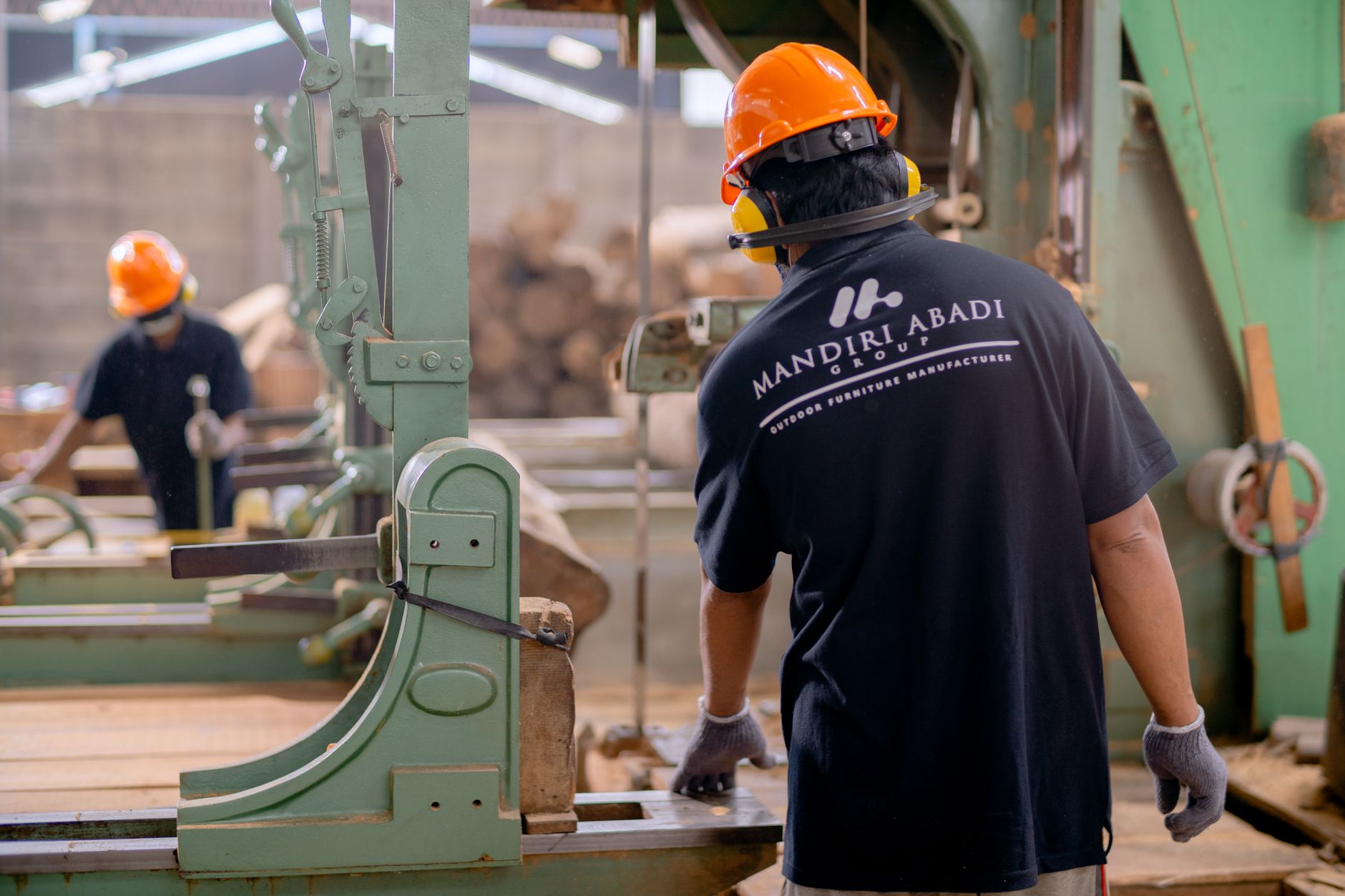
When talking about the factory of the future, the most common image is a brand-new building packed with robots, sensors, and automated lines designed from scratch. The problem is that the real economy does not work that way. There are roughly 280,000 factories in the United States, and a massive share of production will continue to rely for years on machinery installed long before the boom of artificial intelligence. Harmoni has raised $10 million to start with precisely these factories.
The Series A round is led by Bessemer Venture Partners. The startup, founded in 2023 by David Caputo and Adam Ellis, develops industrial tablets and software capable of connecting workers, instructions, orders, and machine data. The new HAL system adds an AI interface that allows users to query operational data and issue commands through a more natural layer.
The industrial challenge is brownfield
In industry parlance, a greenfield facility is built from scratch and can be designed around the most modern technologies. A brownfield site is the exact opposite: machines of varying vintages, proprietary software, paper-based workflows, and systems built across different eras must continue to work together.
This is where many promises of Industry 4.0 have collided with reality. Replacing a well-functioning machine simply because it lacks a modern API can be economically absurd. Technology must therefore adapt to the factory, rather than demanding that the factory be rebuilt to accommodate the technology.
A tablet as a bridge between worker and machine
Harmoni relies on hardware and software to build a common layer atop heterogeneous infrastructures. Workers can receive instructions, log events, and look up information without having to switch between paper sheets, terminals, and disparate applications. AI can then analyze this data flow and answer operational queries.
It is a less flashy form of digitization than a humanoid robot, but it can deliver immediate value. Cutting lost minutes, setup errors, or downtime across hundreds of shifts means increasing capacity without constructing a new plant.
Industrial AI must understand context
A general-purpose assistant can explain how a milling machine works. A useful industrial assistant must know which machine is currently running, which order it is producing, what tolerances are required, and what happened during the previous shift. The real edge stems from local operational data and deep integration.
Harmoni claims it is already working with about 40 customers, including aerospace firms. The scale remains modest, but it provides a tangible proving ground to see whether AI can transition from a demo into day-to-day factory routines.
Automation does not necessarily mean a factory without people
The company positions its system as a tool to augment workers' capabilities, not eliminate them. It is an essential distinction in manufacturing: many plants face shortages of skilled staff and a loss of knowledge when technicians with decades of experience retire or move on.
A system capable of capturing workflows, anomalies, and solutions can turn part of that tacit knowledge into organizational memory. In this way, AI also serves as a vehicle for transferring skills across generations.
American modernization runs through retrofitting
Industrial policy tends to celebrate new facilities for semiconductors, batteries, and advanced technologies. Yet national productivity also relies on thousands of far less visible plants producing components, machining services, and intermediate materials.
Making these facilities smart can have an enormous cumulative impact. It represents a different strategy from wholesale replacement: sensors, tablets, connectivity, and AI are introduced incrementally wherever they generate a measurable return.
The industrial future might look surprisingly old
One of the most compelling insights of this new AI wave is that innovation does not always demand brand-new hardware. A machine built thirty years ago can still cut metal flawlessly; what it usually lacks is a connection to the rest of the information ecosystem.
If Harmoni and similar companies can forge that link cost-effectively, the smart factory of the future might not look like an immaculate laboratory. It may still feature the same lathes, presses, and operators as today, but with a digital layer finally capable of understanding what is happening on the floor.


