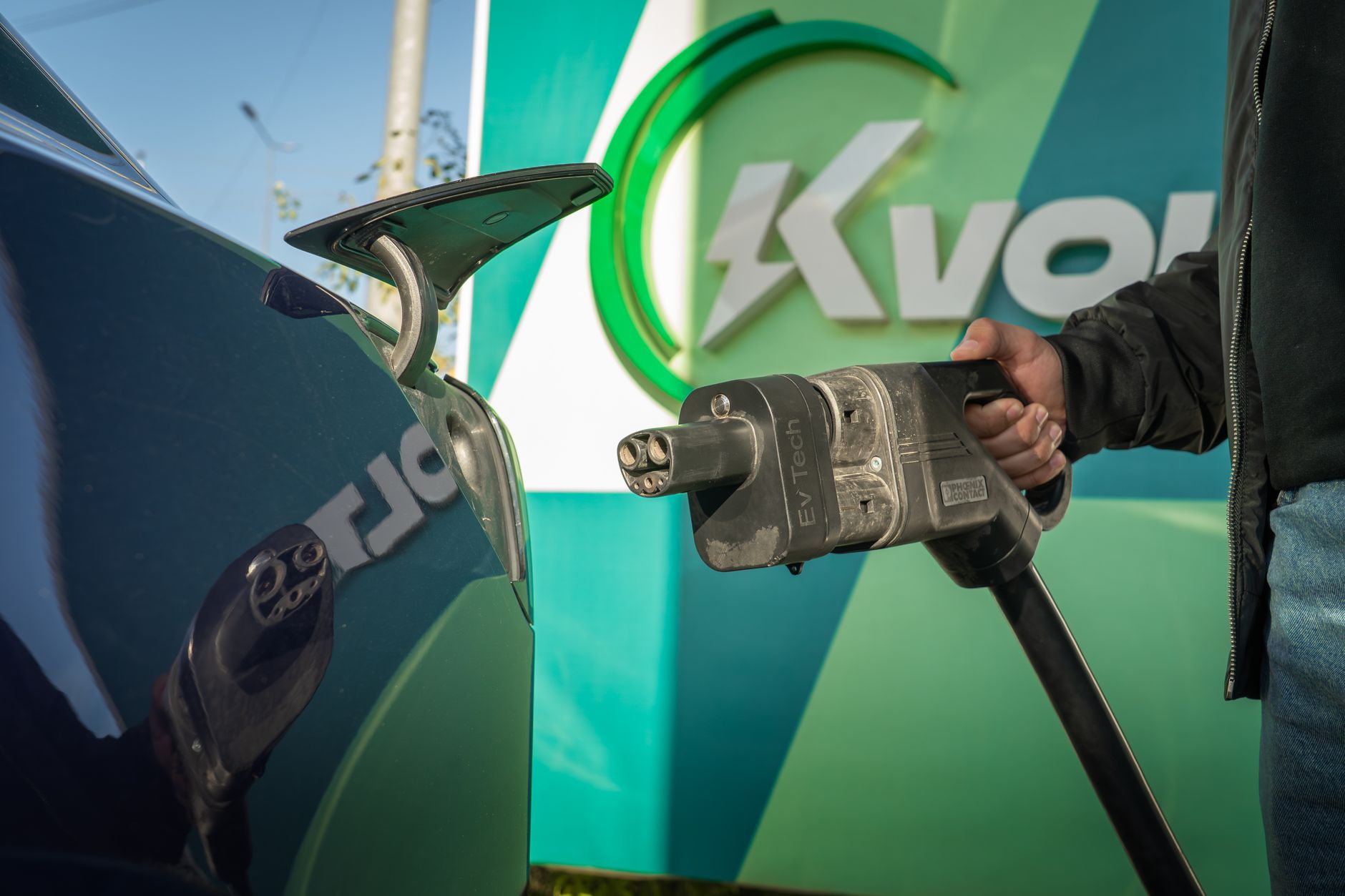
For those without a garage or a private outlet, electric cars have long been associated with a double compromise: greater reliance on charging stations and charging costs high enough to diminish, if not eliminate, the advantage over petrol. However, the analysis highlighted by InsideEVs indicates that, across Europe, an electric vehicle continues to cost significantly less to drive than an equivalent petrol-powered car, even when power is purchased from the public network.
This is a significant factor because it moves the debate beyond the highly favorable scenario of those who can charge at home at domestic electricity rates. While access to a private outlet remains a major practical and economic advantage, it cannot be a necessary condition for making electric vehicle ownership viable. In many European cities, a substantial share of motorists live in apartment buildings, park on the street, or cover distances that require frequent away-from-home charging. For this reason, the cost at charging points is one of the most concrete tests for measuring market maturity.
The finding does not mean that every public charging session is cost-effective, nor that differences between countries are negligible. Rates vary considerably depending on the operator, power output, subscription plan, time of day, and station location. Fast charging along a motorway, purchased without a dedicated plan, can be significantly more expensive than domestic electricity. Nevertheless, within the framework analyzed, the higher cost of public electricity is not enough to close the running-cost gap separating a battery-electric car from a petrol car in everyday use.
Consumption matters more than the price displayed at the charging station
The key lies in energy efficiency. An electric car converts a much higher proportion of available energy into motion compared to an internal combustion engine, which dissipates a significant portion of fuel as heat. As a result, the price per kilowatt-hour should not be viewed in isolation: it must be weighed against how many kilometers that kilowatt-hour allows the vehicle to travel and compared with the liters a petrol car needs to cover the same distance.
As a result, electric cars start with a structural advantage in variable costs. More expensive public charging reduces those savings, and high-power charging reduces them more than slow or AC charging, but does not necessarily wipe them out. This distinction is also helpful to avoid a common oversimplification: comparing the cost of a full tank of petrol to a single fast charge without considering energy consumption, real-world mileage, and usage patterns leads to shaky conclusions.
Running costs also include maintenance. An electric vehicle does not require servicing related to engine oil, filters, and numerous drivetrain components typical of internal combustion cars. This does not make battery-powered cars expense-free: tyres, brakes, suspension, climate control, and routine inspections remain, while damage and repairs can be costly. However, having fewer mechanical parts subject to routine maintenance helps keep expenses in check over the vehicle's lifespan.
The advantage does not eliminate differences among drivers
The European picture must be interpreted with caution. Fuel excise duties, electricity prices, charging network infrastructure, and incentives vary from one market to another. Driving habits also play a role: motorists who frequently travel long distances and rely almost exclusively on ultra-fast hubs will have a different cost profile from those who charge near home or work, perhaps leaving the car plugged in for a few hours.
Furthermore, the comparison mainly concerns day-to-day use, not automatically the total cost of ownership. The purchase price, financing interest, insurance, depreciation, and the potential installation of a wallbox can alter the value proposition for an individual customer. In some segments, particularly among small and affordable cars, the list price of an EV may remain higher than that of a comparable petrol model. The conclusion on running costs should not, therefore, be turned into a promise that an EV is always and unconditionally the cheapest option to own.
Yet this is precisely where another market reality comes into play: electric vehicles have become less expensive to purchase compared to just a few years ago, and the available selection has broadened. The European offering now spans hundreds of models, from city cars to SUVs, from sedans to light commercial vehicles. The arrival of more compact options and new competitors is ramping up price pressure, while the adoption of dedicated EV platforms allows automakers to gradually bring down certain manufacturing costs.
This is neither a linear nor a uniform decline. Carmakers' pricing strategies, tariffs, the battery supply chain, and local demand can all produce marked differences. But the electric car is no longer restricted to a handful of premium models: this evolution is essential if lower running costs are to translate into an accessible choice for a broader base of drivers.
An industrial and infrastructure issue
Operating cost data also directly impacts automotive industry strategies. For European carmakers, tasked with meeting fleet emission reduction targets and facing increasingly intense global competition, day-to-day cost-effectiveness is a compelling sales argument. If driving electric allows for a lower cost per kilometer even without a home charging point, one of the main hurdles perceived by urban dwellers is reduced.
The infrastructure challenge, however, remains unresolved. Stating that public charging can keep an EV cheaper than petrol is not the same as saying the experience is already seamless everywhere. The network needs to be widespread, reliable, clearly signposted, and transparent in its pricing. Charging points are required in residential neighborhoods, public car parks, and workplaces—not just fast-charging hubs along major highway corridors. For many users without a private parking space, the ability to charge near where they park their car matters far more than the peak power output advertised by a highway charger.
Pricing transparency will be just as important. Subscriptions, cross-operator roaming, tiered pricing, and extra fees can make it difficult to know in advance how much you will spend. A clearer, more competitive public network would help turn the potential advantage highlighted by the analysis into easily verifiable savings in everyday life.
The takeaway for prospective buyers, then, is less categorical but more useful than a slogan: you need to compare equivalent vehicles and simulate your actual usage, including the charging stations you would genuinely use. For Europe, the fact that the running-cost advantage holds up even beyond the bounds of private charging reinforces the notion that the electric transition depends on batteries and price lists, but equally on the economic and operational quality of public infrastructure.