The AI race is often framed around increasingly powerful GPUs, but a data center is not a single giant processor. It is a network composed of thousands of accelerators that must exchange immense amounts of data. As the cluster grows, the speed and energy required to move that data become a constraint almost as critical as compute capacity. Celero Communications has just raised $275 million to address precisely this problem.
The Series C, led by Atreides Management, Valor Equity Partners, and CapitalG, brings total capital raised to $415 million and values the company at over $3 billion. The company also claims to have validated the industry's first coherent DSP built on a 2-nanometer process.
An AI data center is primarily a communications machine
During the training of a large model, accelerators must continuously synchronize parameters and intermediate results. If chip-to-chip interconnects cannot keep pace, expensive GPUs sit idle. Increasing the number of processors without expanding network capacity therefore yields diminishing returns.
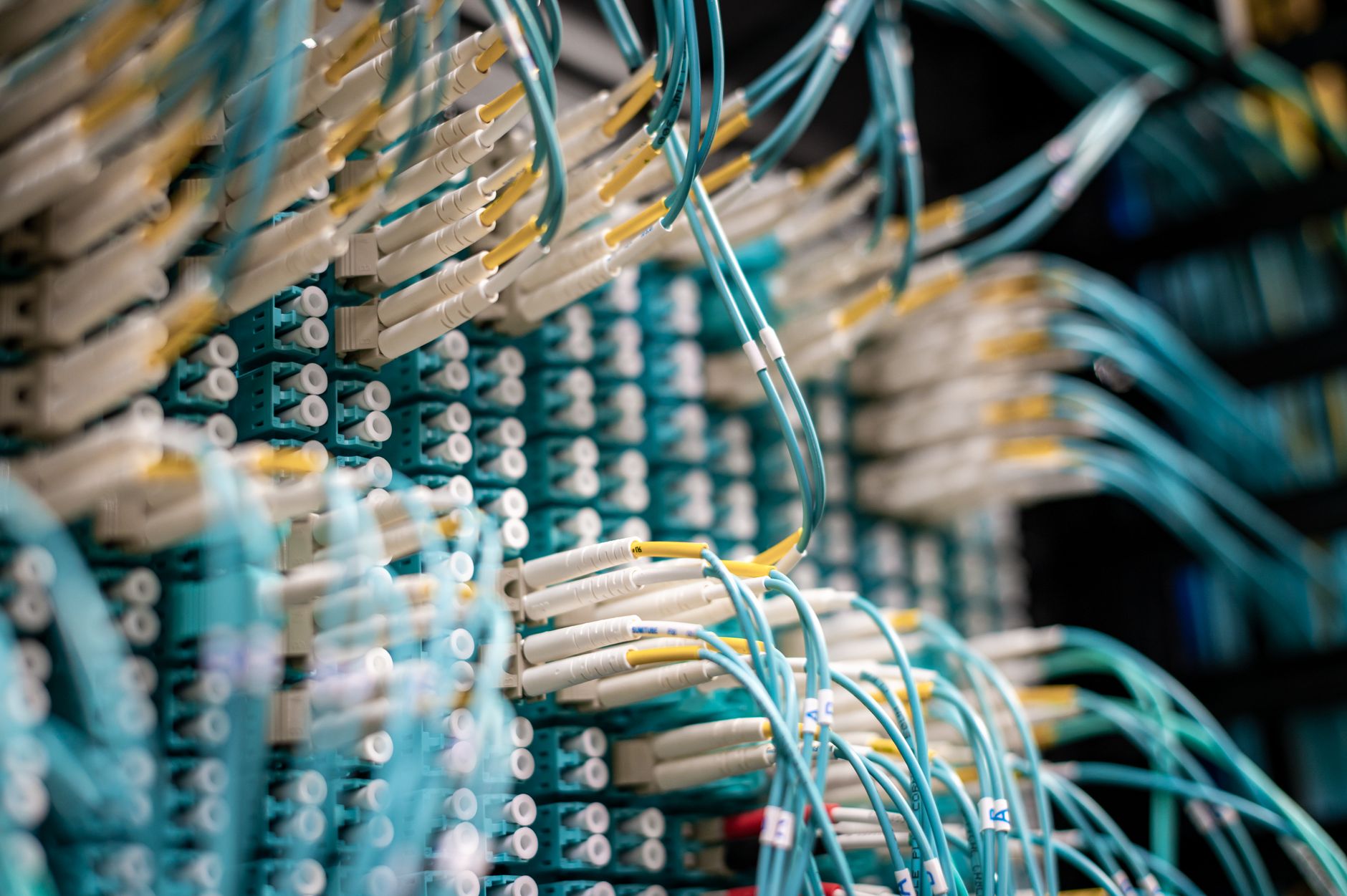
This is why optical interconnects are becoming strategic. Light can carry massive amounts of data over longer distances with more favorable energy characteristics than traditional electrical links.
What a coherent DSP does
A coherent digital signal processor encodes and reconstructs complex optical signals, compensating for distortions and allowing more information to travel through the fiber. Historically, this technology has been critical in long-haul telecommunications networks; the boom in AI clusters is now pushing these sophisticated techniques closer to the data center.
Celero outlines a roadmap from 1.6 terabits per second toward next-generation 3.2-terabit links. The 2-nanometer node is crucial because silicon efficiency becomes decisive when thousands of optical ports are operating simultaneously.
The invisible cost is energy per bit
Every piece of data moved consumes energy. Taken individually, power consumption is minuscule; multiplied across trillions of operations and thousands of accelerators, it becomes a massive line item. In AI data centers, reducing the picojoules required to transfer a bit can translate into megawatts saved across the infrastructure.
This explains why investors like CapitalG are backing companies that do not directly train AI models. The sector's expansion creates demand across the entire supply chain: memory, networking, optics, cooling, and power.
After GPUs, the battle moves to the network
Nvidia built part of its competitive moat by recognizing that a cluster is a system, not simply a collection of chips. Future competition will therefore not only be about which accelerator delivers the most operations per second, but which architecture can keep accelerators fully utilized at the lowest energy cost.
Coherent interconnects could become especially vital as AI campuses expand across adjacent buildings or data centers, spanning greater distances without sacrificing bandwidth.
Validation is not yet mass production
As always in hardware, proving out a working chip is a decisive step, but not the final one. Celero must turn validation into reliable manufacturing, achieve commercial yields, integrate with optical modules, and win customers in a market dominated by massive incumbents.
The $275 million round is intended to accelerate the company's roadmap, research, and production readiness. It is semiconductor capital: significantly higher than what a typical software startup requires because every physical spin costs time and money.
The AI scaling law also runs through fiber
If models continue to demand larger clusters, networking can no longer be treated as a secondary component. Economic value will shift toward those who can make thousands of processors behave as a single machine.
Celero is betting that part of this answer will come from photonics and coherent DSPs. It serves as a useful reminder: AI may appear intangible on a screen, but its growth hinges on profoundly physical challenges. Silicon, fiber, heat, and electricity are determining how fast artificial intelligence can continue to scale.


