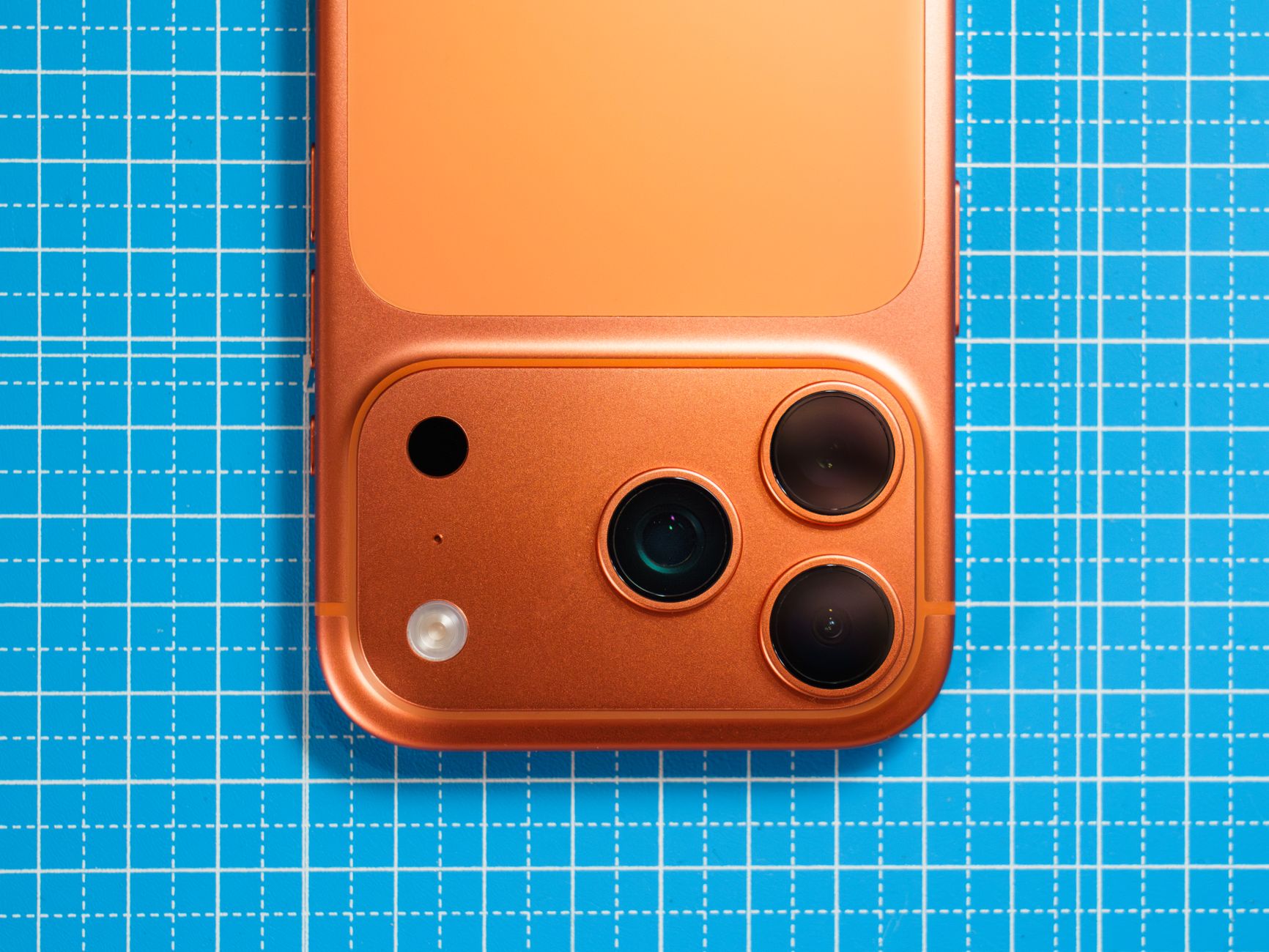
Apple has set October 23 as the commercial launch date for iPhone Duo, its first foldable smartphone. Starting at $1,999, the device is priced just above Google Pixel 11 Pro Fold and Samsung Galaxy Z Fold 8, two of the most direct benchmarks in the book-style foldable segment. Cupertino’s entry is therefore not aimed at making the category more accessible: the goal, at least based on the announced features, is to address several compromises that still affect smartphones with flexible internal displays.
The comparison with Android models goes beyond specifications, not least because different operating systems and software strategies make any direct equivalence partial. However, the profile of iPhone Duo is already fairly clear: Apple has opted for a passport-style folding device, with external and internal panels sharing similar aspect ratios, a hinge engineered to make the inner screen's crease nearly imperceptible, and designed functionality even when the phone is left partially open.
These elements highlight where Apple intends to compete. Over the years, Samsung, Google, and other manufacturers have built a category that is now mature in hardware terms, yet still split between devices that are slim when folded, external displays with varying degrees of usability, and internal panels that must balance size, durability, and visual quality. iPhone Duo enters this landscape without first-mover advantage, but with the potential to turn the foldable into a familiar format even for existing iPhone users.
A more consistent form factor between closed and open
The most evident aspect concerns the display sizes. iPhone Duo uses a 7.6-inch wide-angle internal OLED panel with a resolution of 1,878 x 2,670 pixels and a refresh rate of up to 120Hz. On the outside is a 5.4-inch OLED display at 1,398 x 2,034 pixels, also reaching up to 120Hz. Apple has therefore maintained a consistent aspect ratio between the two surfaces, a choice intended to make the transition from using the closed phone to the unfolded device feel less abrupt.
On Google Pixel 11 Pro Fold, the internal display grows to 8 inches, with a resolution of 2,076 x 2,152 pixels, while the cover screen is a 6.5-inch OLED at 1,080 x 2,342 pixels. Samsung Galaxy Z Fold 8 instead opts for a 7.6-inch internal Dynamic AMOLED at 1,848 x 2,448 pixels, paired with a 5.5-inch external panel at 1,248 x 1,972 pixels. All three phones reach up to 120Hz on both screens.
The Pixel, at least on paper, places greater emphasis on the external display: 6.5 inches is closer to the size of many traditional smartphones. iPhone Duo and Galaxy Z Fold 8 choose more compact cover screens instead. In Apple's case, the difference is not just about screen diagonal. The “passport” format provides a shorter, wider cover screen compared to the classic tall, narrow silhouette of some foldables. This can help with certain daily tasks—messaging, browsing web pages, navigating apps—without immediately requiring the device to be unfolded.
Inside, iPhone Duo does not attempt to surpass Pixel 11 Pro Fold in absolute surface area. Its 7.6-inch panel matches Galaxy Z Fold 8 in diagonal size and remains below the 8 inches of the Google model. Apple seems to have prioritized an area designed to place apps, content, and controls side by side while maintaining a geometry that mirrors the cover display. In-depth testing will show just how effectively this consistency is leveraged by iOS 27 and third-party apps.
The crease remains the proving ground
The hinge and the treatment of the internal panel are the other areas where Apple has focused its messaging. iPhone Duo uses a dedicated outer layer on the flexible display, paired with the unfolding mechanism, to minimize the center line until it is nearly imperceptible. The crease remains one of the features that most distinguishes a foldable from a conventional phone: it can be more or less visible depending on the viewing angle, perceptible to the touch when swiping, and tied, in public perception, to the fragility of the design.
This is not an issue ignored by the competition. Samsung and Oppo have already made significant strides on this front, while the entire industry has worked on hinges and materials to minimize the visual impact of the crease. In the case of iPhone Duo, however, Apple's claim will need to be verified through extended use: initial impressions regarding the panel's continuity are not enough to determine how the surface will hold up over time, nor do they tell the whole story about durability, repairability, or service costs. These are aspects on which currently available information does not yet allow for conclusions.
Apple also states that certain apps remain usable when iPhone Duo is partially folded. It is a mode already familiar in the foldable landscape, where the opening angle can turn the phone into a compact tabletop stand for video calls, photos, or multimedia content. Its real-world value, however, will depend on software integration and app availability: a system feature may be technically present, but it only becomes relevant if developers adopt it with interfaces designed for the two halves of the screen.
Premium pricing, an ecosystem to build
At $1,999, iPhone Duo does not attempt to undercut competitors on price. The price tag is slightly higher than Pixel 11 Pro Fold and Galaxy Z Fold 8, according to available comparisons, confirming that Apple views the foldable as a high-end product. For the company, simply offering a display that opens will not be enough: it will have to prove that the form factor adds tangible capabilities to the iPhone experience rather than just representing a more expensive variant of the traditional phone.
This is where iOS 27 comes into play, while Pixel 11 Pro Fold and Galaxy Z Fold 8 run Android 17. Apple's platform can offer continuity to those who already own an iPhone, iPad, Mac, Apple Watch, and the company's services, but transitioning to a new screen category requires dedicated work. Handling open apps, scaling interfaces, switching between external and internal displays, and operating the device when folded will be factors just as decisive as the quality of the panel.
Samsung starts with the advantage of experience: the Fold series has defined the book-style foldable segment for years and helped establish many of the usage habits associated with this category today. Google has its own reference model and can make changes directly to Android. Apple, for its part, can bring a vast base of iPhone users and strong influence over developers to the sector. The launch does not erase the differences between the three offerings, but it makes the comparison more significant: foldables cease to be an almost exclusively Android territory.
October 23 will therefore mark the start of the most concrete test. The specifications point to a product built around two priorities — continuity between the two screens and crease reduction — but they still do not answer everything that matters to a potential buyer. Battery life, camera quality, thermal performance, mechanism durability, real-world app compatibility, and the balance between thickness, weight, and everyday comfort will be decisive in understanding whether iPhone Duo can win customers over from established foldables or remain a niche offering in Apple's catalog.


