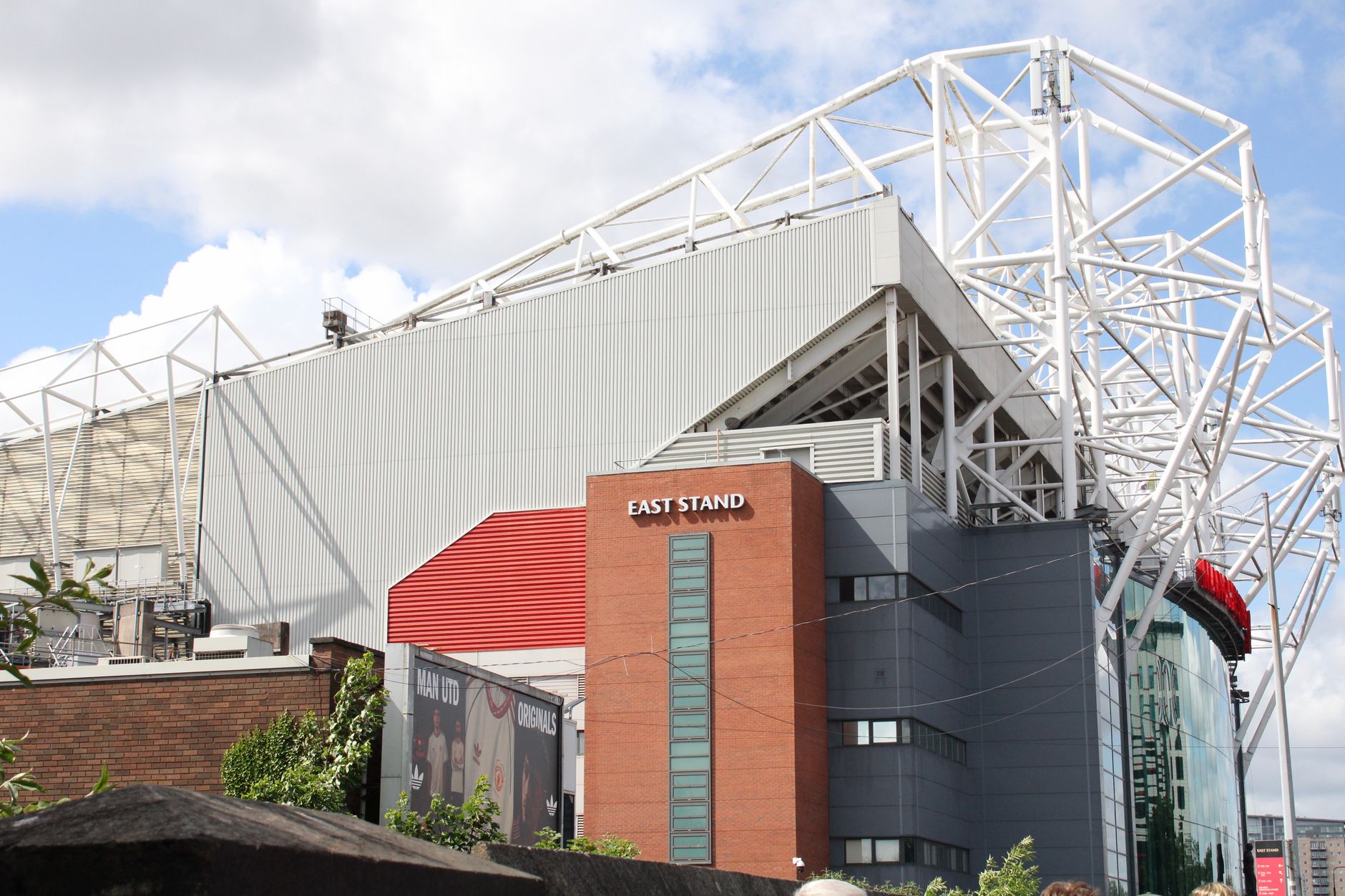
Manchester United will not make any immediate decisions regarding the future of Michael Carrick. The 4-4 draw against Aston Villa, secured after another comeback and only sufficient to avoid defeat, leaves the team in the relegation zone and worsens a start to the season already unprecedented in the club's Premier League history. Even so, the board has no immediate intention of changing managers.
The international break offers Old Trafford a window for reflection that the regular schedule would not have allowed. Carrick and his staff will return to work at Carrington, but the absence of most players on duty with their national teams limits on-pitch activity and enables the club to broaden its analysis. It is not just a matter of evaluating the manager's performance: the review concerns the overall functioning of the team and the reasons why a squad considered competitive has collapsed into such a delicate situation.
A crisis that numbers make hard to ignore
The most damning metric is the league table, because for Manchester United, sitting in the relegation places alters the stakes of every discussion. Added to this is a run of just one win in the last eleven matches and a particularly alarming defensive record: 30 goals conceded across all competitions, the worst total among teams in Europe's top five leagues according to data reported in recent hours.
The 4-4 draw at Old Trafford against Aston Villa encapsulated the contradictions of the moment. On one hand, the fragility of a side that concedes too much and struggles to control games; on the other, a resilience that, for now at least, suggests the squad is not entirely disconnected from its manager. A comeback was also required in the recent Champions League victory over Roma. These signs are not enough to absolve a struggling team, but they remain relevant in the internal assessment of the dressing room's mood.
Carrick took over from Ruben Amorim in January and, across 32 matches, achieved 15 victories. The previous season's finish weighs heavily in the club's assessment: third place in the league had secured Champions League qualification and reinforced the idea of a squad in rebuilding mode yet still capable of competing at the highest level. The transition from European qualification to a scrap in the lower half of the table is therefore far more jarring than a mere slump would suggest.
This is why the club appears to distinguish between Carrick's performance and that of the squad. The view attributed to the hierarchy is that the current group is delivering far below its potential. It is an important distinction, shifting the debate away from the dugout alone toward match preparation, defensive stability, handling adverse moments, and the individual consistency of players who should be chasing targets far loftier than avoiding relegation.
Why Manchester United is not rushing
The lack of a decision does not equate to a definitive backing. It does, however, indicate that, as things stand, Manchester United does not view a sacking as an automatic path to improvement. Changing managers in the middle of a crisis might satisfy the appetite for a visible shift, but it would also open a new transitional phase without any guarantee of resolving the issues that triggered such a dismal start.
Carrick's position still has several factors working in his favor. The first is his relationship with the supporters. As a former player who won eleven major trophies in a United shirt, including five Premier League titles and a Champions League, Carrick retains an emotional goodwill that rarely translates into the kind of stadium pressure often decisive in other dismissals. Following the clash against Aston Villa, backing from the crowd remained palpable despite widespread dissatisfaction with recent results.
The second element is the relationship with the team. Management believes the coaching staff still retains the players' backing, and that the two recent comebacks align with this assessment. It is no guarantee of a turnaround: a team can fight in individual matches while remaining exposed to the very same tactical and mental limitations. But for a club, there is a fundamental difference between a season derailed by poor form and a scenario where the manager has lost the dressing room.
The third factor is strategic. Manchester United has the opportunity to survey the managerial market, with Julian Nagelsmann and Eddie Howe cited as available managers potentially open to talks should an opening arise. However, the availability of alternatives does not mandate action. Appointing a new manager would mean defining a project, assessing whether the squad is built for his ideas, and bearing the cost of a change that could further destabilize an already compromised season.
The break as a checkpoint, not a solution
Over the coming days, the club will have to decide whether the crisis is salvageable with Carrick or if the gap between expectations and results has crossed an irreversible threshold. The assessment should start from a practical reality: it is not enough to acknowledge the team's commitment in comebacks if it continues to concede chances and goals at a rate incompatible with United's ambitions.
Once action resumes, the fixture list will leave even less room for patience. Every match will directly impact the table and the credibility of the decision to stick with the current staff. A convincing response would validate the club's caution and reinforce the notion that the season's trajectory is still fixable. Further missteps, by contrast, would turn the delay into even greater pressure on the board.
For Manchester United, the stakes extend beyond the fate of a manager closely tied to its history. Last season's third-place finish had revived prospects of sporting and commercial growth underpinned by the Champions League; a campaign spent in the lower half of the table upends that outlook, impacting squad planning, European competition revenue, and the ability to approach the transfer market with a recognizable project.
Carrick, therefore, remains in his post but stays under scrutiny. The international break will be used to assess responsibilities, alternatives, and room for recovery. No decision has been made, but the numbers make it clear that Manchester United cannot simply postpone it for long.