The result leaves the standings open, but the most significant figure of the night in Chicago was in the stands. At Soldier Field, Chicago Fire and Inter Miami finished 1-1 in front of 63,094 spectators, setting a new home attendance record for the Illinois club. The previous record had been set just last season, also in the fixture against Miami: a statistic that accurately reflects how the arrival of major European stars has altered MLS's ability to turn regular-season matches into major events.
On the pitch were Lionel Messi and Robert Lewandowski, two names that shared center stage in continental football for years and now represent, from different sides, a commercial and sporting driver for the American league. The match produced no winner, but it had its standout performers: Lewandowski put the Fire ahead in the 10th minute, while Casemiro leveled the score shortly after halftime, heading in a Messi cross from a corner kick.
For Messi, this was his 13th league assist of the season—the highest tally in the league—adding to his 18 goals. The Argentine is also the first player in MLS history to record more than 30 direct goal contributions in three different seasons. These figures explain part of the spotlight surrounding Inter Miami, but they do not account for the entire weight of a contest also shaped by the presence of other veteran stars and the strong response from local fans.
A goal apiece, with Brady decisive
Chicago started the match stronger and took the lead through pure center-forward play. Lewandowski delivered an acrobatic finish in the 10th minute, handing the Fire the margin needed to establish an orderly match and withstand the visitors' pressure. Miami, however, had already created significant chances in the first half: Germán Berterame forced Chris Brady into a diving save in the 16th minute, and the Fire goalkeeper notched three saves before the interval.
The second half changed the scoreline, but not the overall flow of the match. From a corner taken by Messi, Casemiro timed his aerial run to score the equalizer for Inter Miami. The Brazilian midfielder, like Lewandowski and Messi, brings to MLS a profile developed at the highest levels of European football; his goal came just as the Fire appeared to have effectively contained the Florida team's attacks.
Chicago, however, did not break in the closing stages. Brady finished the match with six saves, and his stops prevented Miami's comeback from being completed. Guillermo Hoyos, head coach of Inter Miami, singled out the opposing goalkeeper as the man of the match, emphasizing that while his team managed to generate chances from multiple areas of the pitch, they did not convert enough of them to secure all three points.
It is an important detail in the sporting reading of the evening. Messi's presence naturally raises expectations, ticket sales, and media attention, but the draw was preserved by a key performer for the Fire, preventing the match from turning into a mere showcase for the visitors. For Chicago, hosting a record-breaking event while securing a competitive result against one of the top teams reinforces the value of the operation both on and off the pitch.
The record and the value of an event match
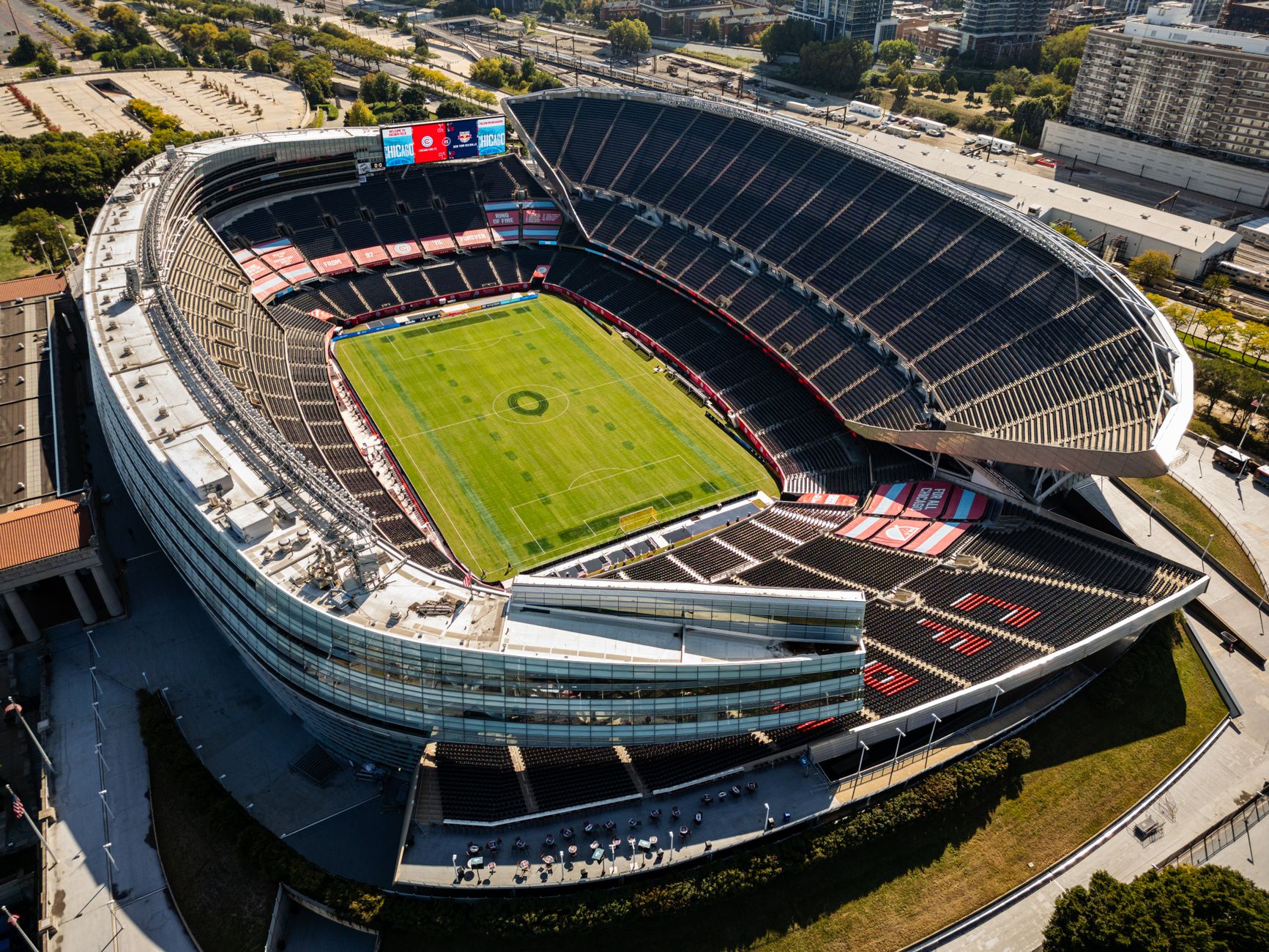
Soldier Field is the home stadium of the NFL's Chicago Bears and offers a far larger venue than the Fire's regular home. The decision to host the match against Inter Miami here responded to the demand generated by Messi and the concentration of globally recognized stars. The 63,094 spectators in attendance surpassed the club's previous record, set in the exact same fixture a year ago: this was not an isolated spike, but an occasion that Chicago has managed to establish as a major city event.
For MLS, instances like this gauge the real impact of its strategy to attract marquee players. The presence of Messi, Lewandowski, and Casemiro extends interest beyond the franchises' regular fanbases and makes utilizing larger venues viable. This does not mean every match can replicate these numbers, nor does star power automatically solve the league's competitive or infrastructural challenges. However, it indicates that certain fixtures now generate demand requiring a different operational scale.
The record attendance also holds specific significance for Chicago Fire. The club was able to showcase a marquee event of its own, with Lewandowski scoring and a squad capable of withstanding Inter Miami's pressure. In American soccer, where schedules feature extensive travel and the influence of individual markets varies widely, such an evening offers the club an opportunity to expand its visibility and strengthen ties with the local market, rather than simply coasting on the halo effect of Messi's squad.
The draw also prevented either rival from making significant ground. League leaders Nashville SC had lost to Toronto FC earlier that matchday, giving both Miami and Chicago the chance to close the gap. Instead, the 1-1 result keeps the chasing pack tightly grouped behind the top spot, albeit with vastly different margins for the two sides.
Standings and upcoming fixtures
Inter Miami sits in second place and will face Nashville this Saturday, trailing them by nine points. The fixture offers the Florida side a direct chance to narrow the gap, but also serves as a crucial test following an inconsistent spell: since early August, their record stands at one win, two draws, and four defeats. The point earned in Chicago halts a potential slide, without diminishing the need to regain consistency.
Miami's ambition remains high. The club is aiming to become the first team to win back-to-back MLS titles since the Los Angeles Galaxy in 2011–12. Pursuing this will require more than the moments of brilliance that set up Casemiro's goal or Messi's consistent output; it will demand a run of results far more solid than what has been recorded in recent weeks.
The Fire, on the other hand, faces a head-to-head clash with the New England Revolution this weekend. A victory would allow them to leapfrog the Massachusetts team and move up from fourth to third place. After hosting more than 63,000 people and securing a point against Miami, Chicago heads into its next fixture with a tangible opportunity in terms of both the standings and momentum.
The evening at Soldier Field brought these two elements together without one overshadowing the other. The record attendance will remain the most immediate takeaway; the box score, however, tells the story of a balanced encounter, decided by the quality of Lewandowski and Messi, but also by Casemiro's finishing and Brady's resilience. For the Fire, it offers an encouraging snapshot: the massive crowd turned out to see the stars, but witnessed a match in which Chicago played an undeniably leading role.