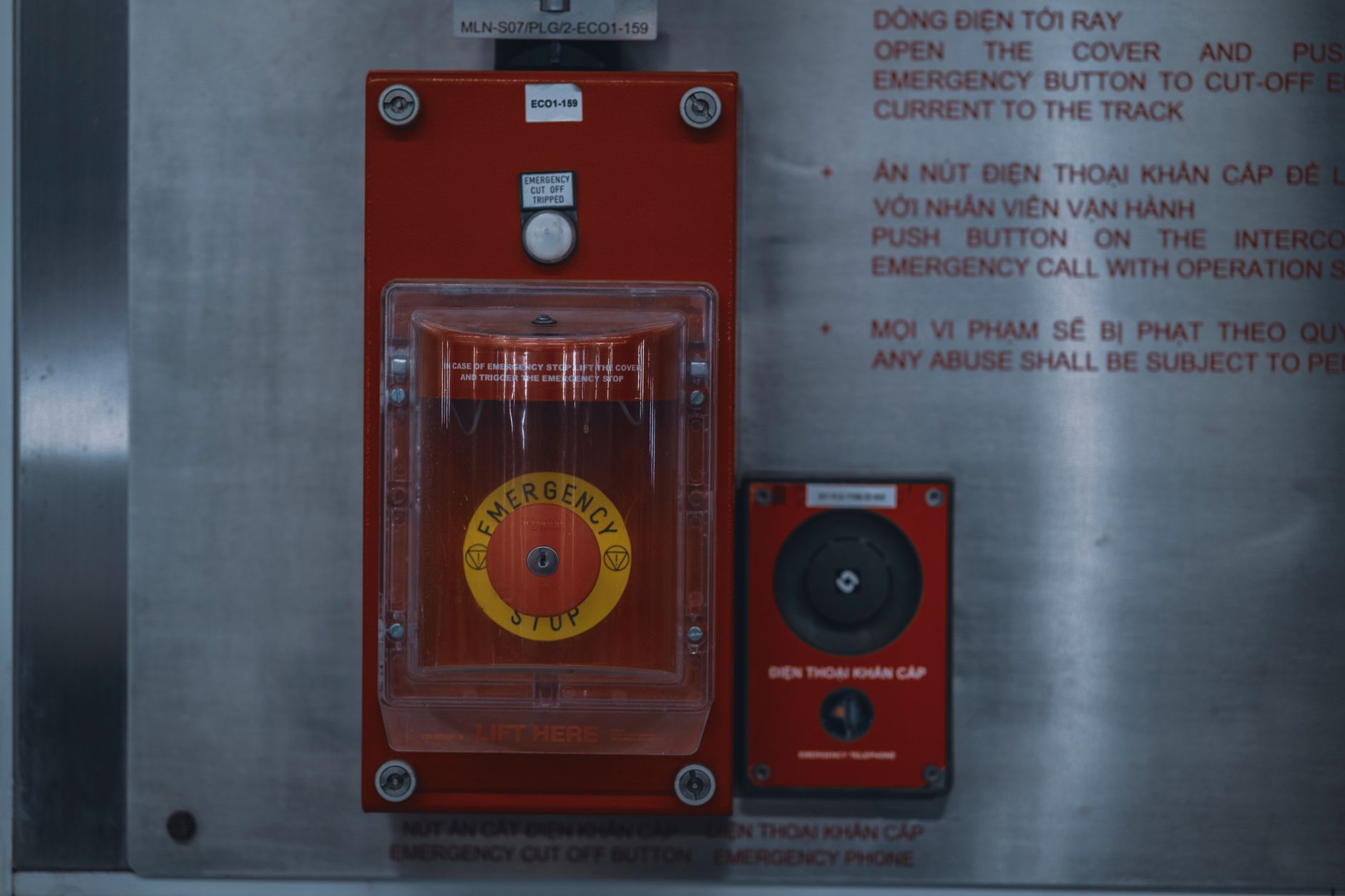
Satya Nadella wants advanced artificial intelligence systems to be designed around an unsettling premise: the model could fail, be compromised, or behave unexpectedly. That is why, according to Microsoft's CEO and Chairman, safety cannot rely solely on a model's internal behavior or on trust placed in its developer. What is needed are external, independent controls built around the model, including the ability for an authorized human to pause or terminate its activity while it is running.
In a post published on X on Saturday, Nadella described this capability as a kind of emergency brake. The metaphor encapsulates a broader proposal: to build a true trust architecture for systems operating with a degree of autonomy, rather than treating them as black boxes whose advice, answers, and actions are merely accepted or rejected after the fact.
The message comes as the debate over AI safety shifts from the mere quality of answers to a far more concrete operational question: who retains control when a model is hooked up to tools, enterprise data, external software, or processes capable of producing real-world effects? It is a question that particularly concerns AI agents designed to carry out complex, multi-step tasks, but also platforms that integrate generative models into sensitive workflows.
The model must not be the sole guardian of the rules
The core distinction drawn by Nadella is between the model and the system coordinating its work. The former produces probabilistic outputs: given the same instructions, it may provide different responses, misinterpret context, and exhibit behavior that is difficult to anticipate. The latter, often referred to as a harness, should instead enforce constraints, verification, and more predictable procedures.
Under this framework, permissions, operational boundaries, and safeguards should not remain implicit within the instructions given to the model. They should be made external, observable, and verifiable. In other words, simply asking a system not to take a certain action is not enough: the environment it operates in must actively prevent it from bypassing that limit, or require human intervention before proceeding.
Nadella pointed to the need to surround non-deterministic models with robust, deterministic system design, human controls, and reliable procedures. It is an approach that shifts the center of gravity from the promise of a perfectly aligned model to building multi-layered defenses. For Microsoft, which distributes cloud services and AI tools to enterprises and public administrations, the issue also carries industrial significance: large-scale adoption requires those using these systems to be able to reconstruct decisions, restrict access, and intervene whenever something deviates from expected behavior.
Readable traces, audits, and containment
Among the elements highlighted by the executive is documenting every significant action taken by the model, with human-readable and tamper-resistant evidence. It is not merely a matter of maintaining a technical log. An understandable trace allows security managers, auditors, and authorized users to see what steps were carried out, which tools were invoked, and on what basis a specific action took shape.
The proposal also includes continuous system testing, independent checks, auditability, model diversity, containment mechanisms, and incident reporting. This last point is crucial because problematic episodes should not remain confined to the internal evaluations of the companies developing or operating the models. A disclosure system, if established with shared criteria, can help the industry identify recurring vulnerabilities and remediate them before they are replicated across new products.
Nadella also suggests treating both proprietary and open-weight models as a potential insider risk. It is a formulation that echoes practices already widespread in cybersecurity: automatic trust is never granted to users, components, or processes simply because they sit within a perimeter considered secure. Every request must be subject to verification, and every potentially critical capability must be granted with caution.
Applied to AI, this framework does not mean arguing that every model is hostile. It means accepting that errors, hallucinations, malicious prompts, or simply unforeseen conditions can lead to unintended consequences. Containment therefore becomes a property of the system as a whole: what data the model can access, what actions it can take, what approvals it must obtain, who can shut it down, and what information can be used to reconstruct what happened.
A stance in the debate over the pace of development
Nadella's remarks come amid an increasingly visible debate among executives, researchers, and governments. Several industry figures, including Anthropic CEO Dario Amodei, have called for greater caution in developing frontier models. Figures such as Bill Gates, Sam Altman, and Elon Musk have also raised questions over time about safety protocols and the risks associated with unchecked acceleration.
Not everyone, however, places the same weight on extreme scenarios or considers it advisable to slow down the race. President Donald Trump has repeatedly dismissed concerns over AI-driven human extinction, focusing instead on the need for the United States to maintain its lead over China. His administration has nonetheless launched an AI Force with a mandate that includes countering malicious actors and supporting the industry.
Nadella's argument does not necessarily equate to a call to halt research. Rather, it suggests that advances in capabilities must be accompanied by operational standards. The distinction is significant: a slowdown concerns how quickly new models are developed and released; external controls, audits, and shutdown mechanisms concern the conditions required to deploy them responsibly.
This approach may be easier to translate into corporate and regulatory environments because it speaks to concrete tools: audit logs, authorized roles, access limits, testing, and incident procedures. Yet the issue of implementation remains open. A stop button is only valuable if it is truly decoupled from the system it is meant to halt, if the person using it holds clear authority, and if the shutdown does not leave other autonomous processes running elsewhere.
Trust as a property of the infrastructure
Perhaps the most significant sentence in Nadella’s post is the one that upends the traditional concept of reliability: the most trustworthy system is not the one built on the model deemed most reliable, but the one engineered so as not to rely blindly on the model itself. It is a logic familiar to mission-critical systems engineering, where redundancy, segregation of duties, and independent checks are designed precisely to prevent a single component from becoming a point of failure.
For users and organizations experimenting with generative AI, the takeaway is practical. Before granting an agent access to email, files, source code, payment systems, or enterprise applications, boundaries and accountability must be established. The advantage gained by automating a process can quickly diminish if it is impossible to determine what the system did or to halt it reliably.
Nadella’s remarks do not announce a new Microsoft product, nor do they define an industry-wide standard. However, they signal a clear shift in the rhetoric of one of the world's leading providers of AI infrastructure and services: the safety of advanced models will not be judged solely on their capabilities, but also on the quality of the guardrails surrounding them and the ever-present ability to return control to a human.