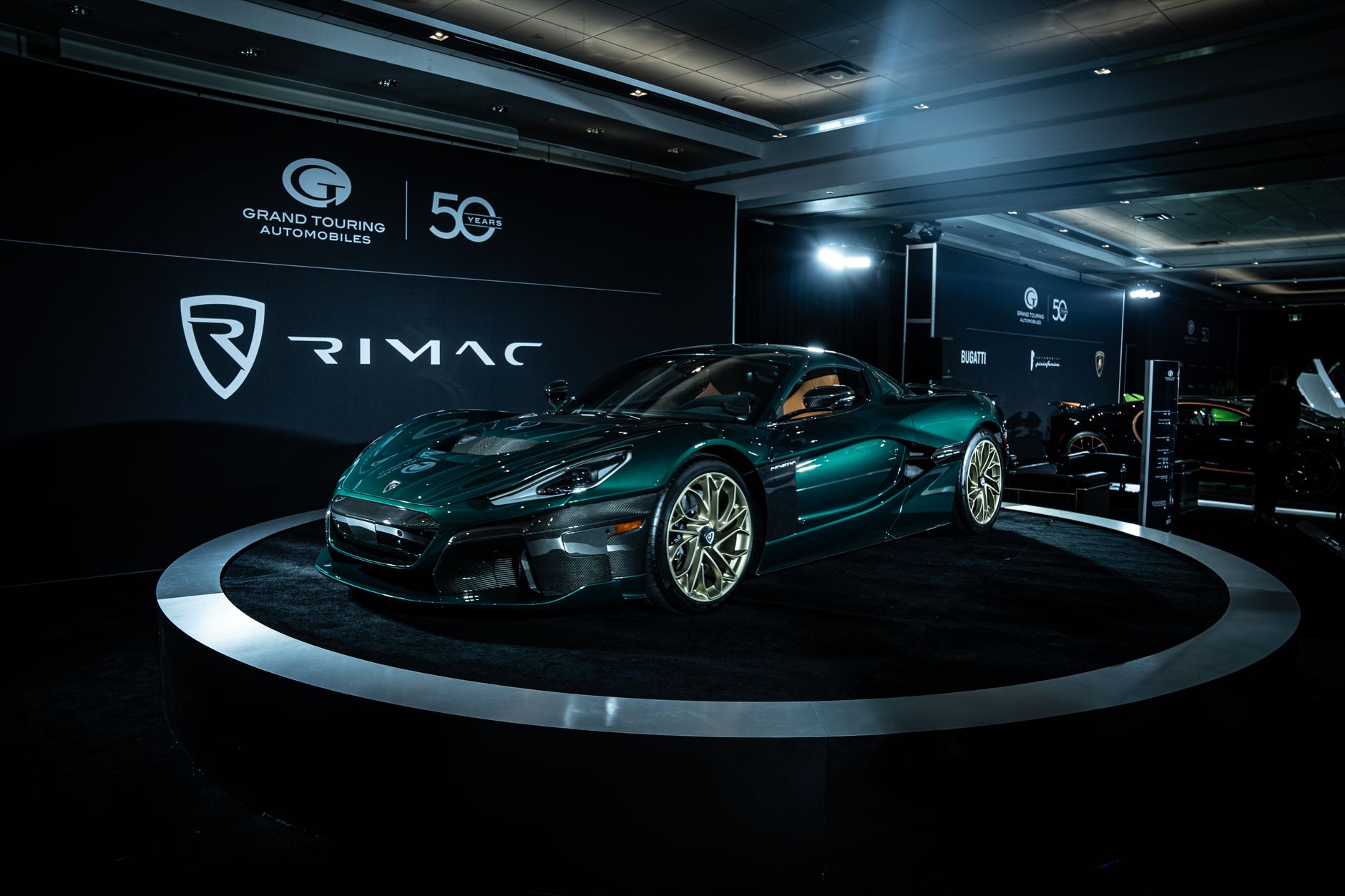
Porsche has completed the sale of its stakes in Bugatti Rimac and Rimac Group, generating approximately one billion euros. The transaction closes a chapter that began in 2021, when the Stuttgart-based automaker helped establish the joint venture bringing together the French hypercar brand and the electric expertise developed by Mate Rimac. Today, however, the group's priority is no longer maintaining an equity foothold in two of the most exclusive players in high-performance automotive: it is recovering margins, freeing up resources, and making sustainable a product plan that has been revised multiple times.
The value of the divestment is stated at around 1.2 billion dollars, equivalent to one billion euros. Porsche thus exits its 45% stake in Bugatti Rimac and its 20.6% holding in Rimac Group. The buyer is a consortium led by HOF Capital, which also includes BlueFive Capital; Rimac Group will continue to manage the Bugatti Rimac joint venture alongside the new investors.
According to Porsche, this is not a sale driven by a liquidity crisis. The company states that it still maintains a solid balance sheet and high net liquidity. But that distinction matters only up to a point: one billion euros immediately available tangibly alters the room for maneuver of an automaker emerging from a very difficult financial year and tasked with concurrently funding combustion, hybrid, and electric products.
A divestment that comes after a very tough year
The 2025 results explain the timing of the deal. Porsche's revenues fell by 9.5%, while deliveries dropped by 10.1%. Even sharper was the contraction in operating profit, which plummeted from 5.64 billion euros to 413 million: a 92.7% decline compared to the previous year.
Those figures were impacted by approximately 3.9 billion euros in extraordinary charges. The largest share, 2.4 billion, was tied to reviewing the product strategy and restructuring the corporate organization. Another 700 million was linked to battery-related activities and an additional 700 million to tariffs in the United States. Compounding this picture is weak Chinese demand, exacerbated by particularly intense price competition in electric cars.
For a brand built on profitability and pricing power, the combination is delicate. Tariffs are squeezing the viability of sales in the United States, China no longer offers the same capacity to absorb high-margin models, and the electric transition requires investments that cannot be addressed with a single architecture or a single powertrain type. Porsche has therefore initiated a repositioning that expands the coexistence of internal combustion, hybrid, and electric engines, rather than banking on a linear, faster transformation.
The divestment of its stake in Bugatti Rimac must be viewed within this context. It does not eliminate operational challenges, nor does it neutralize external factors that Porsche expects could continue to weigh even into 2026. However, it provides additional capital as the company curbs costs, reorganizes its industrial priorities, and updates its lineup to reflect demand that is less predictable than anticipated just a few years ago.
Cash flow improves, but does not solve the margin issue
Porsche has already revised upward its forecast for the automotive net cash flow margin in 2026, raising it from 3–5% to 5.5–7.5%, precisely in light of the transaction. A portion of 250 million euros will be allocated to pension obligations. The remainder boosts financial flexibility at a stage when the group must carefully choose where to focus development, production, and capital.
This is the most immediate consequence of the sale: Porsche transforms minority stakes into directly usable liquidity. The company did not hold control of either Rimac Group or Bugatti Rimac, but their presence in the portfolio represented an industrial and financial bet on the hypercar segment and ultra-high-performance electric technologies. Under favorable market conditions, that bet could bolster the brand’s positioning without weighing on its operational scope. In the current climate, liquidity offers more immediate utility.
The move also signals a more selective approach to shareholdings. Porsche must fund its own transformation before maintaining exposure to external companies, however prestigious they may be. The proceeds generated can be directed toward the broader product plan, cost containment, and managing an energy transition that is not progressing at the same pace across all geographic regions.
Based on the available information, there is no indication of an abandonment of sports cars or electrification research. Rather, the way Porsche allocates its resources is shifting. The company retains the need to compete in performance, driving dynamics, and powertrain technology, but considers it more urgent to strengthen the operations that directly carry its badge and drive its volumes.
Bugatti and Rimac continue without Porsche among their shareholders
For Bugatti Rimac, the ownership change does not translate into a shift in industrial leadership. Rimac Group will remain at the helm of the joint venture, now joined by the incoming investor consortium. This is a significant factor because the company, established in 2021, has a distinct balance: Bugatti brings a century-old heritage and radically exclusive positioning, while Rimac built its reputation on high-performance electric powertrains and related engineering expertise.
Porsche's exit removes a partner that helped build the structure from the ownership roster, but does not in itself indicate a shift in the market positioning of the two brands or the management of the joint venture. Continuity under Rimac Group is therefore the central takeaway for customers, suppliers, and the hypercar market: the deal reshapes the financial structure, but does not herald a new product strategy for Bugatti Rimac.
For Porsche, however, the split represents far more than routine investment rotation. It comes as the carmaker undertakes a review of its industrial model under the pressure of several compounding factors: massive investments, volatile EV demand, Chinese competition, and trade tensions. The divestiture will not wipe out the 3.9 billion in extraordinary charges recorded in 2025, nor will it single-handedly offset the steep decline in operating profit. However, it bolsters the company's ability to support its restructuring without siphoning further resources away from the core business.
In the coming months, execution will above all determine the real impact of this move. Porsche will have to demonstrate that expanding its lineup across internal combustion, hybrid, and electric can protect margins without excessively increasing industrial complexity. It will also have to contend with tariffs and geopolitics, which, according to its forecasts, will remain a drag in 2026. The proceeds from Bugatti Rimac are not a definitive solution, but they give Porsche more time and more options at a moment when both are valuable.


