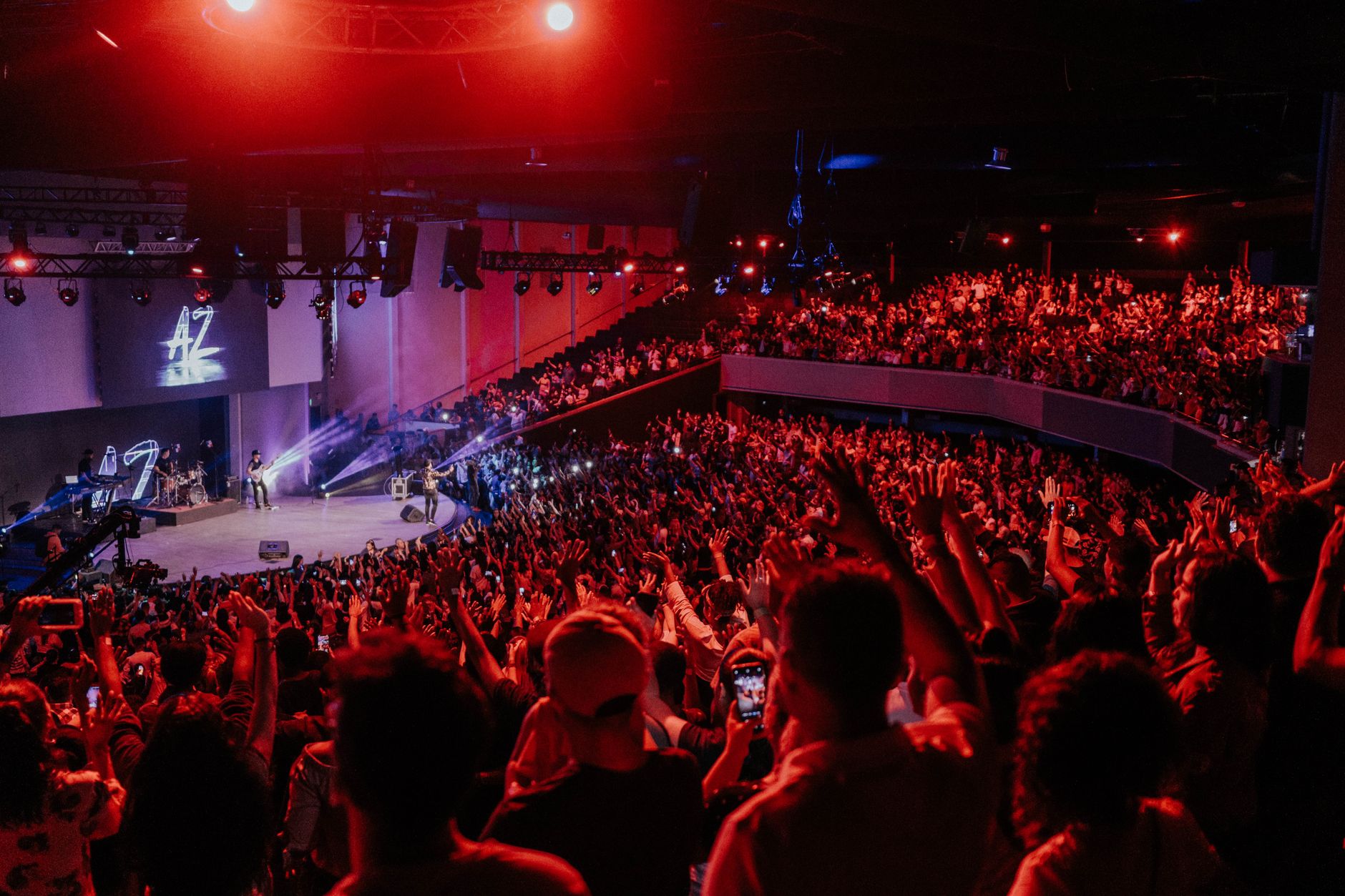
The 2026 Rock & Roll Hall of Fame ceremony, held on Saturday, November 14 at the Peacock Theater in Los Angeles, chose to showcase its new class primarily through live stage performances. Rather than a formal sequence of speeches and award presentations, it was built around encounters between artists from different eras, repertoires brought into dialogue, and surprise appearances kept secret until the very last moment. Television viewers will have to wait: the special, recorded during the evening, will air on ABC on December 8 and arrive on Disney+ the following day.
Opening the show was U2, previously inducted into the Hall of Fame in 2005. The Irish band was not among the honorees for this edition, but their presence gave the evening an unexpected start: Bono and company performed “Silencio”, from their new album Carnaval De Luz, along with “Pride (In the Name of Love)”. For “Silencio”, the group was joined on stage by extras in riot gear equipped with shields, a visual element that marked a performance billed as a surprise.
The appearance comes right around the release of Carnaval De Luz and during U2's fiftieth anniversary. It is also a notable detail for the Hall of Fame machine: an event celebrating well-established careers can maintain contemporary relevance when guest artists present new material alongside the tracks that defined their catalog. In this case, U2's return did not carry the tone of a commemoration, but that of a band still actively driving a new album cycle.
Joy Division and New Order, an honor split between memory and absence
The most delicate segment of the evening involved Joy Division and New Order, inducted jointly into the class of 2026. The two lineups are formally distinct, but their history is inseparable: following the death of Ian Curtis in 1980, the surviving members of Joy Division carried on, giving rise to New Order. After two nominations, in 2023 and 2025, the recognition has finally arrived for an artistic trajectory spanning post-punk, electronic music, and club pop, impossible to reduce to a single identity.
Trent Reznor introduced the two bands. On stage, however, the only historic member of New Order present was Peter Hook. The bassist, who left the band in 2007 and was previously involved in a lengthy legal dispute with his former bandmates over royalties, did not share the performance with them. Stephen Morris and Gillian Gilbert opted out of attending while Gilbert battles cancer; Bernard Sumner was not present. Hook did not mention the other members in his speech and, after the ceremony, reiterated that he cannot envision a reunion under current conditions.
Their absence did not stall the musical performances. Chino Moreno of Deftones sang “Love Will Tear Us Apart”, with Hook on bass, while Lauren Mayberry of Chvrches took on lead vocals for “Bizarre Love Triangle”. The choice of the two songs did not attempt to artificially reconstruct a lineup that was not there; instead, it showcased the two best-known bookends of a shared journey, from the dark tension of Joy Division to the electronic pop songwriting of New Order.
For the Hall of Fame, it is a solution that also serves an industry purpose. The induction ritual thrives on legacy catalogues, but handing performances over to contemporary musicians can bring those songs back to an audience encountering them outside their original context. Moreno and Mayberry were not mere stand-ins for the absent members: they represent two distinct scenes and audiences, called upon to engage with tracks that continue to circulate across playlists, live sets, and the imagination of those who came after.
An evening built on the surprise factor
Secrecy surrounded much of the programme. Reznor, Deftones, and Mayberry had not been announced in advance, and there was no live stream of the ceremony. The event took place before an in-person audience, with attendee videos and eyewitness accounts beginning to document its key moments in the hours that followed. The model differs from that of major music shows designed for real-time online commentary: here, distribution is staggered, with the television broadcast serving as the primary destination.
Alongside U2, the celebration of Joy Division/New Order, and Reznor, the evening featured performances or appearances by Red Hot Chili Peppers, Usher, Cynthia Erivo, Sienna Spiro, and Aerosmith. Spiro performed a track by Sade, another artist inducted in the 2026 edition. The program thus relied on the familiar mechanism of cross-tributes, but with a curated selection capable of bringing together rock, R&B, pop, and alternative sensibilities without framing the Hall as the domain of a single genre.
This year's class includes Billy Idol, Iron Maiden, Joy Division/New Order, Luther Vandross, Oasis, Phil Collins, Sade, and Wu-Tang Clan, alongside the other names featured in this edition. It is a roster that clearly demonstrates how the term “rock and roll,” in the Hall of Fame's usage, has long served as a historical umbrella rather than a stylistic boundary. Placing Vandross and Wu-Tang Clan alongside Iron Maiden, Oasis, and Sade does not erase the differences between their respective careers; rather, it makes explicit the criteria by which the institution attempts to measure influence across popular music.
The value of performances beyond celebration
Induction ceremonies have an obvious limitation: they often arrive when a catalog is already settled and a band no longer exists, or when personal relationships make a reunion impossible. The case of Hook and New Order proves as much. Precisely for this reason, the live component remains decisive. A well-chosen cover, an unexpected guest, or a duet prevents the event from devolving into mere archive footage and retrospective speeches.
The Rock Hall can thus offer established artists a platform to reaffirm their contemporary relevance while simultaneously using younger performers to bring a musical legacy back into circulation. This is not a neutral process: a reinterpretation can shift the spotlight onto a specific phase of a career, favor a hit over a lesser-known track, and shape how a new generation will remember a catalog. Yet it is also what keeps an institution of this kind from speaking exclusively to its own past.
The next step will therefore be the televised version. ABC will air three hours of performances and selected highlights from the evening, from 8 to 11 p.m. on the East Coast of the United States, ahead of its streaming availability on Disney+. It remains to be seen how much of the complexity that emerged at the Peacock Theater — including the absences in the Joy Division/New Order chapter — will make it into the final cut. For those following the music industry, the result matters just as much as the live event: it is through subsequent distribution that these performances become a public narrative, reignite interest in back catalogs, and define the image of a new Hall of Fame class.


