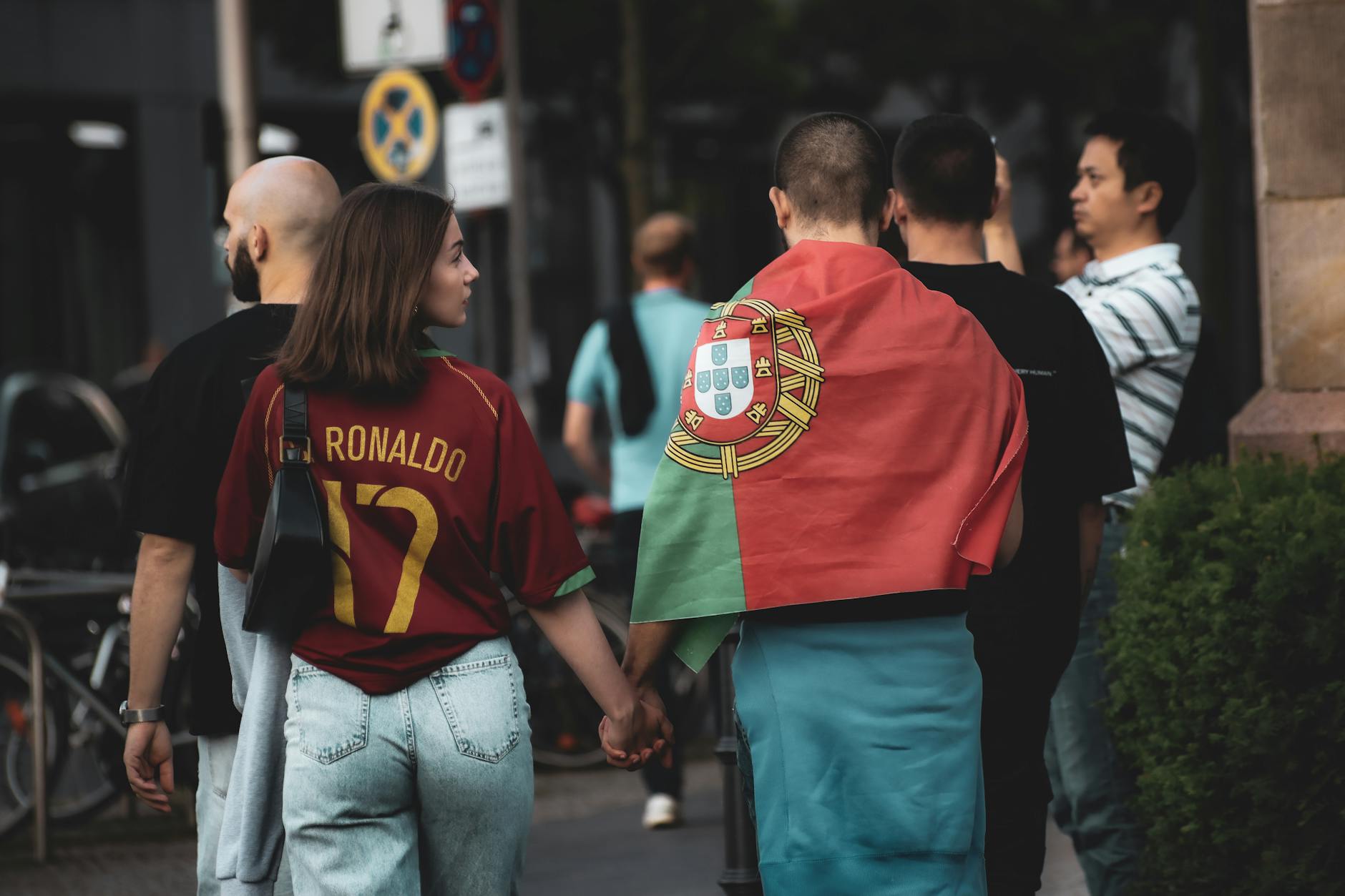
In a video message shared on social media, Cristiano Ronaldo announced his retirement from the Portugal national team. This brings to an end a journey that began in August 2003 and spanned twenty-three years, during which the forward transformed the Seleção into the defining team of his career: 234 appearances and 146 goals, both all-time records in men's international football.
His departure also closes a historic chapter for Portugal. Before the Ronaldo era, the national team had never won a major trophy; with him as captain, they secured the 2016 European Championship and two Nations League titles, in 2019 and 2025. The farewell message went viral immediately: within a few hours it garnered millions of views, while the post on Instagram surpassed three million likes in the first hour according to ANSA.
In the video, Ronaldo looks back on his journey without focusing solely on the numbers. He speaks of ambition, the desire to win and leave a mark, but also acknowledges the mistakes made along the way. It is a different tone from the one that has often accompanied his public image, built on relentless competition and the pursuit of records. His exit, however, does not erase the tensions that had marked the preceding weeks.
A retirement shaped by friction with Jorge Jesus
The decision comes just over a month after a public clash with head coach Jorge Jesus. In September, Ronaldo spent the entire Nations League match against Norway on the bench; the incident led the forward to leave the training camp, also disputing the expectations surrounding his role. The federation subsequently suspended him for one month.
It would be unfair to reduce a relationship spanning more than two decades to that final clash, but the incident highlighted an issue Portugal had been grappling with for some time: how to manage the twilight international years of a champion still capable of scoring, yet inevitably less central to tactical build-up compared to his prime. In recent years, the debate surrounding the national team had focused precisely on the balance between the captain's symbolic stature and the need to provide continuity for a younger generation.
Ronaldo's decision now removes an awkward variable. Portugal loses its historic leader and the player with the greatest ability to attract international attention, but gains a more defined tactical framework. For Jorge Jesus, and for whoever comes after him, there will no longer be a need to balance established hierarchies, playing time, and the management of a figure who for years has represented far more than just a forward.
The value of a shirt beyond the pitch
In Ronaldo's case, the national team, athletic performance, and economic value have always been closely intertwined. The Portugal shirt helped cement CR7 as a global brand: every tournament, record, or image wearing the captain's armband fueled a presence reaching far beyond European football. Social media was also the channel chosen for this announcement, consistent with a direct relationship with the public that has gradually reduced the mediation of clubs, federations, and traditional media.
According to estimates published by Forbes, Ronaldo has a net worth close to 1.2 billion dollars and is among the few active athletes to have achieved billionaire status. For the 2026-27 season, Forbes reports total earnings of around 300 million dollars: roughly 250 million coming from his contract with Al-Nassr, with the remaining 50 million tied to sponsorships and commercial activities.
Retiring from the national team does not, therefore, equate to stepping away from professional football, nor to an automatic drop in his commercial clout. Ronaldo will continue playing for Al-Nassr in the Saudi Pro League, maintaining the most lucrative part of his football career. What does change is the brand's narrative calendar: international breaks, the European Championship, and the World Cup disappear as major recurring milestones around which to concentrate visibility, content, and campaigns.
For Portuguese football, the impact is twofold. On the one hand, the federation loses the most recognizable face in its modern history, an athlete capable of drawing crowds and attention in any market. On the other hand, it can build the messaging for this new chapter around a squad less reliant on a single figure. It is a delicate transition: Ronaldo’s profile gave Portugal a global reach that is hard for any single successor to replicate, but a national team cannot build its future around a permanent exception.
The records remain, the role changes
The sporting record is difficult to dispute. Ronaldo holds the all-time records for appearances and goals in men’s international football, having bridged generations of teammates, head coaches, and technical cycles. Euro 2016, the first major trophy in Portuguese history, remains the collective turning point of his international career. The Nations League campaigns then confirmed Portugal's place at the top of continental football during an era when the national setup boasted greater technical depth than ever before.
At the same time, this farewell comes when his competitive centrality was already being questioned. From undisputed captain and icon, Ronaldo had also become a tactical dilemma: how much playing time to grant him, how to distribute attacking responsibilities, and how to preserve the identity of a squad undergoing renewal. Recent matches played without him had fueled this debate, showcasing credible alternatives in attack, including Gonçalo Ramos.
In his video message, Ronaldo expressed his gratitude to his teammates, managers, federation staff, family, and fans. He underscored his bond with Portuguese communities abroad, for whom the national team serves as a shared sense of belonging. This is a crucial element in understanding the scale of his farewell: his international career coincided with the consolidation of Portugal’s cultural presence in global football, providing the diaspora with an instantly recognizable symbol.
The question of his final appearance remains open
It is not yet clear whether Ronaldo will play a farewell match. In October, he had referred to the possibility of one or more final appearances, but in his announcement video he spoke about the end of his journey on the pitch with the national team without specifying a date. Portugal has two Nations League matches scheduled in November, against Denmark and Norway, but there is no confirmation of his potential involvement.
What is certain is that leaving the Seleção does not mark the end of Ronaldo's career. With Al-Nassr, his personal pursuit of the 1,000-goal milestone remains ongoing, with sources reporting that he is just fifteen goals shy of the target. At the national team level, however, the transition is already underway: Portugal will have to prove it can maintain its ambition and competitiveness without the player who, for twenty-three years, embodied its most prominent face.