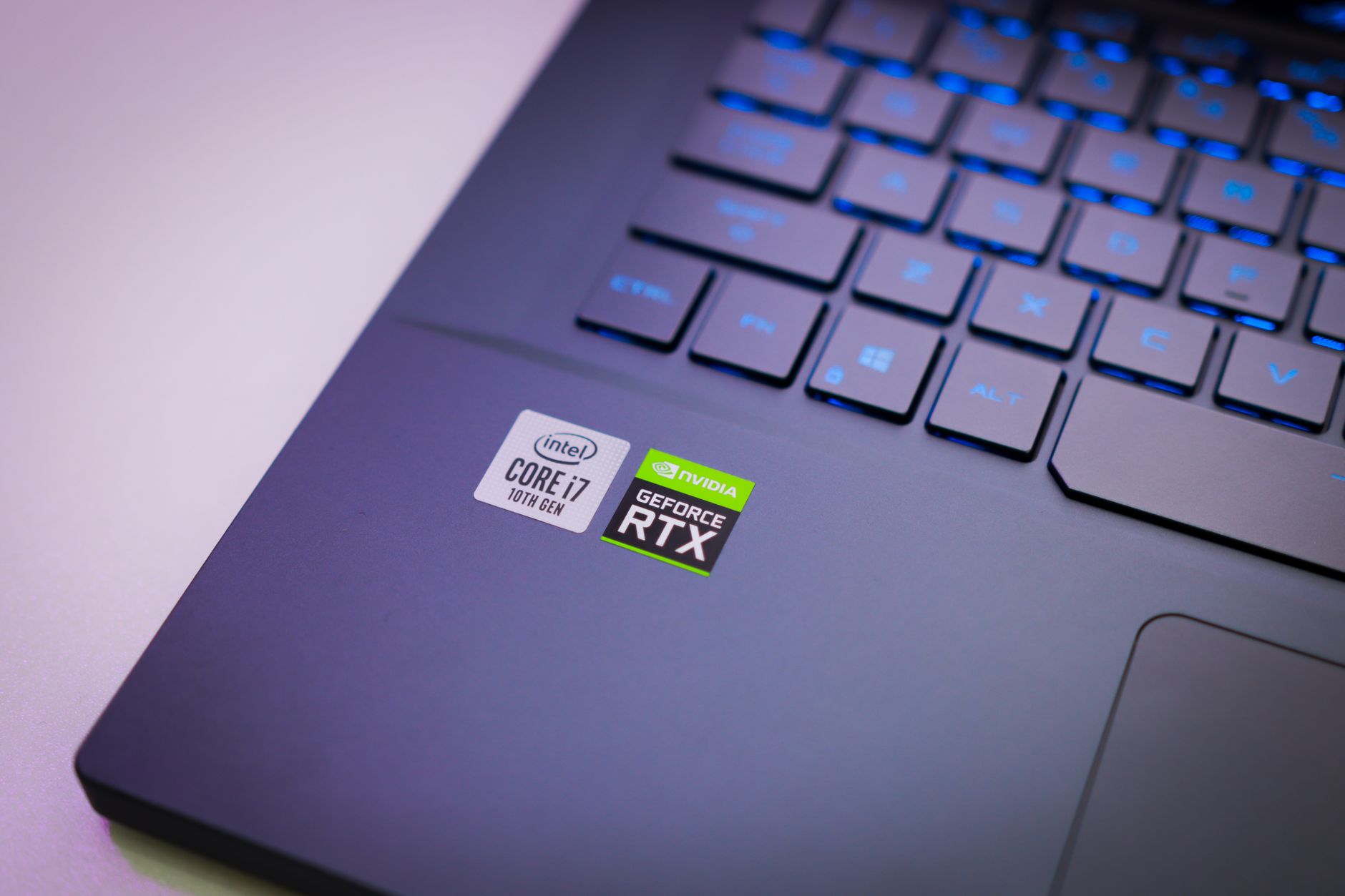
NVIDIA is ready to kick off the launch of RTX Spark, a new Windows PC platform that the company presents as a meeting point between local AI computing, creative tools, and gaming. The debut is set for Friday, October 16, and will be accompanied by public events in various regions around the world, featuring hands-on demonstrations and initiatives organized alongside commercial partners.
In the message accompanying the announcement, NVIDIA describes RTX Spark as a single PC designed simultaneously for creators, gamers, and AI agents. It is a definition that clarifies the product's positioning rather than its specifications: the core of the proposition is bringing together activities traditionally considered distinct, from content creation to running on-device AI models and workflows, through to gaming. The materials released for the occasion do not state pricing, configurations, market-specific availability, or full hardware details.
This absence is not negligible. The promise of local AI holds tangible value only if translated into a credible balance among performance, battery life, noise levels, available memory, software compatibility, and final cost. RTX Spark is therefore launched primarily as a product direction: a Windows PC in which artificial intelligence is not confined to cloud services or features added to apps, but becomes a workload to be executed directly on the machine.
The PC as an environment for local models and workflows
For NVIDIA, the reference to AI agents shifts the focus beyond the most common assistive features built into software. An agent, in the lexicon now widespread across the industry, is a system capable of carrying out complex tasks using AI models, tools, and files. Running it locally can offer significant benefits in terms of data control, response times, and continuity of use, since part of the work does not necessarily have to pass through remote infrastructure.
However, specific conditions must be met for this prospect to be useful beyond demos. Applications must be optimized, models must fit within system resources, and the experience must remain accessible even to those without developer skills. NVIDIA emphasizes having worked with numerous applications to optimize Spark technology, while initial evaluations cited by the company focus specifically on local AI use, gaming, and creative workflows.
The role of software will therefore be decisive. NVIDIA has long been building its presence in AI not only through hardware, but also through CUDA and the ecosystem of tools that leverage GPU acceleration. RTX Spark brings this approach to a category of PCs aimed at a broader audience than professionals and data centers. Compatibility with Windows and with the applications used every day by creators and gamers will be an essential part of real-world testing.
The project also comes at a stage when the PC industry is trying to define what “AI PC” should truly mean. Many manufacturers have so far focused on features integrated into the operating system, on assistants, transcription, image processing, or productivity tools. NVIDIA is trying to position itself on a different level: not just AI features available on the computer, but a machine designed to run more advanced workloads, with a declared focus on agents and creation as well.
A global launch built around hands-on testing
October 16 will have a strong in-person component, even though the product is about software and artificial intelligence. NVIDIA and its partners will organize events in six cities: San Francisco, Berlin, Taipei, Beijing, Istanbul, and Seoul. The planned format varies from market to market, but the common element is hands-on demonstrations, with stations dedicated to creation, development, and gaming.
- In San Francisco, the event will take place at the Best Buy on Harrison Street from 10:00 to 12:00, with free admission until capacity is reached.
- Berlin will host the event at Xperion at Saturn, Alexanderplatz, from 19:00 to 22:30; registration is required.
- In Taipei, the gathering will be held at Muse Garden and will include demos, music, and discussions with the AI community; registration is also required here.
- Beijing will see the celebration at the JD MALL Beijing Shuangjing Store, with check-in starting at 19:00 and kickoff at 20:00 via WeChat registration.
- In Istanbul, Vatan Bilgisayar Topkapı will feature demos and activities with local creators, with no advance booking required.
- In Seoul, in the East Lobby of COEX, demos will begin at 19:00, and the program dedicated to gaming and AI creators will kick off at 20:00.
The choice of venues reveals the campaign's goal: RTX Spark is not being presented merely as a component or platform for insiders, but as a hands-on product to experience in retail and community settings. Access arrangements vary, however, and capacity is limited in some cases. Anyone planning to attend should therefore follow the local guidelines published by the organizers.
The launch is also accompanied by an online initiative called #ShareYourSpark. NVIDIA is inviting users to share what their first Windows PC was and what interests or passions that machine sparked. An ASUS ProArt P14 RTX Spark signed by Jensen Huang, founder and CEO of NVIDIA, is up for grabs among participants. The campaign's official rules remain the reference for eligibility and terms of participation.
Gaming, creativity, and AI: the promise must be proven beyond the debut
The emphasis on gaming in RTX Spark's messaging is significant, as it prevents the product from being viewed strictly as a laptop intended for developers or AI professionals. NVIDIA wants to offer a system capable of shifting from a gaming session to creative workloads or local inference workflows. It is an ambitious promise, but it entails inevitable compromises that must be evaluated through independent testing: performance in each domain, the quality of the experience under sustained loads, and actual software maturity cannot be inferred from a launch announcement.
The first reviews cited by NVIDIA highlight positive results across various use cases and solid platform integration, but repeatable testing across different applications, games, and models will ultimately determine the extent to which RTX Spark can deliver on its promise of versatility. A more practical question also remains for the public: which tools will be ready out of the box, which will require specific configurations, and what price range will accompany the product.
For gaming followers, RTX Spark also signals the evolution of the gaming PC. The GPU remains central to graphics rendering, but it is increasingly becoming the engine for parallel workloads: content generation and manipulation, assistance in creative apps, local models, and automated processes. The value of this convergence will not hinge on the “AI PC” label, but rather on the ability to leverage these capabilities without compromising the simplicity, stability, or performance of the tasks for which a computer is bought.
Following the October 16 events, attention will shift from the announcement to actual availability and in-depth reviews. NVIDIA has already teased another public appearance on October 21, when Jensen Huang will deliver the keynote at GTC Berlin. For RTX Spark, however, the first decisive test begins in retail stores and demos: proving that local AI, creativity, and gaming can coexist on a Windows PC without turning technical complexity into an obstacle for users.


