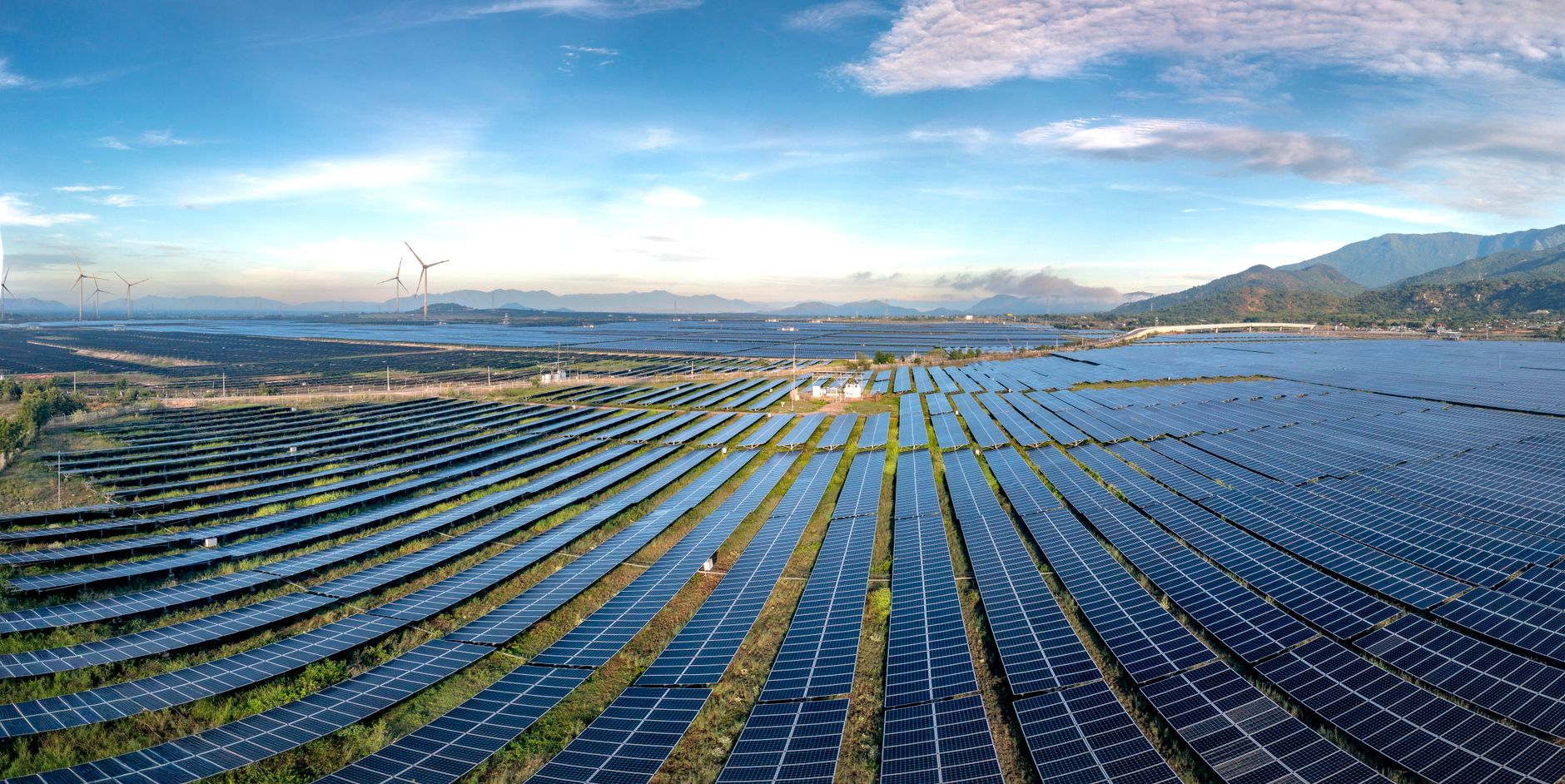
For fifteen years, the battery story has been told primarily through the electric car: longer range, faster charging, higher energy density. But the energy transition is creating a second market where many of the features essential for a vehicle become secondary. A grid-connected battery does not need to be lightweight, fit beneath a floorpan, or accelerate from zero to a hundred. Above all, it must be inexpensive, long-lasting, safe, and capable of storing large volumes of electricity to deliver it back when needed.
This is where technologies beyond conventional lithium-ion are emerging: sodium-ion batteries, iron-air systems, flow batteries, and other forms of long-duration energy storage. There is no clear winner yet, and many solutions still have to prove their competitiveness at scale, but the problem they address is set to become increasingly critical as wind and solar power expand.
The problem isn't generating renewable energy, but shifting it over time
A solar panel generates power when there is light, and a turbine when the wind blows, whereas households and industries consume electricity according to entirely different patterns. As long as the renewable share remains modest, dispatchable power plants and interconnectors can absorb most of the variability. As that share grows, hours of abundant energy and hours requiring reserves become far more frequent.
Lithium-ion batteries are outstanding at shifting energy across a few hours and are expanding rapidly across grid systems. But increasing duration often means proportionally adding more cells, and therefore driving up costs. To bridge longer periods, it can become cost-effective to deploy less energy-dense technologies built from cheaper materials.
Sodium trades lightness for abundance
Sodium-ion batteries rely on an element far more abundant than lithium. The chemistry shares fundamental principles with lithium-ion cells and can leverage much of the manufacturing expertise accumulated by the industry. Lower energy density is a serious drawback in passenger cars, but matters far less inside a container installed next to an electrical substation.
Its strategic value also extends to the supply chain. Diversifying cell chemistries can curb reliance on critical minerals and leave energy storage less vulnerable to price swings in a single raw material.
Iron and air: when weight almost ceases to matter
Iron-air batteries pursue an even more radical proposition: use exceptionally common materials and accept low energy density in exchange for the ability to store electricity over much longer horizons. The electrochemical principle can be described as a controlled, reversible form of iron oxidation.
For the grid, a massive footprint is not necessarily an issue if land is cheap and the facility is built to stand for decades. The core question becomes economic: what does it cost to store a megawatt-hour, how many times can the system be cycled, and what efficiency does it maintain over its lifespan?
Flow batteries decouple power and energy
In flow batteries, energy is stored in liquid electrolytes held in external tanks. A notable advantage is that storage capacity can be scaled up simply by enlarging the tanks, while power output is determined by the electrochemical stack. This decoupling allows storage duration to be engineered in a fundamentally different way.
Various chemistries exist, including vanadium systems and alternatives based on different active materials. Here too, the theoretical upside must contend with capital costs, plant complexity, and supply chains, but a long operational lifespan makes the technology an appealing candidate for stationary applications.
The metric that matters is the cost of delivered energy
Evaluating batteries strictly on euros per kilowatt-hour of initial capacity can be misleading. A technology with a higher upfront cost that tolerates significantly more cycles may prove economically superior over the entire operating life of the installation. Round-trip efficiency, degradation rates, maintenance, calendar life, and the market value of electricity at the point of discharge must all be taken into account.
For this reason, the storage landscape is likely to fragment. Lithium will remain exceptionally competitive for fast-response and short-duration needs, while alternative technologies find their place when requirements stretch to eight, twelve, a hundred hours, or even several days.
A grid with more batteries reshapes the electricity market
Storage is more than just physical equipment: it buys electricity when supplies are abundant and sells it when they are scarce, supplies frequency response services, and relieves local grid bottlenecks. If capacity scales sufficiently, it can narrow wholesale price spreads across hours and reduce the need to fire up peaking plants.
Yet its true value hinges on market design. Electricity markets engineered around systems dominated by conventional power plants must adapt to assets that act simultaneously as load and generation. Interconnection queues, tariffs, and revenue models for grid services can accelerate or stall investment almost as decisively as cell chemistry itself.
The most important battery might be the one no one sees
Consumer technology has conditioned the public to judge a battery by the percentage in the corner of a screen. The energy transition, however, could make a battery consumers never see far more consequential—housed in an industrial park and built to run for twenty years.
If renewables continue to grow, producing clean electricity will be only half the problem. The other half will be storing it long enough to make it available when the sun and wind do not coincide with demand. It is in that step, seemingly less glamorous than a new car, that a decisive part of the future energy system could be played out.


