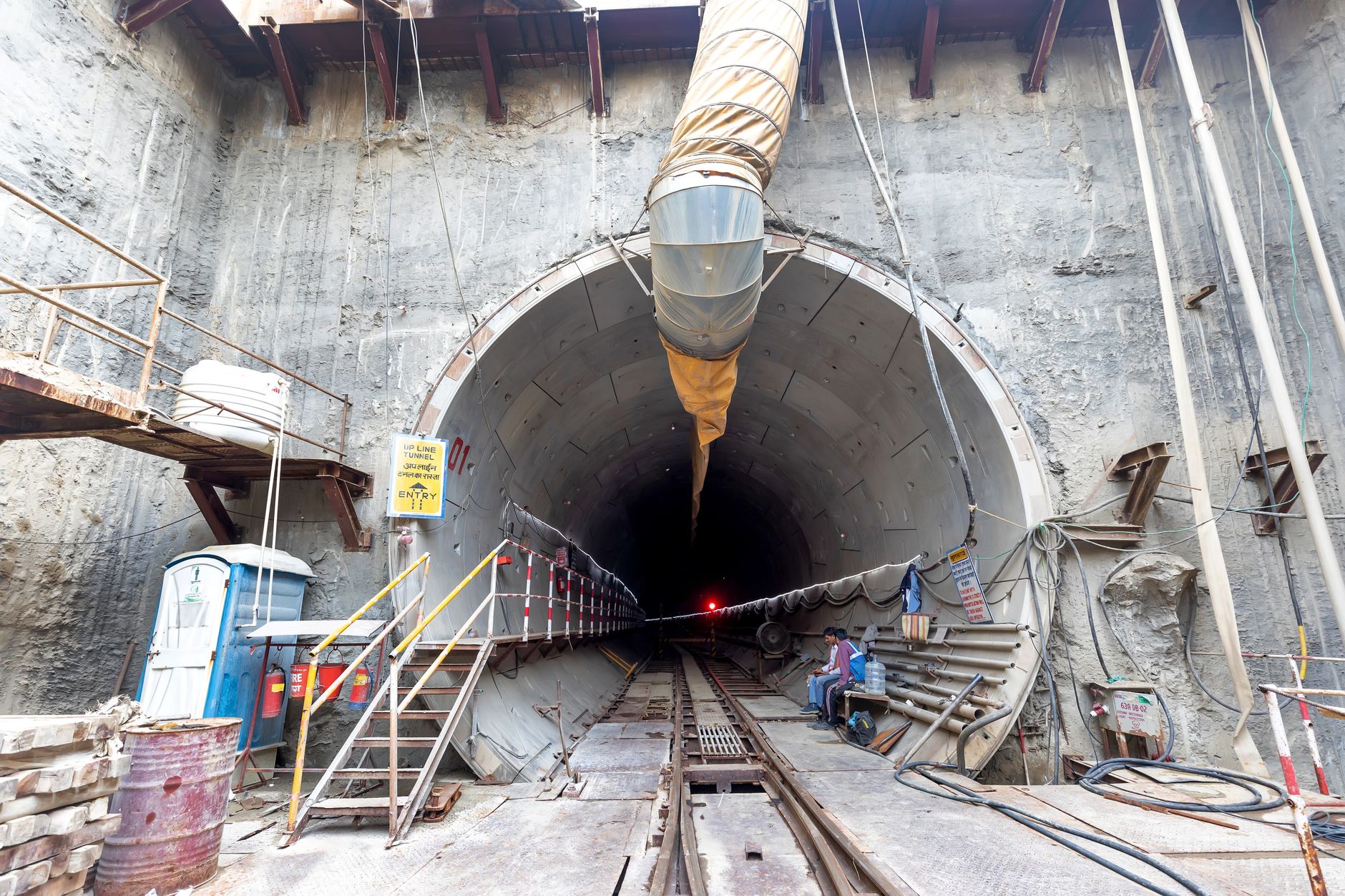
The Boring Company has closed a $3 billion Series D round, bringing its valuation to $23 billion. Led by the United Arab Emirates, the transaction ties the new capital to an already outlined expansion: Elon Musk's company plans to build over 150 kilometers of tunnels in the Middle Eastern nation.
For a startup founded with the stated goal of moving part of urban mobility underground, the funding carries weight beyond the size of the capital raise. Until now, the company's primary operating ground has been Las Vegas, where it runs several tunnels connecting casinos and hotels with the convention center. The Emirati project, however, would multiply the geographical scale of its announced activities, positioning The Boring Company in a market that becomes both an investor and a destination for its future infrastructure.
Andreessen Horowitz, Sequoia Capital, Human Capital, Vy Capital, and Valor Equity Partners also participated in the round. The raise falls short of the $4 billion ceiling that, according to a Wall Street Journal report in July, the company was considering securing. It nevertheless remains one of the most significant deals for a private player in transportation infrastructure.
Capital and construction heading in the same direction
The involvement of the United Arab Emirates lends a dual interpretation to the news. On one hand, there is the funding of a company that requires substantial resources to design, excavate, and equip underground networks. On the other, there is the outline of an industrial plan targeted directly at the home territory of the round's lead investor. The more than 150 kilometers announced by the company therefore represent a benchmark for infrastructural ambition, not a report of already completed tunnels.
The Boring Company has long pitched its tunnels as a potential solution to road congestion: the idea is to move a portion of vehicular trips into a three-dimensional underground network. This approach sets it apart from companies that develop solely mobility components or traffic management software. The product, in this case, is a combination of civil engineering works, access points, connections, and day-to-day operations. Scaling up therefore requires more than just prototypes or isolated permits: it demands active construction sites, procurement contracts, city coordination, and a sustained execution capacity over time.
The $23 billion valuation gives the company substantial value before the announced international network has even been built. Investors are betting on the ability to replicate and scale up the model tested in the United States, but the gap between a network vision and an infrastructure actually open to the public remains decisive. In particular, 150 kilometers of tunnels represent a far more extensive program than the installations associated with the company's operations to date.
Las Vegas remains the operational benchmark
Most of The Boring Company's excavation work has taken place in Nevada. In Las Vegas, the company operates a series of tunnels connecting casino-hotels and the convention center. It is the most tangible use case available to observe the model Musk describes: vehicle transit via dedicated underground routes, rather than a traditional rail system.
That experience matters because the Emirati project is not starting from a completely blank slate, but it does not automatically resolve the challenges of scaling up. Every urban network depends on the city's layout, the accessibility of stations or entry points, integration with other transit modes, and local regulations. The announcement does not detail which cities in the Emirates will be involved, what the route will be, when excavation will begin, or which service will use the future network. Completion timelines and the breakdown of investment per individual project were also not disclosed.
In the United States, meanwhile, The Boring Company recently broke ground on a project in Nashville, Tennessee: an underground “loop” stretching 10 miles, roughly 16 kilometers. This construction site also signals that the company is trying to expand its offering beyond Las Vegas, but the stated scale for the United Arab Emirates would be significantly larger.
A test for the underground network model
The new round provides The Boring Company with resources to navigate a phase in which construction costs and complexity take center stage. A software company can deploy a product to new markets primarily through local teams and digital infrastructure; a tunneling operator, by contrast, must turn every expansion into a physical civil engineering project. This makes relationships with investors, regulatory authorities, and local communities particularly crucial.
For the Emirates, the deal signals strong interest in a large-scale underground mobility project. The 150-kilometer figure, however, must be taken for what was actually announced: a plan proposed by the company. Detailed information regarding tunnel layout, operating models, transit capacity, or project timelines is not yet available. These will be the decisive factors determining whether the announcement translates into a viable network and what tangible impact it will have on traffic.
The fundraising round also shifts the competitive landscape of urban mobility infrastructure. With an additional $3 billion, The Boring Company holds a more robust financial foundation to pursue international expansion while backing concurrent projects across the United States. Yet capital alone does not automatically build tunnels: permitting, engineering design, and construction work remain critical hurdles, especially when dealing with hundreds of kilometers underground.
The next signal to watch will therefore be the operational development of the Emirati initiative. The announcement set the direction, the stated minimum scale, and the financial backing, but leaves open the specifics needed to assess the network's timeline, coverage, and practical utility. For The Boring Company, the Series D round raises the bar: after Las Vegas and the launch of the Nashville project, the ability to deliver a vastly more extensive infrastructure will be the defining test of its underground mobility vision.


