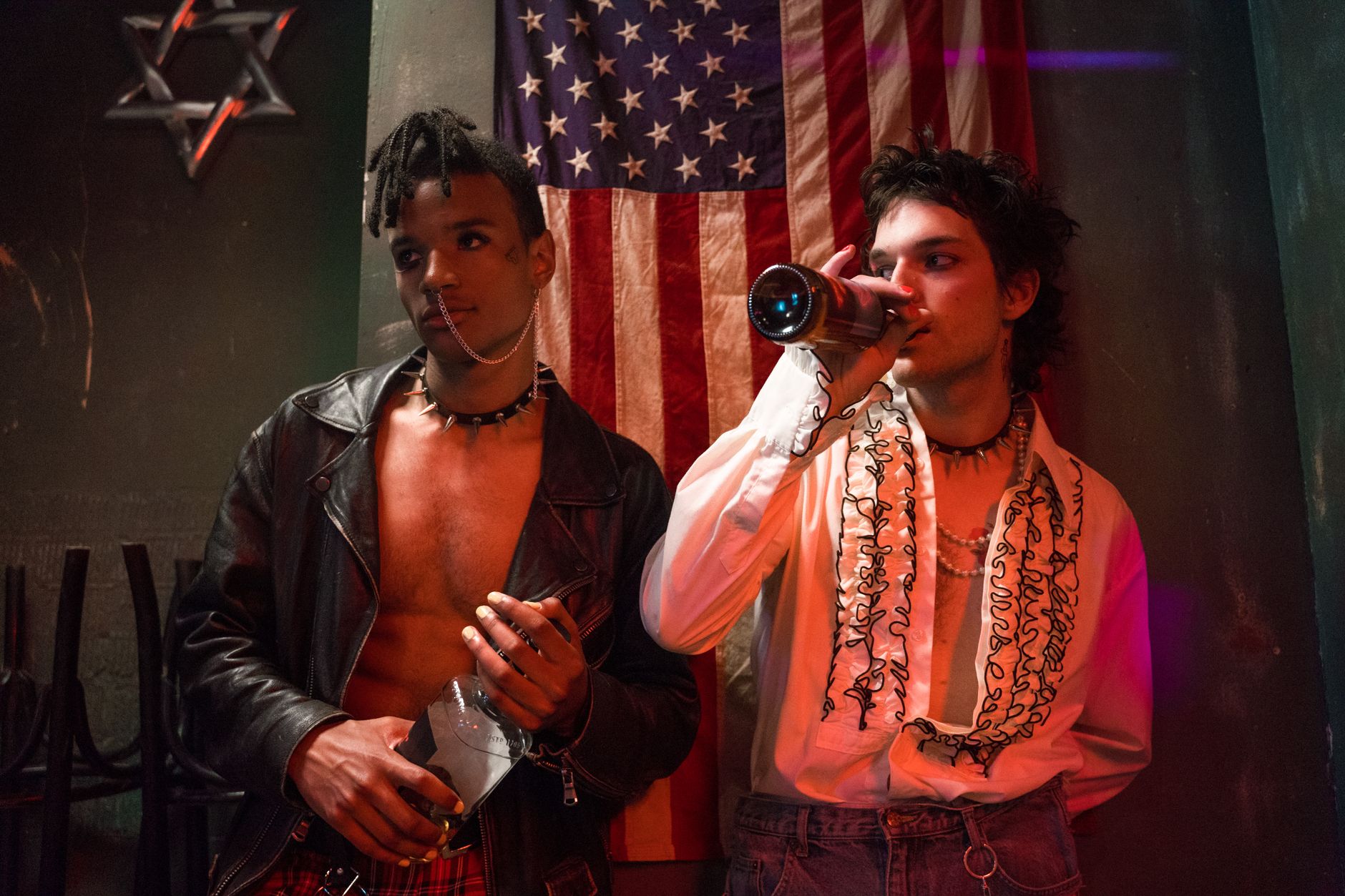
Before the runways get fully underway, New York Fashion Week held its off-calendar opening event: the annual Council of Fashion Designers of America party. On Wednesday evening, Le Rock, a brasserie inside Rockefeller Center, hosted around 200 industry professionals to kick off the Spring 2027 season, which will bring 70 runway shows and presentations to the city over the coming days.
This was not merely an eve-of-event reception. Within the New York fashion system, where established fashion houses, independent brands, investors, press, and creatives coexist across a highly fragmented landscape, the CFDA uses this moment to make a community visible and align its priorities at the start of the year's most high-profile week. Gathering before the shows concentrates the industry's institutional and networking dimensions in the same room—two facets that almost always go hand in hand in New York.
The event was hosted by CFDA chairman Thom Browne, alongside Stacey Bendet, Joseph Altuzarra, Sabyasachi Mukherjee, and the organization's CEO Steven Kolb. Guests included, among others, Willy Chavarria, Zac Posen, Vera Wang, Christian Cowan, Dao-Yi Chow, Andrew Kwon, and Prabal Gurung. It was a cross-generational lineup spanning diverse aesthetic languages and commercial positioning, from long-standing American fashion tradition to names that have built new cultural and international platforms in recent years.
A fashion week that starts with connections
The NYFW schedule remains defined by debuts, buyer appointments, editorial narratives, and sales results that mature over time. But its resilience also depends on less visible networks: those who back an emerging brand, connect a designer with a prospective partner, or work to ensure that issues of sustainability and inclusion do not remain mere mission statements. The CFDA party reflects precisely this infrastructure, blending the informal tone of an evening event with the substance of an industry gathering.
Michael Kors pointed to the blend of backgrounds and generations as one of New York’s defining traits. It is an interpretation that reflects the city’s historical role within fashion month: not a uniform model, but a collection of different brands, identities, and audiences. Thom Browne, in turn, recalled the value of a scene where individual expression still holds a central place and where local talent deserves visibility.
This plurality is also a competitive asset, but it does not eliminate structural challenges. For an emerging label, being included in the fashion week conversation does not automatically translate into access to production, distribution, or capital. For this reason, the weight of the CFDA is not measured solely by its ability to organize events or present awards: what matters is the continuity of its support, especially when the media phase of the shows gives way to the slower process of building a business.
Awards, governance, and designer support
The evening came just hours after the announcement of the nominees and honorees for the CFDA Fashion Awards, the association’s marquee celebratory event. Browne is among the nominees for the American Menswear Designer of the Year award. The link between the party and the awards highlights the CFDA’s dual role: on the one hand, selecting and legitimizing excellence in American design; on the other, providing networking opportunities where reputation and partnerships take shape.
Last May, Joseph Altuzarra joined the organization’s board. The designer described the new role as an opportunity to contribute to the community and take part in discussions about the CFDA’s future goals. The move is significant because it brings the direct perspective of creatives back into the organization’s governance, at a time when the cost of scaling a brand and the pressure on the traditional runway model make dialogue between designers and institutions increasingly essential.
The same logic informs Friends of the CFDA, an invitation-only group established in 2023, shortly after the start of Browne's presidency. Members make an annual donation dedicated to the organization's activities: supporting emerging talent, sustainability initiatives, and expanding diversity in the industry. In return, they gain access to moments and settings normally less open to the public. It is a patronage model that attempts to channel part of a supporter network's resources toward the creative supply chain, without turning into an investment fund.
Allison Sarofim was named chair of Friends of the CFDA in June, succeeding Jordan Roth. On Tuesday evening, Browne and Kolb had already gathered around fifty guests at the Living Room Lounge of Faena New York to mark the launch of her tenure. Sarofim, a film producer, placed the emphasis on supporting younger designers and expanding the supporter community. For Kolb, the quality of this network lies in the willingness to contribute without seeking an immediate individual return.
Le Rock as the setting for a cultural supply chain
The chosen venue in turn reveals something about the evening. Le Rock occupies an Art Déco-inspired space in Rockefeller Center, one of the locations where New York continues to overlap business, hospitality, art, and urban imagery. As the number of guests grew, the brasserie took on the function of a temporary public square: conversations about summer holidays, already packed schedules for September, and commentary on the Fashion Awards nominations preceded the ramp-up of the week's calendar.
To the outside public, images of an industry party risk coming across as the most exclusive side of fashion. Yet their industrial significance is more concrete than the social format might suggest. In a city where so many brands operate with lean structures, access to people, knowledge, and institutions can impact the chance of being heard. The limitation, naturally, remains the one inherent to any invitation-only network: proximity neither guarantees results nor replaces broader action on the economic conditions under which independent brands operate.
In the coming days, attention will shift to the Spring 2027 collections and their ability to translate this energy into recognizable, desirable, and commercially sustainable offerings. The CFDA party does not preview a single aesthetic trend, nor does it claim to resolve market tensions. However, it defines the scope of the week: NYFW begins with a community that wants to present itself as united, diverse, and still capable of mobilizing support around American design.


