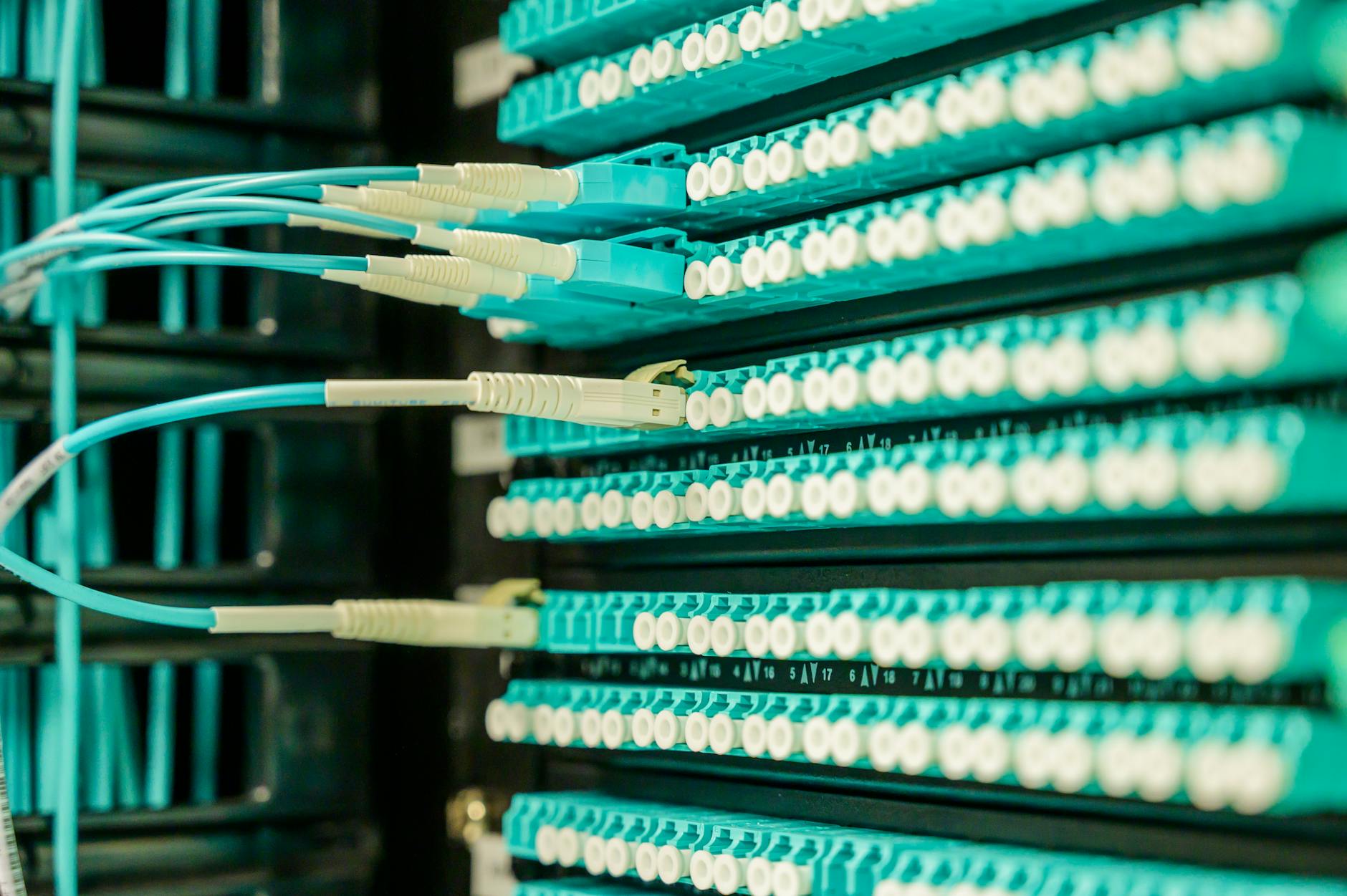
The Internet is often imagined as a cloud, but its actual geography is surprisingly physical. When a message, a video conference, or a request to a cloud service crosses an ocean, in the vast majority of cases data does not travel by satellite: it passes through optical fibers enclosed in cables laid on the seabed. Thousands of kilometers of infrastructure connect continents and data centers, turning the oceans into a giant backbone for the digital system.
The growth of the cloud and artificial intelligence is making this network even more critical. Distributed training, data replication, global services, and real-time applications require increasing capacity across different regions. This is why companies like Google, Meta, Microsoft, and Amazon no longer just buy bandwidth from telecom operators: they directly participate in financing and building subsea systems.
Satellites are visible, fiber carries far more
Satellite constellations have transformed connectivity in remote areas and are essential for resilience and coverage, but for ultra-high-capacity intercontinental traffic, subsea fiber retains massive advantages. A single modern system can carry amounts of data that would be economically unfeasible to replicate with space links, offering lower latency across major backbones.
The result is a paradox: the most advanced digital economy relies on a technology whose core principle dates back to nineteenth-century submarine telegraphy. Materials, amplifiers, and capacity have evolved, but the logic remains the same: laying a physical connection between two coasts.
Building a cable is a geopolitical project
The route is not chosen based on distance alone. Depths, seabeds, seismic activity, fishing zones, anchorages, permits, landing sites, and the political stability of the countries crossed must all be considered. Each landing station becomes a strategic hub because it concentrates traffic and connects the international backbone to terrestrial networks.
Choosing a new route can therefore reshape digital geography. Connecting two regions directly reduces reliance on intermediate hubs, creates redundancy, and can attract data centers near landing points. In this sense, a cable is not just telecommunications: it is industrial policy.
Big Tech is verticalizing the Internet
For many years, cables were primarily the domain of major carriers. Today, hyperscalers are among the leading investors because they generate a massive share of the traffic that travels across them. Controlling dedicated capacity allows them to better plan the growth of their clouds, reduce dependencies, and design routes aligned with the locations of their data centers.
This phenomenon drives efficiency but also raises questions about concentration. The same companies can own data centers, cloud services, consumer platforms, and stakes in the infrastructure that ties the entire system together. This does not mean the Internet automatically becomes private, but it increases the infrastructural clout of a handful of global operators.
The weak link is near the coast
Cables in deep ocean waters are relatively well-protected; many faults instead occur in coastal areas, where anchors and fishing activities can damage them. For this reason, they are buried or heavily armored along the most vulnerable stretches. When a fault occurs, specialized ships must locate the break, retrieve the cable from the seabed, and repair it.
The global network is designed with redundancy, so the failure of a single link is often absorbed by rerouting traffic elsewhere. The risk increases in regions served by few routes or when multiple links are severed simultaneously.
Cable security has become national security
In recent years, governments and institutions have stepped up their focus on the resilience of undersea infrastructure. Incidents in the Baltic and other areas have highlighted how difficult it is to quickly distinguish between accidental damage and sabotage, and how complex maritime surveillance and attribution are.
Protection cannot consist of physically guarding every kilometer. It requires alternative routes, repair capabilities, monitoring of maritime activities, and international coordination. Resilience stems primarily from the ability to keep operating when a section of the network goes down.
AI increases pressure on the global backbone
Artificial intelligence is often framed as a challenge of GPUs and electricity, but models and services must also move data. Major cloud platforms operate across distributed regions; datasets are replicated, services synchronized, and users routed to the most suitable point of presence. The more compute capacity is built in new countries, the more essential it becomes to connect it with high-capacity international backbones.
This establishes a direct link between energy geography and telecommunications geography. A country may offer cheap electricity to attract a data center, but without sufficient international connectivity, that advantage loses its edge. The new maps of AI will therefore be drawn simultaneously by power plants and subsea cables.
The most modern part of the Internet is a physical network
Every digital generation tends to obscure the underlying infrastructure. The cloud made the physical location of servers seem irrelevant; generative AI makes interaction even more abstract. In reality, every prompt traverses routers, fiber, data centers, and power grids before returning as an answer.
Submarine cables are perhaps the clearest example of this contradiction. They are invisible to most users and simultaneously indispensable to the daily lives of billions of people. The more sophisticated the Internet becomes, the greater the value of that silent fiber on the ocean floor.


