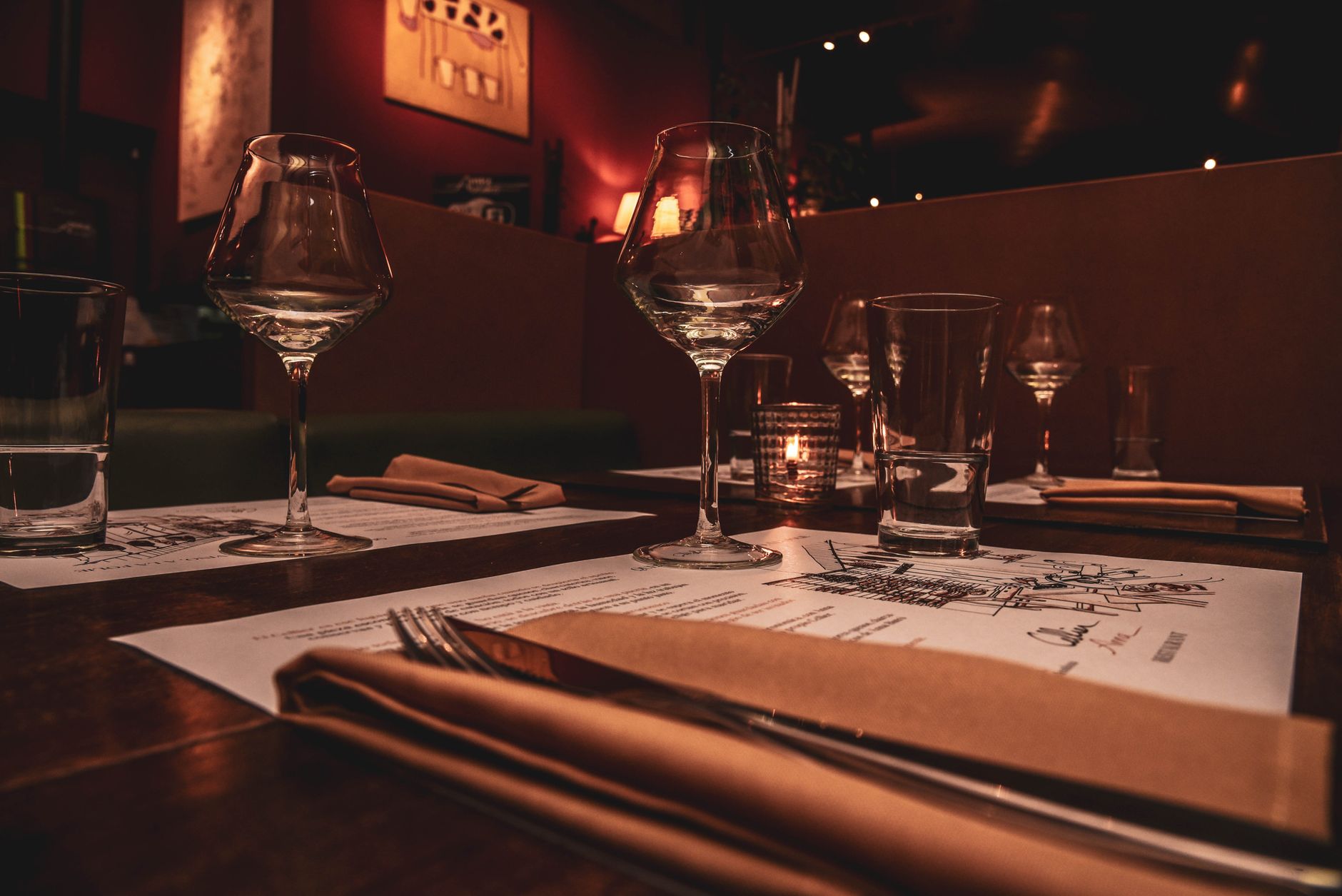
Villa Maiella is trying to make part of its gastronomic offering more accessible to a younger clientele. The restaurant owned by the Tinari family, in Guardiagrele, has introduced the Piccolo Menu: priced at 80 euros, it is available on weekdays and is not served on weekends or during holidays. The choice sits alongside the house's two main tasting menus, the 100-euro “Territorio” and the 120-euro “Racconto”, signaling a concrete effort to make signature dining accessible without altering an identity built over three generations.
Price alone naturally does not define the affordability of a fine dining experience for students or those at the start of their careers. However, the 20 or 40 euro gap compared to the other menus is significant because Villa Maiella explicitly links it to the goal of introducing younger generations to food and wine culture. The decision to limit its availability also follows an operational logic: it concentrates the offering during lower-demand services, protecting days with higher booking pressure while leaving the venue's regular offering unchanged.
A cuisine that starts from Guardiagrele
The Piccolo Menu arrives within a story that does not revolve around a single dish or a commercial formula. Villa Maiella is the result of a family's work that has placed Abruzzo at the center, maintaining a direct connection to its own produce. Indeed, the breeding of black pigs, grains, and farm-grown vegetables are integrated into the culinary project alongside research that embraces contemporary technique.
Today, Arcangelo and Pascal Tinari carry this legacy forward. After training outside Guardiagrele, they returned to develop a model where expertise gained elsewhere serves to interpret local ingredients and traditions. Arcangelo leads the kitchen; Pascal manages the cellar and pairings, with a selection that looks beyond the local territory and also includes a pairing dedicated to Champagne.
It is an approach that helps understand the nature of the restaurant. The farm is neither a decorative element nor a vague nod to local produce: it is part of the supply of raw ingredients upon which the menu is built. At the same time, in-house production does not exhaust the culinary narrative, which also works with diverse ingredients and references. The offering therefore moves between agricultural roots, regional memory, and contemporary restaurant language.
Two tasting journeys, two ways of interpreting the region
The “Territorio” menu, priced at 100 euros, signals from its name a more direct relationship with Abruzzo’s culinary repertoire. The dishes feature raw mutton with vanilla and corn, pallotte cac’ e ova reimagined in presentation but kept recognizable in flavor, chitarra with lamb ragù and juniper-smoked ricotta, culminating in thyme lamb. It is not a literal reproduction of home cooking: traditional preparations are placed in a different context, without erasing their core coordinates.
“Racconto”, at 120 euros, takes a broader and more experimental direction. Veal marinated with coffee and mountain cumin is presented as a carpaccio; cracked farro from Caprafico meets porcini mushrooms; chitarrina is paired with wild spinach, orapi. There is also a taste of the pig raised by the family. It is a sequence demonstrating how local ingredients can become the foundation for less conventional pairings, without reducing the region to a list of immutable specialties.
The dessert section follows the same approach. “Idea di caffè” and “mirtillo e yogurt”, together with the petit fours, close a journey in which dessert is not treated as an afterthought. The overall result is a dining experience that uses fine-dining codes to evoke a precise geography: that of Guardiagrele and inland Abruzzo, with its meats, grains, vegetables, herbs, and the local dialect resurfacing in the names of the dishes.
The 80-euro menu as an entry point
In this context, the new tasting menu does not appear as an alternative or simplified version of Villa Maiella's cuisine. Instead, it serves as an entry point into the restaurant's offering. The Tinari family targets younger diners and makes it available during a specific window of the week. The key takeaway for the industry lies precisely in the combination of positioning and service management: a lower price point, without devaluing the work in the kitchen, front of house, or the raw ingredients.
Italian fine dining has long grappled with a potential audience that views gastronomic experiences with interest but puts off booking due to cost, dining habits, or an unfamiliarity with tasting menus. A dedicated offering can help lower that initial threshold, especially if it avoids presenting itself as a product detached from the rest of the establishment. At Villa Maiella, the move maintains continuity with the narrative already developed across the 100- and 120-euro menus: the focus remains Abruzzese cuisine filtered through the family's work.
There are clear boundaries, however. The Piccolo Menu is not available during peak demand periods, meaning it does not alter the experience for those seeking a reservation on weekends or public holidays. Furthermore, 80 euros represents a more restrained rate within the restaurant's menu, not an affordable price in absolute terms. The initiative must be seen for what it is: a selective lowering of the financial barrier, paired with a scheduling choice that allows the venue to manage its impact.
In-house supply chain and family continuity
The hallmark of Villa Maiella remains the consistency between production, kitchen, and hospitality. In many cases, the language of the short supply chain is used as a generic label; here, black pig, grains, and farm vegetables are highlighted as tangible components of everyday operations. This does not mean the restaurant is self-sufficient, nor that every ingredient originates from the farm: rather, it means that part of the supply chain is directly in the family's hands and can power a cuisine with a recognisable identity.
For a family restaurant, maintaining this balance also requires generational continuity. The Tinari family made external training a step in their journey, later bringing skills and vision back to Guardiagrele. Arcangelo's cuisine and Pascal's work with wine are two distinct yet complementary functions: one builds the dish, while the other focuses on the overall dining experience and on dialogue with a cellar not limited to regional boundaries.
The decision to introduce the Piccolo Menu is therefore part of a broader strategy of longevity and renewal. Villa Maiella is not abandoning its main tasting paths, nor is it giving up the complexity of its offering; instead, it seeks to create an additional opportunity to explore that world on days when the restaurant's schedule permits. For younger patrons, the test will be whether this gateway succeeds in transforming a first visit into a lasting relationship with signature cuisine and the products of a territory.