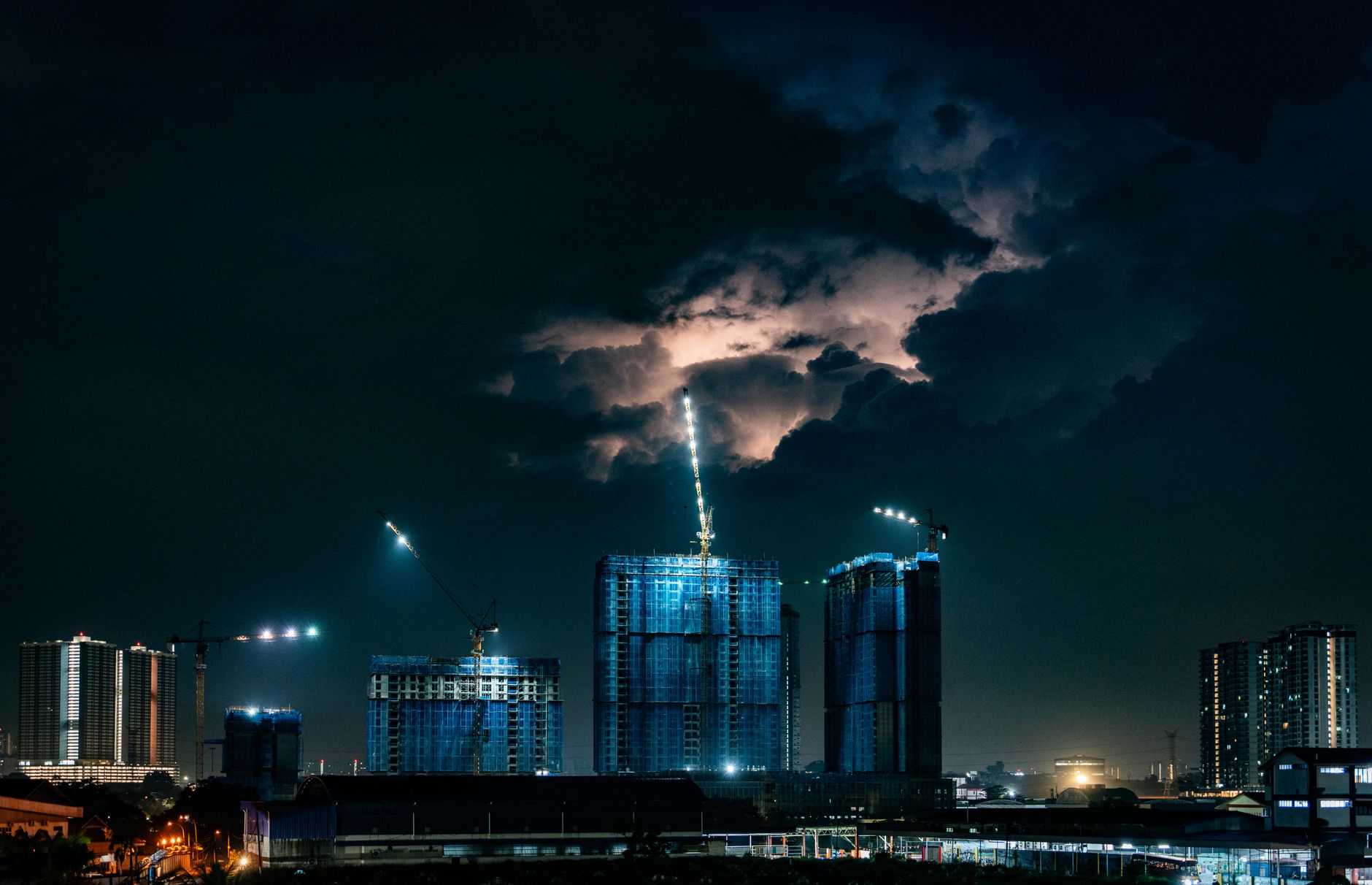
A weather forecast says a storm might be coming. A safety manager, on the other hand, has to decide when to halt a game, evacuate a construction site, recall a crew, or reopen a facility. Between information and decision lies an operational gap that Perry Weather has turned into a business. The Dallas-based company has raised $110 million in a Series C led by Silversmith Capital Partners, with participation from Arthur Ventures.
Perry Weather serves more than 3,000 organizations, including school districts, cities, construction firms, manufacturing facilities, and sports leagues. The platform combines on-site weather stations, forecast data, lightning tracking, automated alerts, sirens, and logging of executed procedures.
The problem isn’t knowing it’s raining
Consumer apps are great for deciding whether to grab an umbrella. An organization has different needs. It has to define thresholds, responsibilities, and protocols: at what distance does a lightning strike require a shutdown? How much time must elapse before resuming operations? Who received the alert?
Automating these rules reduces ambiguity when pressure is at its peak. The system can transform a written policy into a sequence of actions and keep an audit trail.
On-site weather stations still matter
Modern meteorology relies on satellites, radar, and sophisticated models, but conditions can change significantly at the local level. Sensors installed where activities take place add location-specific observations and make it possible to compare forecasts with reality.
Perry Weather therefore builds a hybrid product spanning hardware, software, and data. It is a more complex model than pure SaaS, but it also creates a deeper relationship with the customer.
AI enters the protocol
The new capital will also be used to develop AI-powered features. The opportunity is not necessarily about building a new foundational weather model, but about interpreting conditions and procedures, anticipating risks, and helping operators make consistent decisions.
It is a useful distinction: AI often delivers the most value when positioned between a forecast and an action, where rules, context, and economic consequences exist.
Climate is turning risk management into software
Extreme heat, thunderstorms, wind, and lightning impact work, schools, events, and infrastructure. As scrutiny over these risks increases, organizations must demonstrate not only that they have a policy, but that they enforced it.
The automated logging of alerts and responses thus creates a compliance layer. The product doesn’t just sell a forecast: it sells the ability to prove that a decision was made based on defined criteria.
The future of weather is increasingly vertical
Major weather models will continue to improve, and AI is already accelerating global forecasting. But on top of those models, specialized applications will emerge for agriculture, energy, aviation, insurance, and workplace safety.
Perry Weather is a prime example of this second economy. It doesn’t need to forecast the weather better than anyone else across the entire planet; it needs to know what that weather means for an athletic field, a roof under construction, or a factory floor. It marks the shift from meteorology as information to meteorology as decision-making infrastructure.


