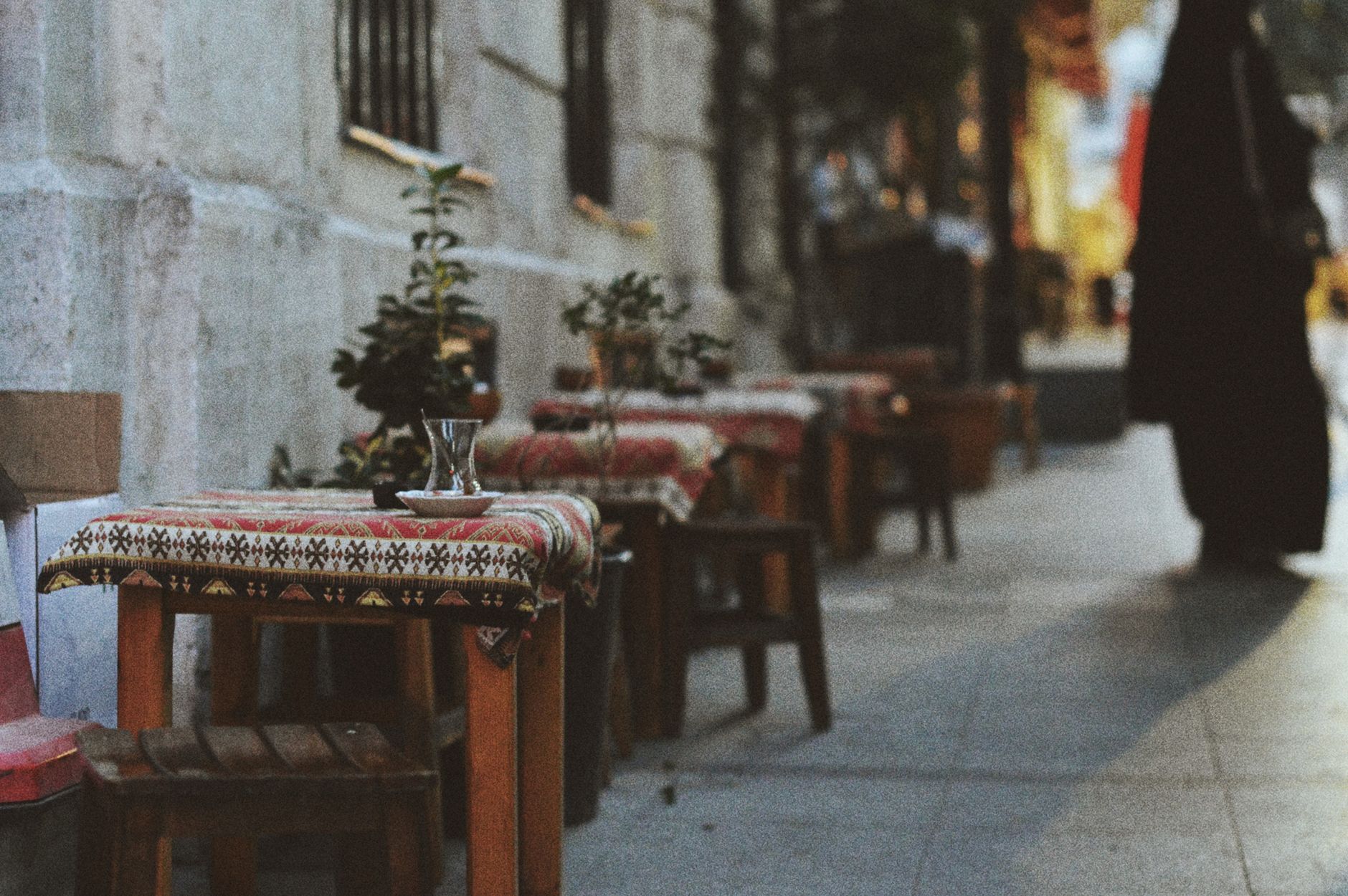
The same dish does not feel the same everywhere. Eating a carbonara on a residential street, a sandwich outside a train station, or a glass of wine in a square changes the experience, even if the recipe remains identical.
Food has always been tied to place, but today the neighborhood has become even more prominent. We do not just choose a restaurant: we choose an area, a route, an atmosphere.
The place begins before the door
Dinner often begins ten minutes before sitting down. On the walk from the stop, in the street we cross, in the people we pass, in the shops still open.
A venue can be stunning, but if nothing is happening around it, the experience feels more isolated. Conversely, a simple restaurant within a vibrant neighborhood can feel like part of something bigger.
Restaurants tell the story of urban transformation
New openings can alter the perception of a street. A pastry shop, a bakery, a café, or a contemporary trattoria become signals: someone is investing here, someone thinks it is worth coming.
This can bring energy, but also tension. When a venue's success becomes too overwhelming, the neighborhood risks turning into a backdrop for outsiders.
Authenticity is not immobility
We often say that a neighborhood “is no longer what it used to be” as soon as venues change. But cities have always evolved. The point is not to freeze them in time, but to understand whether change adds opportunities or completely erases what was there before.
The most interesting restaurant is not necessarily the one that mimics the past. It is the one that manages to inhabit the present without acting as if the neighborhood were merely a backdrop.
Eating well also means understanding where we are
Perhaps that is what makes certain places memorable. You could not move them five kilometers away without losing something.
The food can be excellent, the service precise, the design beautiful. But when a venue also manages to truly belong to the street it sits on, the neighborhood becomes an invisible ingredient. And often, that is what we remember the longest.
Food increasingly tells the story of where it is served
The relationship between restaurants and their local area is not just marketing. FAO treats urban food systems as networks that connect food provenance, distribution, access, health, and sustainability. From this perspective, the neighborhood is not the backdrop of the restaurant: it is part of the supply chain.
Markets, nearby producers, bakeries, small shops, and migrant communities can influence ingredients, recipes, and a cuisine's identity. In Rome, for example, FAO highlighted in 2025 the presence of 70 local markets, over 55 solidarity purchasing groups, and numerous farmer’s markets: a network that demonstrates how deeply urban food is intertwined with the city's social geography.
The risk lies in turning the neighborhood into a mere aesthetic label. Instead, real value is generated when the connection is verifiable: suppliers, people, stories, and ingredients that truly exist within the surrounding fabric.


