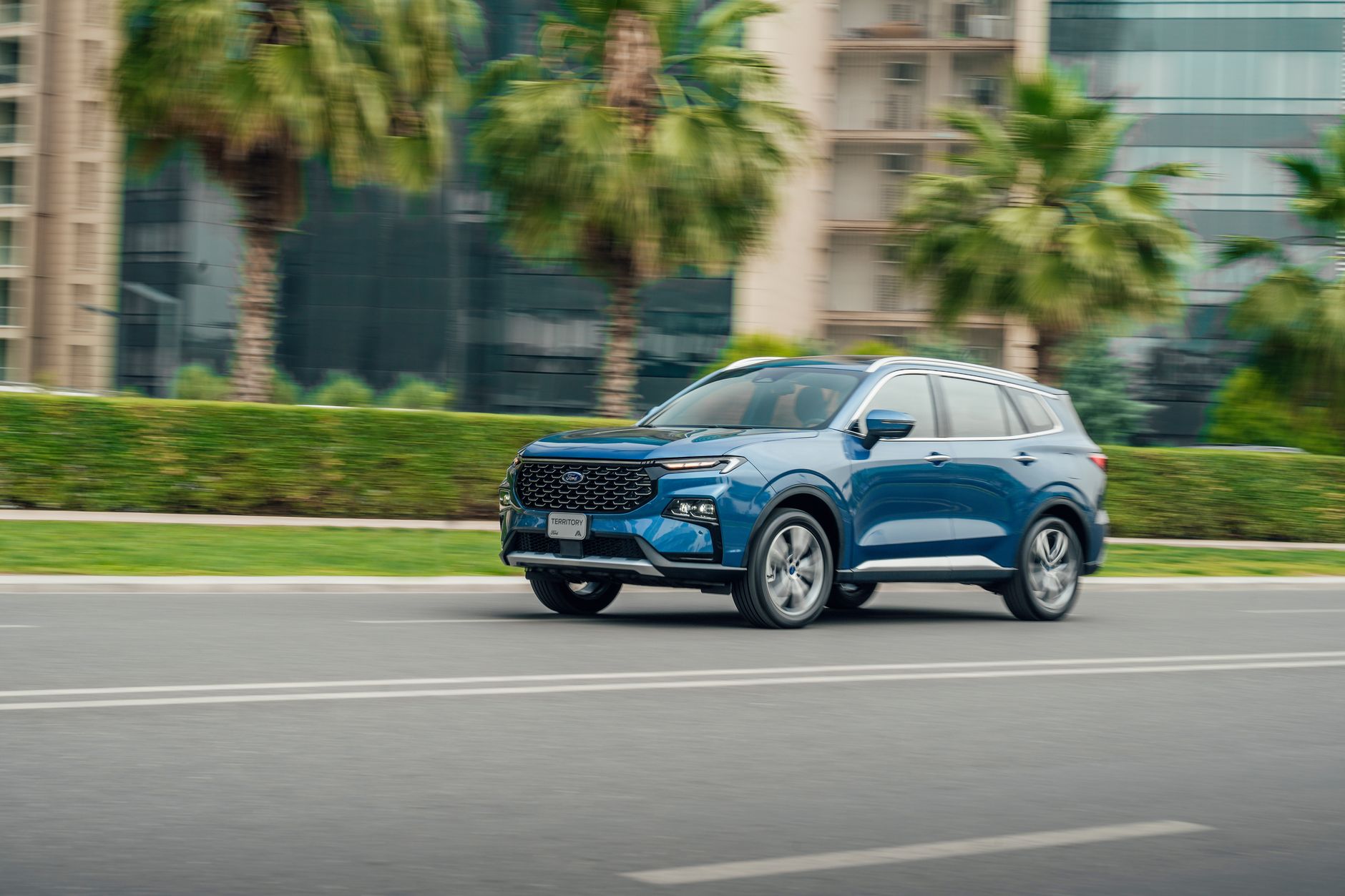
In recent years, cars have grown. Taller, wider, heavier. Even models once considered compact now take on crossover proportions, with robust body panels and an elevated driving position.
The reason is not merely practical. Large cars project safety even before setting off. A high seating position offers a commanding view, massive bodywork suggests protection, and the sheer size creates the perception of a greater distance from danger.
It is a powerful sensation. And like all powerful sensations, it deserves to be distinguished from reality.
The driving position changes how we perceive the road
Sitting higher allows drivers to get a better view of the traffic ahead, anticipate certain situations, and feel less dwarfed by other vehicles. This perspective can heighten the sense of control.
Yet perceived control and actual control are not the same thing. A taller, heavier car can require more stopping distance, carry greater inertia, and prove less agile during maneuvers. Safety depends on chassis structure, tires, electronic systems, braking performance, visibility, and driver behavior—not on a single attribute.
The size paradox
More people choose large cars because they feel vulnerable next to other large cars. It is an almost collective dynamic: if everything around you is growing, staying small can feel like a disadvantage. Thus, the market feeds on itself.
This creates consequences that extend beyond the individual driver. More weight often means more energy required to move. Greater width translates to less room on roads and in parking spaces. Added height can reduce visibility of what lies immediately in front of the vehicle.
The question therefore becomes less personal: how much space are we willing to occupy just to feel more protected?
Modern safety is mostly invisible
Many of the technologies that have truly revolutionized automotive safety are unseen: electronic stability control, automatic braking systems, sensors, impact-absorbing structures, traction management, and drowsiness monitoring.
They lack the visual presence of a tall hood or massive wheels, but they often matter far more. It is one of the reasons why assessing safety simply by looking at bodywork is increasingly difficult.
We have confused protection with distance
A large car also creates psychological distance from the rest of the road. Pedestrians, bicycles, and smaller cars seem farther away. Inside a quiet, insulated, and elevated cabin, speed itself can be perceived less acutely.
This feeling of separation may be pleasant, but it demands greater awareness. The more a vehicle shields us from noise and external stimuli, the more we must remember that they still exist outside.
Perhaps real safety means feeling secure enough not to need to dominate the road
Large cars are not inherently wrong. For many families, jobs, trips, and terrains, they can make sense. The problem arises when size becomes a symbolic substitute for safety.
A well-designed car should let you feel protected without turning every journey into a competition of mass and height.
The smarter future could be made of vehicles that make better use of space instead of constantly taking up more of it. Because feeling safe matters. But a road is only truly safe when everyone outside our door is safe as well.
Bigger does not automatically mean safer
The sense of protection provided by a high driving position is real, but it does not tell the whole story of vehicle safety. The Insurance Institute for Highway Safety found that front-end shape and height significantly affect outcomes for vulnerable road users. Vehicles with hoods over 40 inches off the ground are roughly 45% more likely to cause a pedestrian fatality compared to vehicles with lower, sloped front ends.
Mass can also create a risk-transfer effect: those inside a heavier vehicle may perceive themselves as more protected, while anyone struck by that vehicle faces greater forces. Safety, therefore, should not be assessed solely from the occupant's perspective.
The new engineering challenge is building cars that protect their occupants without needlessly increasing the risk for those outside. Sensors, automatic braking, and front-end design can become just as important as dimensions and structural rigidity.


