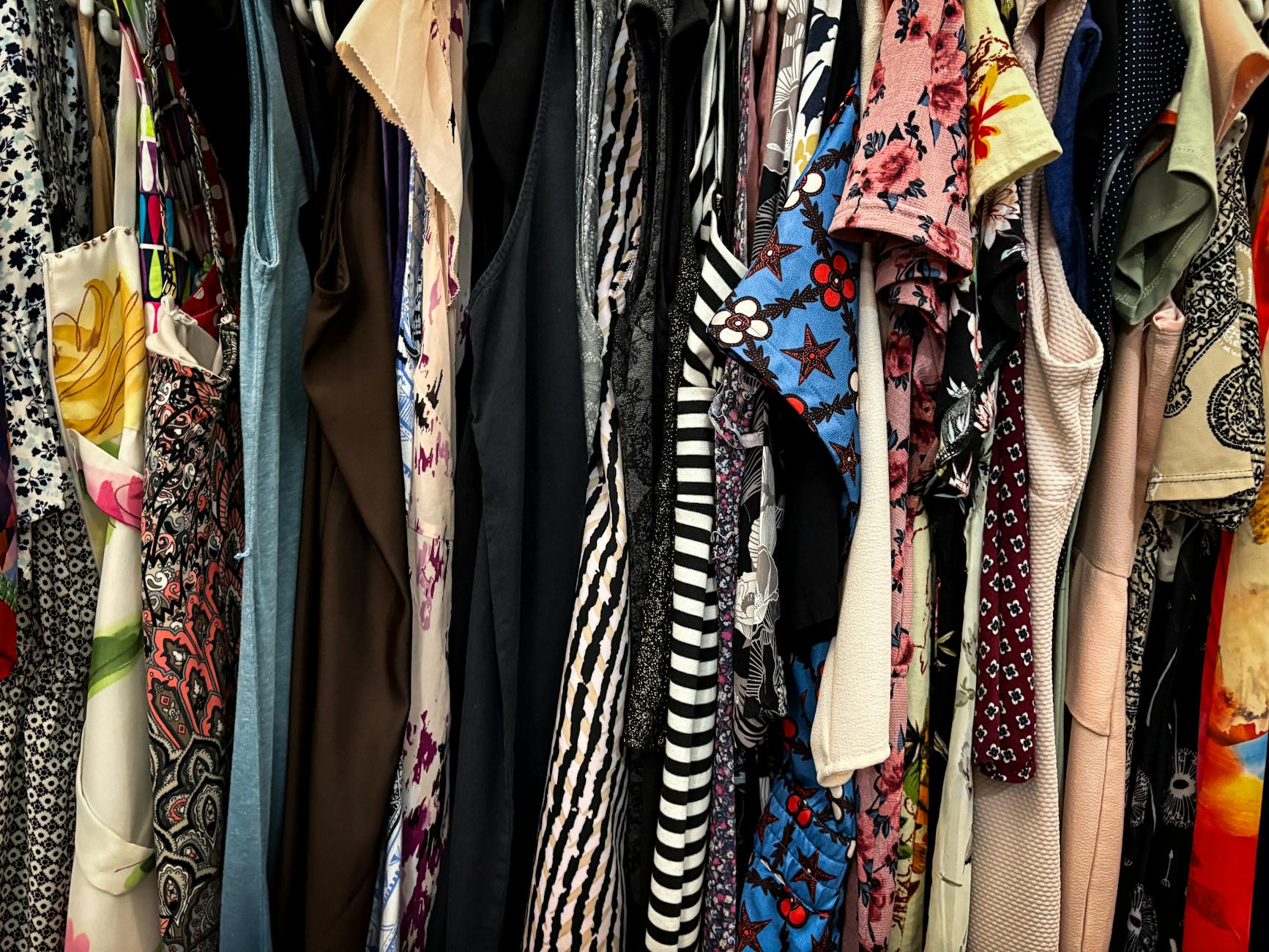
For a long time, vintage was associated with nostalgia: reclaiming an era, mimicking an aesthetic, searching for something that is no longer produced.
Today, it often works differently. A piece from the past is chosen not to look old, but to make a contemporary wardrobe more interesting.
The past has become material
A jacket from the nineties can be worn with freshly released shoes. A twenty-year-old pair of glasses can feel more current than many new models. Vintage doesn't necessarily reconstruct an era: it samples it.
Fashion has learned to treat the past as a continuously accessible archive.
The unique piece matters more than historical accuracy
The strength of a vintage garment often lies in the difficulty of finding an identical one. In a market flooded with replicable products, owning something with a specific history heightens the sense of individuality.
It isn't important to know exactly which collection it came from. What matters is that it doesn't look like it just emerged from the same algorithm that picked everything else.
The hunt is part of the pleasure
Vintage introduces something online shopping has all but eliminated: unpredictability. You can't always decide in advance what you'll find.
Flea markets, stores, second-hand platforms, and archives take time. But that very time turns a purchase into a discovery.
Sustainability matters too, but it doesn't explain everything
Reusing existing garments can reduce the need to produce new ones. Yet the success of vintage isn't merely environmental. It is also aesthetic and cultural.
In a system that relentlessly churns out novelty, choosing something old can be a way to escape the pace of fashion collections.
Vintage, then, is no longer simply a desire to turn back the clock. It is one of the tools we use to build the present out of what the present had forgotten.
Vintage is becoming infrastructure for circular fashion
Second-hand is no longer merely an archive of bygone eras. It is increasingly a standard part of the market: digital platforms, specialized stores, and authentication services have made buying pre-owned garments simpler, more comparable, and more accessible.
European regulations are also pushing in the same direction. The EU strategy for sustainable textiles aims for more durable, repairable, and recyclable products, treating reuse and repair as central elements of the transition. Furthermore, from July 2026, large companies in the Union will no longer be permitted to destroy unsold clothing and footwear.
Vintage thus takes on a contemporary meaning: not merely nostalgia, but an extension of an object's useful life. Its value stems from the intersection of aesthetic uniqueness, material quality, and limited availability—three characteristics that fast fashion inherently struggles to replicate.


