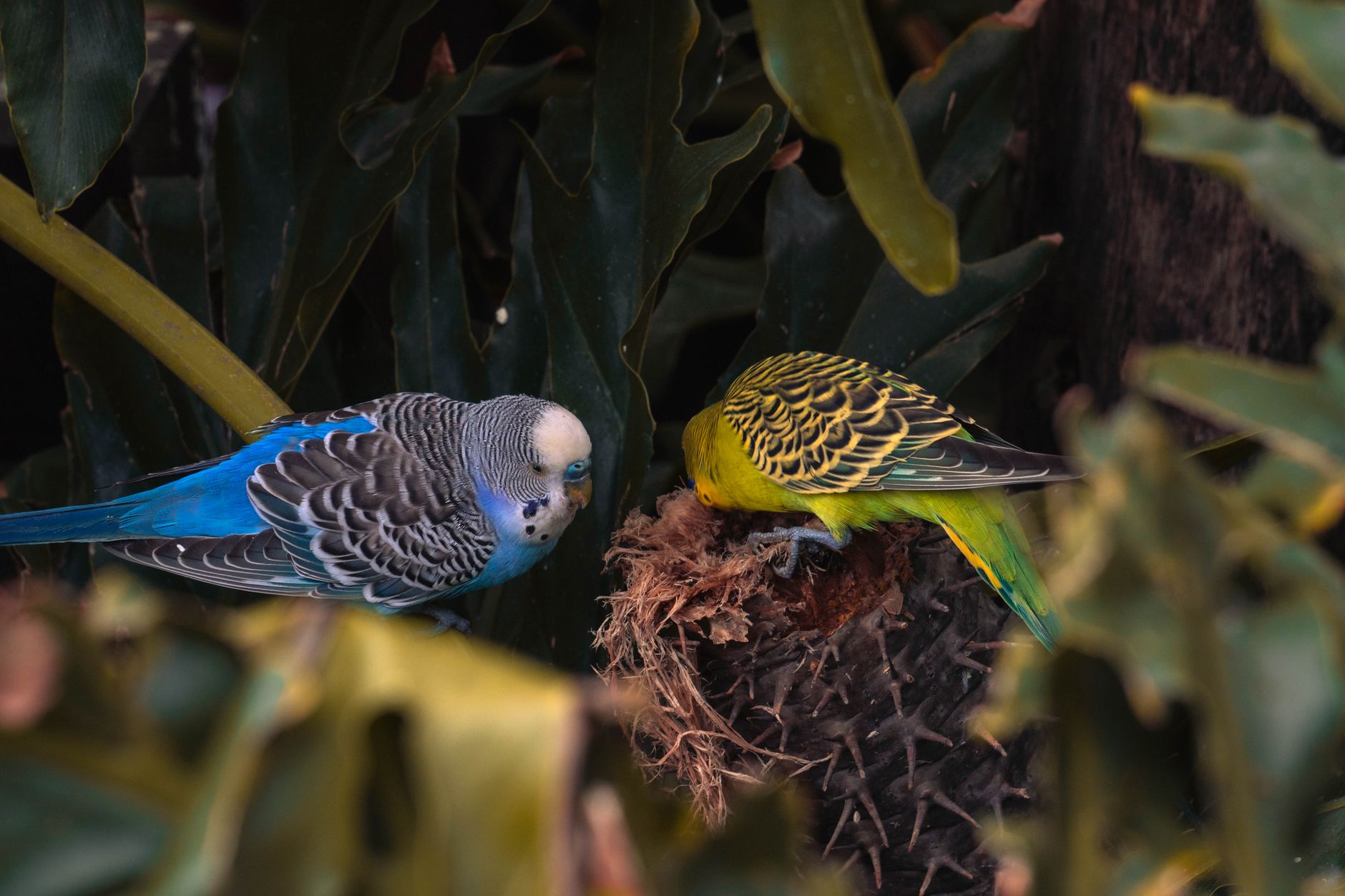
Among the challenges of a production set in World War II, with football fields and Pacific combat to reconstruct, Peter Berg points to a surprisingly tiny one: a parrot. During the filming of The Mosquito Bowl, the bird slated for a scene with Ray Nicholson flew off into the Queensland jungle in Australia, forcing a multi-hour pause before the crew could complete the shot.
The story emerged during a Hollywood panel dedicated to the film, attended by Berg, Nicholson, producer Alex Gayner, and executive producer Ezra Emanuel. Beyond the inevitably humorous tone of the anecdote, the incident effectively reflects the real hierarchy on a set working with animals: the director can set up the scene, the actor can follow directions, but the operating conditions are dictated by handlers and protocols designed for the animal's safety.
For Berg, therefore, the challenge was not just finding a parrot in an isolated, wooded area. Once on set, the animal was accompanied by four handlers responsible for managing it. The scene was arranged according to their instructions, with the crew asked to keep quiet and communication restricted to hand gestures to avoid startling the bird. Nicholson had to adapt to those conditions while the parrot was positioned for the shot.
When Berg called action, however, the bird took off into the foliage and perched atop a very tall tree. Work ground to a halt. The team had to locate it, coax it down, and bring it back to the set; on the second attempt, to prevent another escape, a tether was tied to its leg. Only then did the production secure the necessary take.
A detail from the book that could not be ignored
The parrot's presence was not a stylistic flourish added during staging. The Mosquito Bowl adapts Buzz Bissinger's book and follows four college football stars called to serve in the Marines during World War II. Tom Francis stars as David Schreiner, Nicholas Galitzine plays John McLaughry, Ray Nicholson portrays Tony Butkovich, and Bill Skarsgård plays Bob Baumann.
In the book, Butkovich sends his parents photographs showing him with a parrot on his shoulder. Berg explained that he considered that detail part of the material to bring to the screen. It is a choice that reveals something about the nature of the adaptation: even a marginal detail can hold value because it builds a character's profile and their relationship with a wartime experience otherwise told primarily through training, military service, and the war in the Pacific.
However, turning that detail into a scene opened up an independent production challenge. The animal was necessary, the chosen location was in Queensland, and local availability did not make finding one easy. Berg entrusted Gayner with the search while continuing to shoot the rest of the film in the meantime. The parrot was found only on the eve of the scene. In organizational terms, it is the kind of solution that avoids stalling an entire production day while waiting for a single element, while still leaving a margin of risk the moment that element actually arrives in front of the camera.
The set never moves solely at the director's pace
Cinema tends to portray directing as an exercise in control: the director chooses the framing, directs the actors, and coordinates a scene. On set, especially during on-location shoots, that control is inevitably shared. A trained animal introduces specialists with the authority to dictate timing and methods; a woodland location introduces environmental unpredictability; a sequence that relies on quiet turns every crew noise into a potential obstacle.
The episode from The Mosquito Bowl is instructive precisely because it does not involve a spectacular effect or a massive battle scene. Indeed, the film charts the transition from football fields to wartime sequences in the Pacific, yet Berg's most memorable hurdle was securing just a few moments with a parrot. It is a disproportion that is only apparent: in audiovisual work, a brief shot can demand more coordination than an expansive scene if it involves constraints beyond the availability of the cast or crew.
The handlers' caution also served a specific purpose. It was not about rushing the animal to stick to the schedule, but about giving it time to acclimate and keeping it safe. Hence the order not to speak and Berg's inability to direct Nicholson directly as he would have in a standard scene between actors. The director described the actor as extremely professional for his ability to execute what was required without breaking that perimeter of silence.
When the parrot disappeared into the trees, the issue also took on an immediate reputational dimension. Berg recalled being concerned about the potential fallout of the escape and how it might be perceived externally. Even before resuming shooting, it was necessary to confirm that the animal had been recovered and was safe. The production priority at that moment was not saving the scene, but bringing the parrot back.
From theaters to Netflix, with a second window already scheduled
The Mosquito Bowl is now in theaters and will arrive on Netflix on November 25. This dual release path rapidly expands the film's potential audience, but it also makes the story of its production even more compelling: for a movie combining historical memory, sports, and war, behind-the-scenes insights can become a valuable asset to stand out in today's crowded distribution landscape.
The parrot, in this sense, is not merely an on-set anecdote. It highlights the gulf between the page and the screen: in the book, a few photographs sent by a soldier to his parents are enough to evoke a personal moment; on screen, those photographs entail animal casting, trainers, safety protocols, delays, and the real possibility that the plan will not succeed on the first attempt. The final result compresses all this work into a matter of seconds, while the production must absorb its full complexity.
For Berg, the scene ultimately wrapped with the take secured. For the film, it remains a brief glimpse into Tony Butkovich's journey; for observers of the audiovisual industry, it serves as a tangible reminder of how a commitment to source fidelity can affect on-set operations. And of how, even in a production geared up to tackle war and jungle, the most difficult element to direct may simply be an animal deciding to take flight.