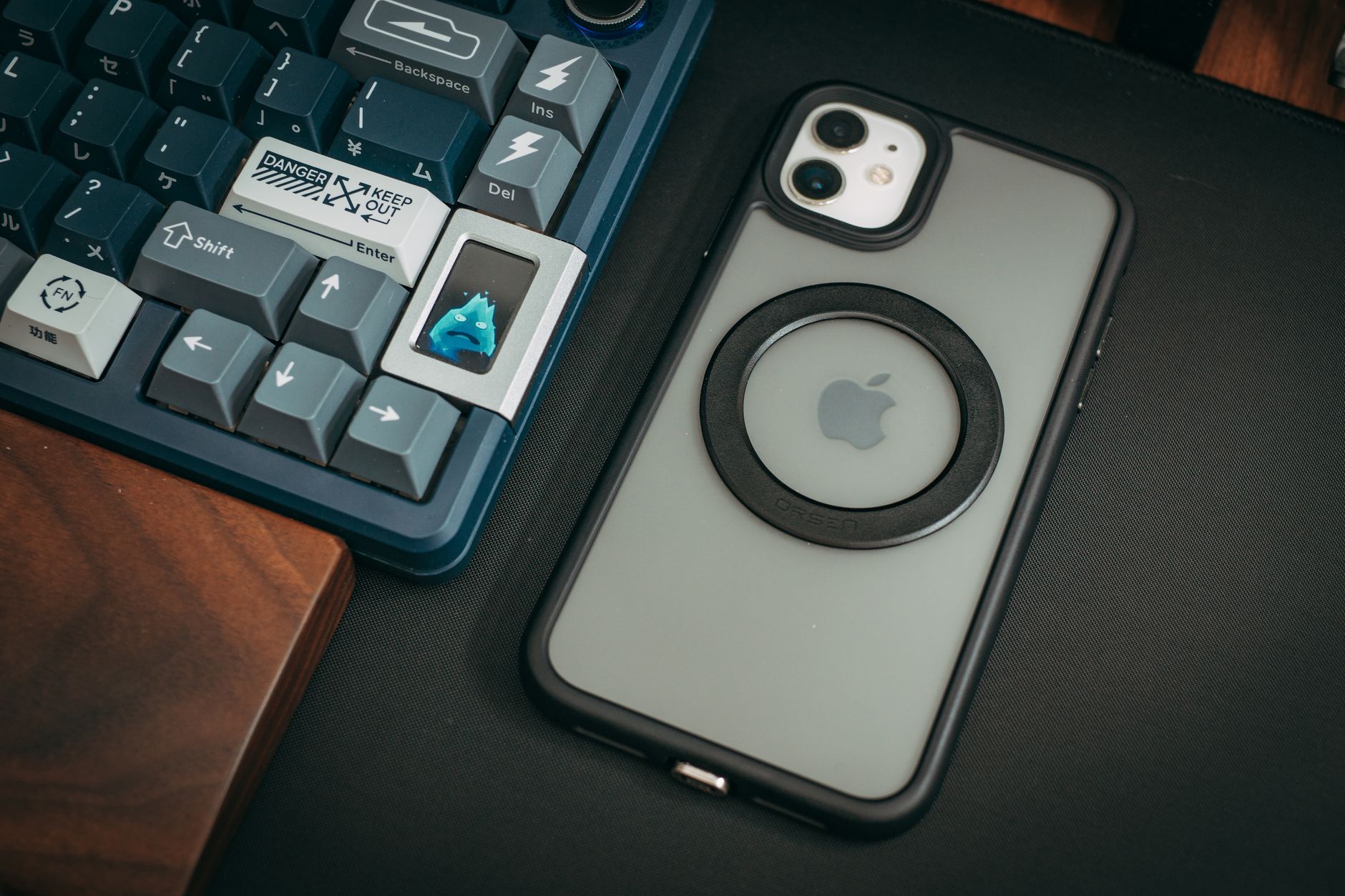
Among the accessories already arriving in stores for the upcoming iPhone Duo, Apple’s most affordable official case features a detail worth noting before purchasing: it doesn’t stay in place purely through pressure, snap fits, or magnets. Securing it to the smartphone requires adhesive strips applied to the inside of its two component pieces.
The procedure is outlined in the documentation included in the box: users must peel the protective film from the adhesive surfaces, position each half of the case onto the phone, and press down to ensure it holds. It is therefore a case designed for a more permanent installation than it might seem at first glance, but also far less reversible than a standard hard or silicone case bought for a traditional iPhone.
Apple offers two official protective cases for iPhone Duo. The one featured in the report costs $79; the alternative is the $129 Folio with kickstand. The foldable phone, for which pre-orders opened on October 16, will not reach the first customers until next Friday, whereas accessories have already begun showing up early in retail locations. It was precisely these first purchased retail boxes that brought the adhesive detail to light.
Why the adhesive changes the user experience
On a conventional phone, removing a case to clean the device, switch colors, or swap to a slimmer profile takes only seconds and carries no foreseeable consequences. With the iPhone Duo Case, that routine could prove more delicate. The strips are an integral part of the mounting system: taking off the case likely means degrading its ability to adhere just as effectively upon reapplication.
That is not to say the adhesive makes detaching the case impossible, nor that Apple intends it as a single-use accessory. However, currently available information does not clarify whether the company will sell replacement strips or outline a specific procedure for reinstalling the case once removed. This is the practical limitation to keep in mind: those who frequently swap cases, prefer going caseless on occasion, or want to thoroughly clean the frame and cover may find the experience far less flexible than usual.
The choice is not without precedent in the foldable market. The form factor of these devices makes it trickier to fit a case across the two halves without interfering with the hinge, the opening motion, or the screens. A simple snap-on edge may not be enough to keep the accessory perfectly in place, especially on very thin components and with exterior surfaces that must remain accessible. Adhesive can offer a solution for stability, but it shifts part of the compromise onto the user.
For Apple, the decision appears consistent with the goal of keeping the two shells properly aligned with the iPhone Duo body. It is an important consideration on a product that opens and closes, exposing more complex areas than a standard slab smartphone. However, this does not eliminate buyers' most practical concern: how well will the adhesion hold up after removal, and how easy will it be to deal with any residue or dust buildup along the edges?
Protection is partial, and the alternative works differently
The iPhone Duo Case consists of two parts and protects the back, including the camera bump area, as well as the section around the outer display. The case naturally features a cutout for the latter and does not cover the inside of the device when the foldable is opened. It is not, therefore, full coverage: its purpose is to protect the most exposed exterior surfaces during transport and while closed, without wrapping around the inner display.
The description of the materials also warrants a note of caution. Early reports pointed to a silicone case, while others describe it as being made of polycarbonate. Regardless of that difference, the detail shared across retail leaks is the attachment method: internal adhesive strips are designed to lock the two halves onto the device.
The Folio with kickstand, on the other hand, takes a different path. It costs 129 dollars, attaches magnetically, and uses no adhesive. It offers a built-in kickstand, but its design involves trade-offs of its own: it does not protect the sides of the iPhone Duo and, when closed, covers the outer display. However, magnets make it easy to fold the cover back when you want to use that screen—a flexibility that the 79-dollar adhesive option does not seem to offer in the same way.
The difference between the two accessories is therefore not just about price and the presence of a kickstand. It reflects two different approaches to use. The cheaper case prioritizes permanent adhesion to the two halves of the frame; the Folio relies on a magnetic connection and an added feature, accepting less extensive side coverage. Neither solution is inherently better, but the choice should come down to personal habit: continuous protection and greater stability on one hand, removability and a stand on the other.
A small detail on an already expensive purchase
On its own, relying on adhesive does not define the value of iPhone Duo or its case. In fact, it can be a sensible engineering response to the physical constraints of a foldable device. However, it is an important detail because it alters a habit that many iPhone owners take for granted: a case is no longer necessarily an accessory you can put on and take off whenever you like.
In the foldable segment, every additional element must contend with slim profiles, hinges, and shifting surfaces. Cases are often where these constraints become most apparent. Apple chose not to rely on magnets for the $79 model; buyers should therefore only apply it if they are willing to leave it on for a significant period, at least until clearer details emerge regarding the replacement and reusability of the adhesive strips.
It remains to be seen whether, once the first iPhone Duo units arrive, the adhesive will be seen as a simple initial setup step or an everyday hindrance. Real-world testing will shed light on long-term durability, ease of removal, and the possible availability of official solutions for reinstalling the case. For now, anyone looking to buy the Apple accessory has one clear factor to consider: this case doesn't just snap onto the phone—it requires being stuck on.