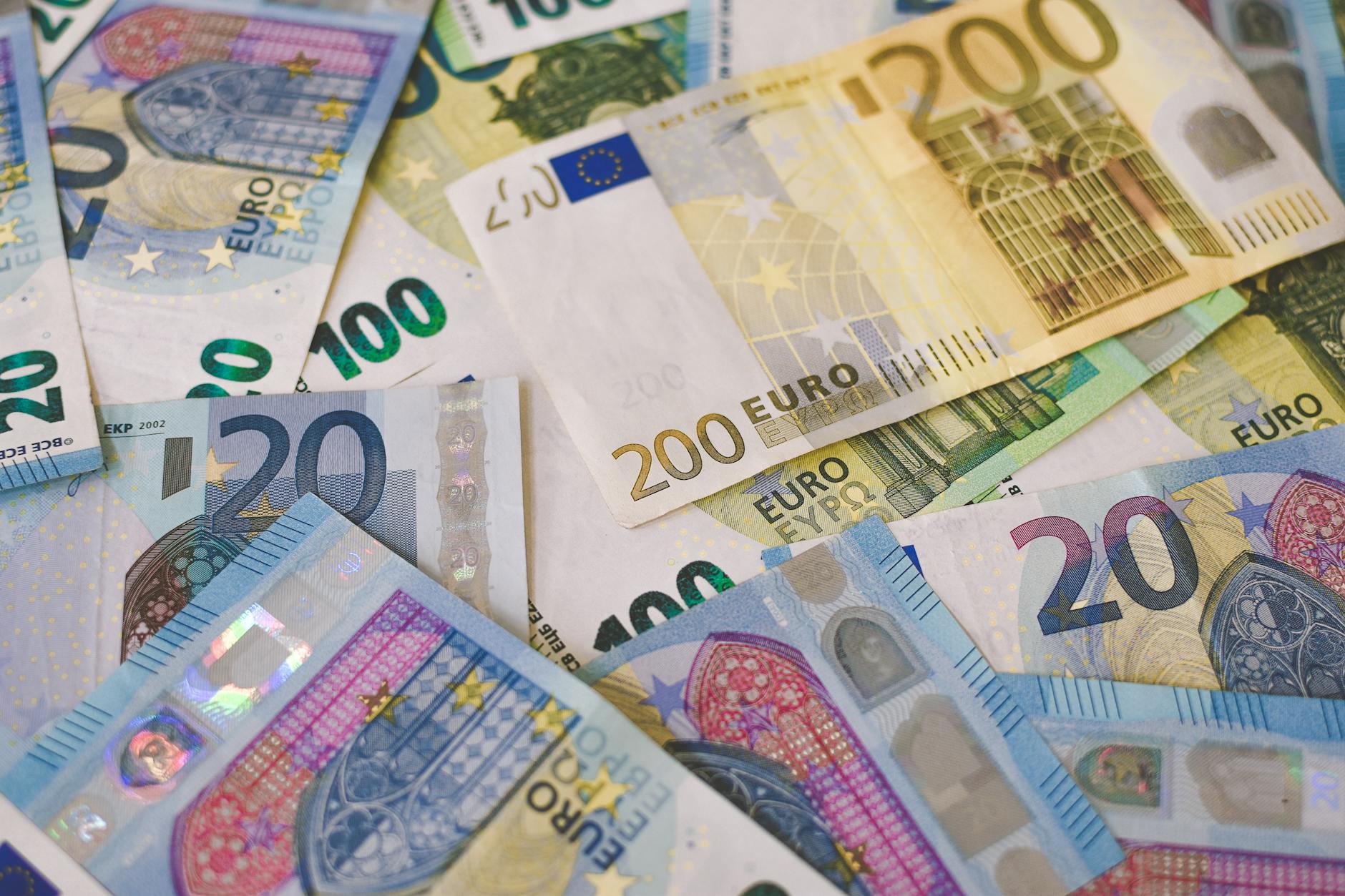
Christine Lagarde brings a two-track message to the annual meetings of the Fondo monetario internazionale: the euro area economy is holding up despite the pressure of energy prices, while the Banca centrale europea accelerates the definition of a public infrastructure for everyday payments. The digital euro, in the words of the BCE president, will need to complement cash and help make the retail payments market more competitive.
The link between the two issues is primarily economic and institutional. On the one hand, Francoforte must calibrate monetary policy at a time when inflation has not yet been fully brought back to target; on the other, it is building a tool that responds to a structural transformation in the way citizens and businesses pay, increasingly dependent on digital platforms and private networks. For Lagarde, the resilience of the euro area allows the shock to be weathered without abandoning a cautious stance. But resilience does not mean an end to the challenges.
Energia e inflazione: il problema non è chiuso
Lagarde pointed to the September figure, with euro area inflation at 3.8%, attributing a significant portion of it to energy price hikes. The BCE expects this component to ease over the course of next year, but considers it likely that the new energy shock will keep inflation above target into the first half of 2027 as well.
For the markets, the main takeaway is that the central bank does not view the current price increase as sufficient reason for an automatic, aggressive reaction. The president defended a measured response, consistent with the need to distinguish between an energy-driven flare-up and broader, more persistent inflationary pressures. It is an essential distinction for households and businesses: energy can quickly hit disposable incomes, industrial margins, and logistics costs, but excessive monetary tightening would risk weighing on credit and investment when the economy is already exposed to that very disturbance.
The BCE assessment therefore remains conditional on the development of energy costs. If their impact subsides as expected, the inflation path could become less problematic; if, on the other hand, it feeds more strongly into consumer prices and wage dynamics, the outlook would require a reassessment. Lagarde’s message contains no operational policy announcement on interest rates, but it does confirm that Francoforte does not consider the inflation battle over.
The digital euro as a payment infrastructure
Alongside current economic conditions, Lagarde framed the digital euro within the broader vision of European payment autonomy. The project is designed for the retail segment—that is, everyday transactions—and not as a replacement for cash: the stated objective is to add a digital counterpart to the physical currency issued by the central bank.
The BCE President argued that the digital euro can stimulate innovation and competition in retail payments. The rationale is that the presence of a public solution, alongside offerings from banks and private players, can prevent market developments from relying on a small number of infrastructures. Within this framework, central bank digital currency would become an element of the European payment architecture, not an alternative financial product intended for speculation.
This point deserves attention because it moves the discussion beyond the underlying technology. A payment system determines who controls network access, what costs merchants and consumers bear, how transaction data flows, and how much an economic area can rely on its own rails in times of stress. The BCE explicitly links the coexistence of public and private solutions to so-called European strategic autonomy.
However, no launch date for the digital euro emerges from the available statements. Describing it as operationally imminent would therefore be inaccurate: Lagarde reiterated that the BCE is working on its preparation, without specifying when citizens and businesses will actually be able to use it. This distinction is significant for banks, payment providers, and merchants, who need to know the rules, distribution models, technical requirements, and scope of the new tool before they can plan investments and adaptations.
Two distinct tracks: retail and market settlement
The BCE's stance on digital infrastructure goes beyond everyday payments. In September, the institution launched Pontes, a system designed for financial intermediaries to settle transactions involving tokenised assets using central bank money. Its scope differs from that of the digital euro: Pontes focuses on the wholesale market and inter-institutional settlement, whereas the digital currency referenced by Lagarde is aimed at the public.
The distinction helps clarify a multi-layered strategy. In wholesale, the objective is to provide a central bank money settlement alternative for transactions on tokenised instruments, rather than relying solely on private assets such as stablecoins. Pontes is starting with an initial set of services, with full implementation expected by 2028. In retail, meanwhile, the BCE aims to maintain the availability of public money in the everyday digital economy.
Conflating the two levels would be misleading. The digital euro is not Pontes, nor is it designed as a stablecoin; at the same time, both projects highlight the central bank's intention not to leave the evolution of digital financial infrastructure entirely to the private sector. For the European banking system, this ushers in a phase where innovation will have to coexist with a more visible central bank presence in payment networks, with outcomes that will hinge on concrete design choices.
What to watch for banks, businesses, and consumers
The promise of greater competition does not automatically translate into an advantage for all players. Banks will need to determine their role in distribution and support, while payment service providers will evaluate whether the new rail creates integration opportunities or shifts the competitive balance in transactions. For merchants, costs, ease of acceptance, and widespread public adoption will matter most. For citizens, the real test will be delivering a useful and reliable method alongside cards, bank transfers, apps, and cash.
There is also the macroeconomic context. An economy that Lagarde describes as resilient continues to contend with inflation that remains high compared to the BCE target, as well as an energy component capable of quickly altering outlook and confidence. Developing the digital euro does not resolve that short-term pressure, but it is a long-term response to the transformation of the payments sector. It is precisely this temporal separation that defines the scope of the announcement: prudent management of today's price shock, preparation of a public monetary infrastructure for tomorrow's market.