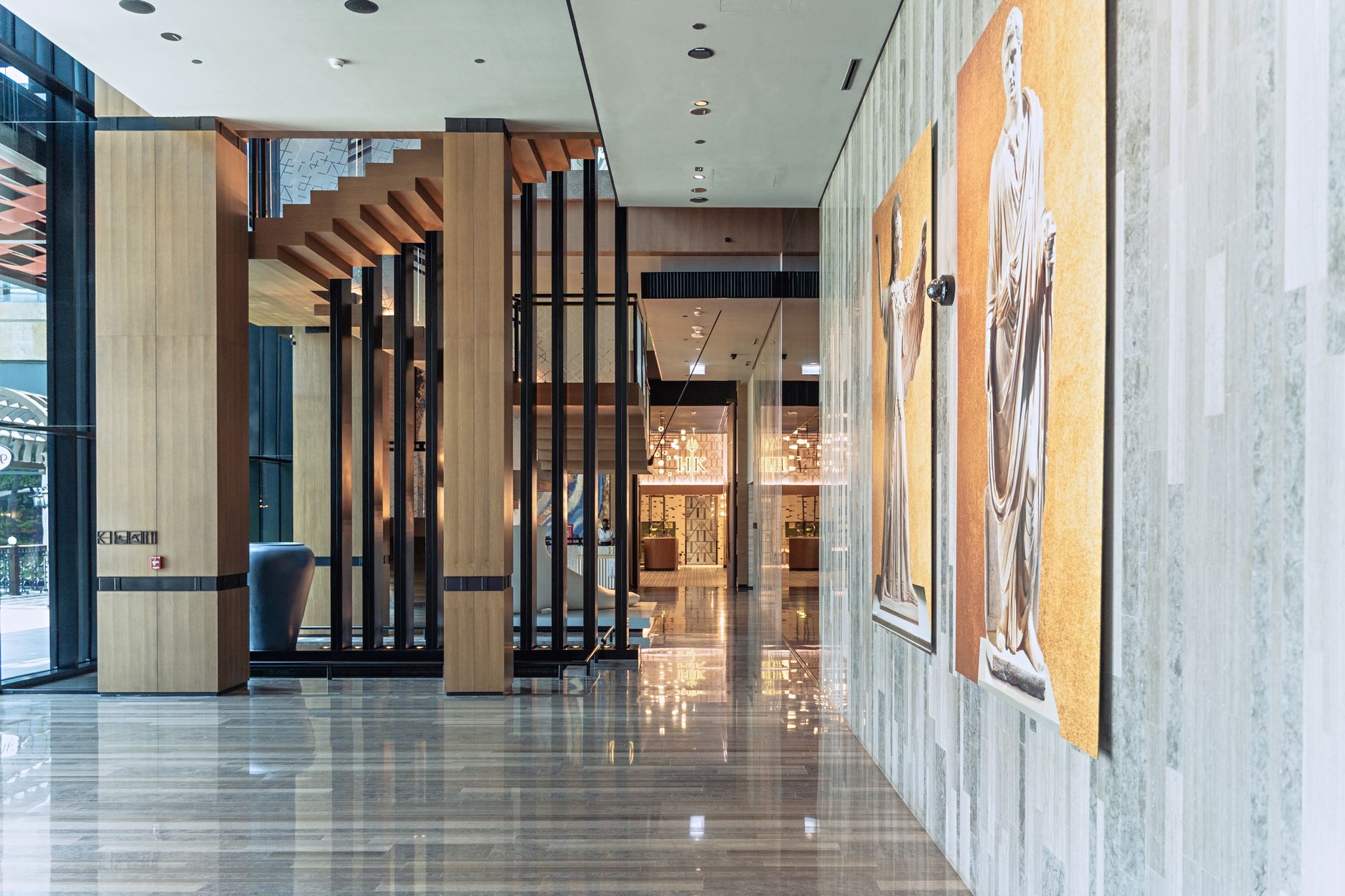
In Florence, contemporary art is trying out a new address, at least for a month. From 10 September to 10 October 2026, the Anglo American Hotel Florence – Curio Collection by Hilton hosts Animeyed, a project dedicated to Hungarian photographer Flóra Borsi and the first event of Art Suite, an initiative conceived by Florence Biennale in partnership with the hotel.
This initiative is not simply an exhibition relocated to a hotel due to space constraints. Art Suite was created to embed artworks directly within the tangible hospitality experience: guests arriving at the property will find ten photographs arranged throughout the hotel, in areas passed through during their stay. Meanwhile, a copy of one artwork will be installed inside a suite, accessible only to guests staying in that room.
It is a choice that shifts the relationship between viewer and image. In a museum, gallery, or art fair, encountering artistic work is scheduled and framed by opening hours, predetermined paths, and exhibition functions. In a hotel, photography enters an entirely different sequence: arrival, waiting, crossing communal spaces, returning to the room. The artwork is not necessarily sought out; it can become a recurring presence, far less detached from the visitor’s daily life.
The debut with the work of Flóra Borsi
Animeyed brings together images from the most recognizable body of work by Flóra Borsi, an artist born in 1993. Her process begins with photography but is built through performance and digital interventions. At the core are frequently self-portraits in which a human face is juxtaposed or merged with elements from the animal world: swans, flamingos, chameleons, and other natural figures become part of the composition.
The selected images include Swan, Black Swan, Chameleon, and Flamingo. These are works where identity remains visible, yet is altered by the overlap between the human and animal subject. The transformation is not a decorative detail: it addresses how the face is recognized, represented, and interpreted by the viewer, alongside the connection between humanity and nature.
For Borsi, this is not the first collaboration linked to Florence Biennale. Her works had already been used in the coordinated visual identity for the event's 2021 edition. That same year, the artist was Guest of Honour at the XIII Florence Biennale, dedicated to the theme Eternal Feminine | Eternal Change. Concepts of Femininity in Contemporary Art and Design, receiving the Premio Lorenzo il Magnifico del Presidente. Art Suite therefore continues an existing relationship, opting however for a more widespread format that is less tied to the biennale's timeline.
A hotel as a cultural space, without replacing the museum
Florence is a city where hospitality and culture have long overlapped, but typically through historical heritage, monumental itineraries, and major museum institutions. Florence Biennale's project intervenes on different ground: the possibility for a hotel to act as a touchpoint with contemporary production, without necessarily presenting itself as a new museum.
The distinction matters. An accommodation facility has its own constraints and priorities: it must guarantee navigation, comfort, security, staff workflow, and service quality. Art placed in these environments must therefore coexist with foot traffic and flows that differ from those of an exhibition visit. For the public, it can offer informal access to contemporary works; for the hotel, a component of the identity and experience offered to guests. Finally, for the organizers, it is an opportunity to reach people who would not necessarily have stepped into a dedicated art venue.
However, the formula also presents a structural limitation. Accessibility is not uniform: part of the artwork is in the hotel's shared areas, while the piece located in the suite is reserved for its occupants. That work thus enters a private, temporary circuit defined by room bookings. This is not a flaw to hide, but rather an element that clarifies the nature of the project: Art Suite experiments with the intersection of hospitality and art, including through varying degrees of access.
In this sense, the artwork in the room is the initiative's most distinctive gesture. The suite is not merely a container for an artistic object, but the space where the time of engagement expands. The guest can coexist with the image, revisit it at different moments, and detach it—at least partially—from the rapid visual consumption that often characterizes public spaces and digital channels. At the same time, the arrangement highlights how much the value of the experience can depend on the material conditions of hospitality.
The model and its impact on the city
Art Suite arrives in a city where tourism pressure demands an ongoing discussion about the quality of what is offered and the relationship between visitors, businesses, and the urban fabric. A project of this type does not resolve issues such as cultural accessibility or the balance between tourism and civic life on its own. However, it can point toward a specific direction: using existing hospitality infrastructure to host cultural content, rather than simply dressing up the stay with generic references to local heritage.
The difference lies in curatorship and continuity. An artwork hung in the lobby as furniture conveys little of the research behind it; an explicit selection, tied to a project and an artist, can build a more legible context. The details released about Art Suite point to ten photographs distributed throughout the hotel and an exhibition with defined dates: these elements suggest a temporary intervention, with a recognizable theme and creator, rather than mere permanent decoration.
For Florence Biennale, the initiative also extends its reach beyond the exhibition event itself. The biennale can circulate relationships, artworks, and artists across other venues in the city, maintaining the link to its recent history. For Anglo American Hotel Florence, the agreement delivers a cultural program connected to the local area and the international contemporary scene. The success of the experiment, however, will depend on how guests perceive it and on the ability to maintain a clear distinction between an artistic proposition and a mere hospitality marketing lever.
For now, Art Suite has an initial schedule and a first face: Flóra Borsi, from September 10 to October 10. This event will show whether the hotel can become, at least at times, a place for cultural engagement with its own grammar. Neither an alternative to traditional institutions nor entirely public, but integrated into the urban landscape of a city that continues to search for new ways to combine hospitality, cultural production, and contemporaneity.


