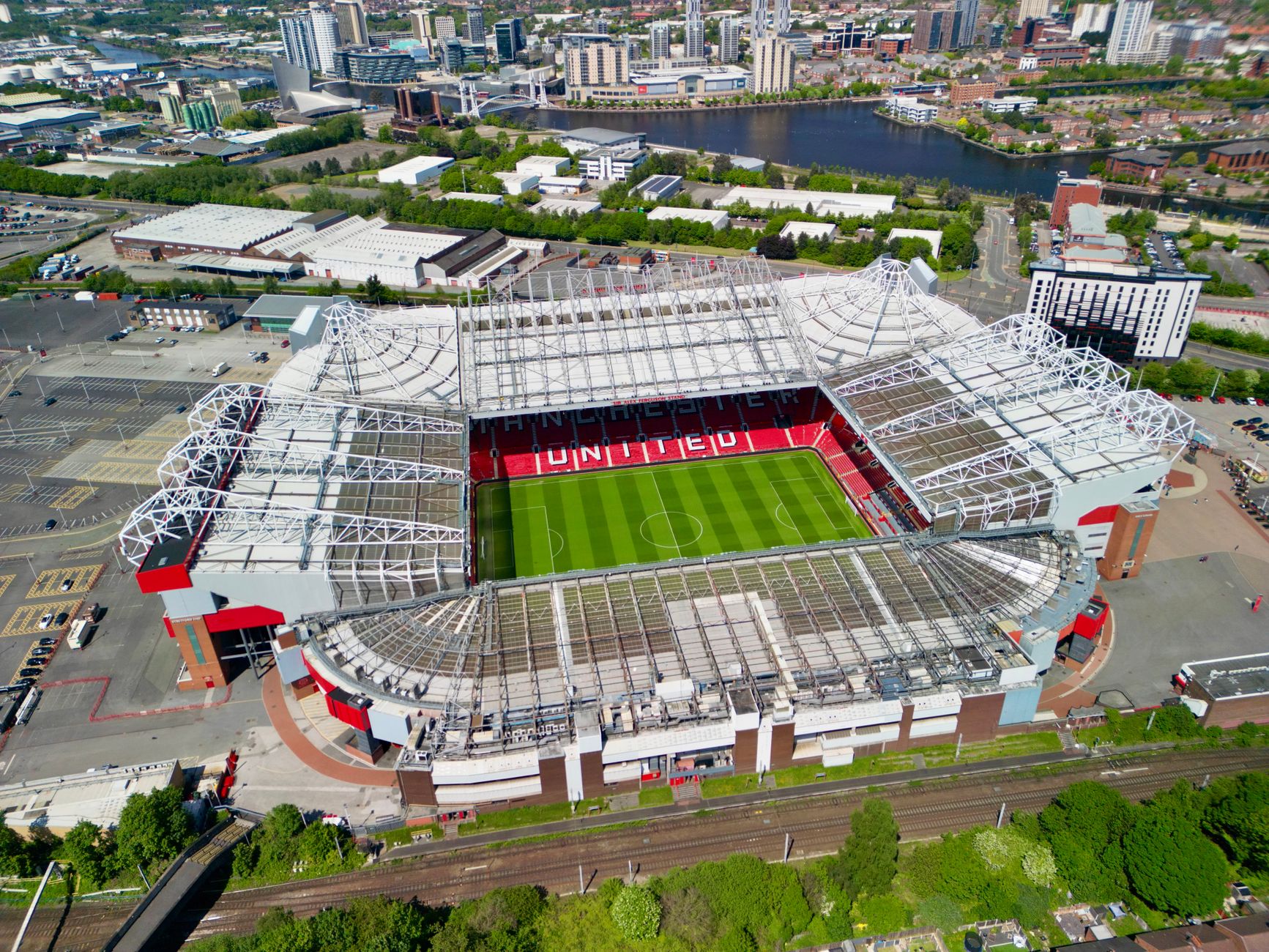
Michael Carrick makes no secret of how counterintuitive his mood might appear on the eve of Manchester United-Roma. The team enters the Champions League clash winless in nine matches across all competitions, in a precarious position both in the Premier League and in the European standings. Yet the Red Devils manager views the fixture at Old Trafford as an opportunity, not as yet another trial to endure.
The manager admitted that, looking at the results and the context, his enthusiasm might seem “crazy”. But he explained that he is eagerly anticipating a night that, in his vision, must become a pivotal one for the club. He made no attempt to predict his own future nor did he point to shortcuts: the message was firmly focused on the match and the opportunity to change the course of the season through a convincing performance.
For Carrick, who signed a two-year contract in the summer, the fixture list offers little leniency. Roma have lost only one match since the start of the season: a home defeat against Real Madrid in the Champions League, conceded after the Giallorossi were leading 3-1 with seven minutes left on the clock. United, by contrast, have already suffered European defeats against Atletico Madrid and Como and sit 21st after three rounds. Under the competition's new format, only the top 24 in the table advance to the next stage: the English side is still within that threshold, but with no margin left to keep losing ground.
A match beyond the European standings
The significance of Roma-United goes well beyond the points on offer. In the Premier League, Manchester United sit in 17th place, a reality that turns every fixture into a direct confrontation with the mood of an already exasperated environment. The nine-match winless run is the club's worst since 1988-89. To find a streak of ten games without a victory in a single season, one has to go back to 1977-78.
These historical comparisons do not dictate the decisions of the ownership or executive board on their own, but they illustrate the depth of the slump. Speculation is mounting around Carrick regarding a potential managerial change during the upcoming international break. In this context, the match against Roma will not automatically resolve everything, but it could heavily influence the immediate verdict on the manager and the team's ability to prevent a rough patch from spiraling into a more structural crisis.
Old Trafford, by tradition and pressure, magnifies every signal. A victory would provide United with a useful result in the Champions League and an emotional foothold ahead of upcoming fixtures; another winless night, however, would fuel doubts about the tactical project. Carrick chose not to shift the conversation toward personal risk. His reading is that the squad must turn the opportunity into a “great night,” regardless of what might happen next.
The dressing room dilemma and the Martinez case
The eve of the match also offered insights into the internal atmosphere. During the open training session at Carrington, Bryan Mbeumo and Carlos Baleba appeared particularly engaged, as did Lisandro Martinez. The Argentine defender is back in the spotlight after being sent off against Chelsea, an incident that sparked strong negative reactions and fueled calls for his omission against Roma.
Carrick took a cautious stance: in football, he noted, wrong decisions and moments when things simply do not go right can happen. His comments regarding squad commitment were more direct. The manager dismissed the idea of any issue regarding the players' dedication to the club, the manager, or their teammates. According to Carrick, the team must improve in the quality of its play and in decision-making on the pitch, rather than in effort or willingness.
It is a significant distinction. During periods of poor results, public debate tends to interpret every mistake as a sign of division in the dressing room. Carrick, on the other hand, is trying to steer the discussion back to athletic output: performances, decisions, and the ability to manage key phases of matches. Roma will present a stern test in precisely these areas, not least because they arrive in Manchester on the back of a seasonal run that has made them competitive even against top-tier opponents.
Mainoo and the search for a turning point
Alongside Carrick at the press conference was Kobbie Mainoo. The English midfielder returned from the bench against Chelsea after missing four matches due to a muscle issue. At 21, he is among the youngest in the squad, but his history at the club gives him a unique perspective: he joined the United academy at seven years old and is the longest-serving player currently tied to the club.
Mainoo acknowledged the toughness of the season, but urged against viewing the current situation as irreversible. His belief is that a single win can quickly shift momentum. It is an understandable stance in a dressing room that, following a long negative run, needs first and foremost to break the cycle. However, the result alone would not erase the issues that have surfaced in recent weeks; it would primarily serve to rebuild the confidence needed to address them.
United are no strangers to difficult seasons and have navigated rough starts in the past. Their last relegation dates back to 1973-74; after at least nine matchdays, the club had not found itself in the relegation zone since November 1986, during Sir Alex Ferguson's first two matches in the dugout. The current 17th place also echoes the worst standing after at least nine games since that era, in 1989-90, when the team was likewise seventeenth. These historical comparisons do not ease the present reality, but they explain why discontent has grown so quickly.
The clash with Roma therefore brings together three key demands: staying in contention to advance in the Champions League, delivering a credible performance in front of their home fans, and giving Carrick a tangible response while his future is under debate. The manager says he cannot control what will happen in the coming days. He can, however, prepare for a match that, given the context and the opponent, has already taken on the weight of a decisive turning point.