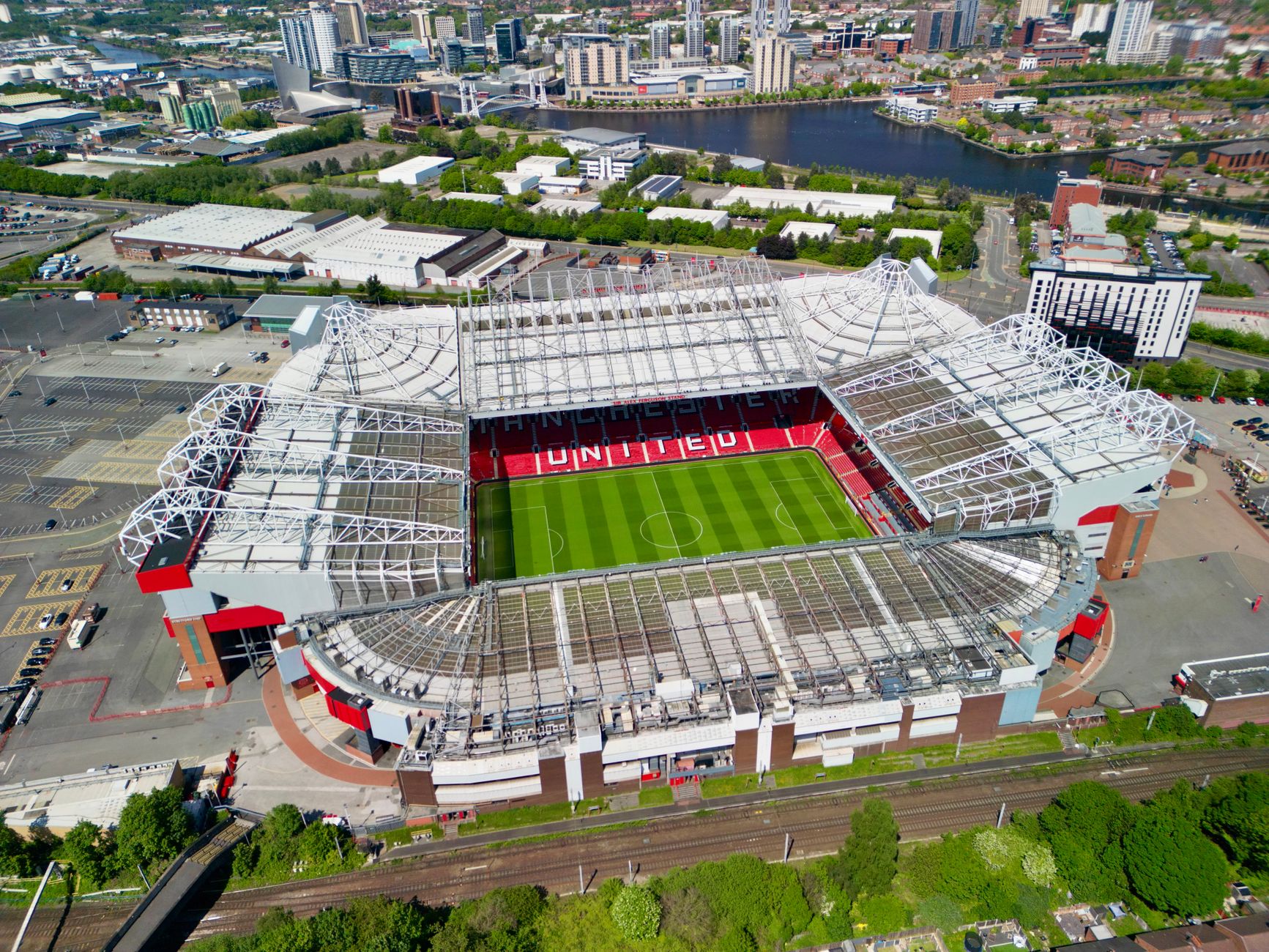
To see Bob Dylan at the Unipol Dome in Milano on November 2, attendees first had to accept an almost non-negotiable condition: locking their smartphone in a sealed pouch. Not turned off in a pocket, not used discreetly, but removed from immediate availability for the entire duration of the show. In an arena accustomed to the continuous documentation of live events—photographs, vertical clips, text messages, glowing screens—the rule altered the relationship between audience and stage before the first song even began.
The most tangible consequence was also the simplest: no personal archive of the evening. No video to compensate for the distance, no zoom to bring closer an artist who deliberately remained out of the spotlight. Dylan appeared at the piano on the left side of the stage, his head covered, in an understated setting: a blue backdrop, dim lighting, and no giant screens to widen the frame. For part of the audience, during the first few minutes, identifying the musician at the center of the event with certainty was not even immediately obvious.
It is a choice consistent with the way Dylan has approached his concerts for years, but in an arena it carries particular weight. The phone usually acts as a visual prosthetic and an escape from attention: it allows people to search for details not visible from their assigned seat, to interrupt their listening, and to turn a performance into a stream of content to save or post. Here, that mediation was removed. What remained was the music, with all its friction.
A concert that does not simplify listening
Dylan, 85, did not build a celebratory set in the most predictable sense of the word. The 18-track setlist alternated recent material with songs from different eras of his career, offering no explanations between tracks and seeking no direct dialogue with the room. Opening with Watching the River Flow and It Ain’t Me Babe immediately signaled the direction: widely known tracks, yet subjected to an overhaul that shifts their profile, rhythm, and recognizability.
The voice remains a distinctive element, even if today it sits at a distance from the audience, rougher and less clear in the arena setting. During the opening songs, the sound also struggled to find satisfactory definition in the stands. Unipol Dome offers a capacity that accommodates greater demand than a theater: three years ago, at Arcimboldi, getting a ticket for Dylan was difficult and expensive. Moving to a larger venue broadens access, but entails clear acoustic compromises for a show built on subtle dynamics and layered arrangements.
It is not a minor detail. A Dylan concert does not thrive merely on the familiarity of the repertoire, but on its continuous reshaping. Live versions can drift so far from the benchmark recordings that listeners may be uncertain, at least at first, about what they are hearing. It is part of his method: songs are not treated as relics to be faithfully reproduced, but as material that remains malleable. Anyone arriving expecting a collection of hits in their most recognizable form therefore encounters a less accommodating live set, built through subtraction and detours.
The band gives shape to the repertoire's detours
The musical core of the evening was the quintet backing Dylan. Tony Garnier on bass, Anton Fig on drums, and Joel Paterson and Mike Seal on guitars supported a genuine band setup, more interested in internal dialogue than in a spectacle. Jams took up space between and within the songs, with an upright bass positioned centrally to highlight one of the ensemble's most prominent timbres.
In this setting, even the harmonica, played by Dylan, was used sparingly: just three appearances throughout the set. Precisely because they were not overused, the solos acted as recognizable markers in a performance that often asked the audience to follow its shifts without immediate handholds. The moments that drew the warmest response came from the reinterpretations of Tangled Up in Blue, Million Miles, and I Can’t Seem to Say Goodbye, a track by Jerry Lee Lewis. Not every segment shared the same energy: Black Rider and I’ve Made Up My Mind to Give Myself to You, both from the 2020 album Rough and Rowdy Ways, appeared more restrained.
However, reducing the evening to the performance of individual tracks would be misleading. The concert operated as an environment with its own rules: limited sightlines, no screens, no discursive breaks from the artist, and a repertoire often rendered erratic by the arrangements. Everything pushed audiences to choose whether to truly follow the show or remain on the sidelines. Following a more tentative start, the progression of the performance made that choice easier: Dylan maintained his elusive posture, but the band brought continuity and tension to the set.
The sealed phone as an artistic and market choice
The ban on smartphone use did not eliminate the live show's shortcomings, nor did it automatically turn every concertgoer into a focused listener. However, it prevented physical distance from the stage from being compensated for by a device's screen. In a concert so little geared toward artist visibility, the measure may even seem severe: those far away had no means to catch expressions, gestures, or details of the musicians' craft. It is the flip side of the very choice that shields the experience from the relentless production of video.
For the live industry, cases like this continue to expose an ongoing friction. Audiences have factored personal recording into the price of admission and into the very concept of participation; many artists, by contrast, view smartphones as a distraction, a source of uncontrolled image circulation, and an element that alters the dynamic in the room. Dylan falls squarely into the second camp. He offers no ready-to-share content and refuses to make the stage easily consumable from a distance.
This approach can also reinforce the unrepeatable nature of the event. If no sharp footage exists to rewatch the following morning, what remains above all is the memory of the listening experience—inevitably partial and personal. It is a perspective almost diametrically opposed to the contemporary logic of concerts as social media fodder, yet it resonated with an audience willing to accept the conditions set by the artist. At the end of the two hours, the Unipol Dome responded with a standing ovation: not proof that every choice was flawless, but rather a sign that the premise was understood for what it was—an encounter with Dylan on his own terms.