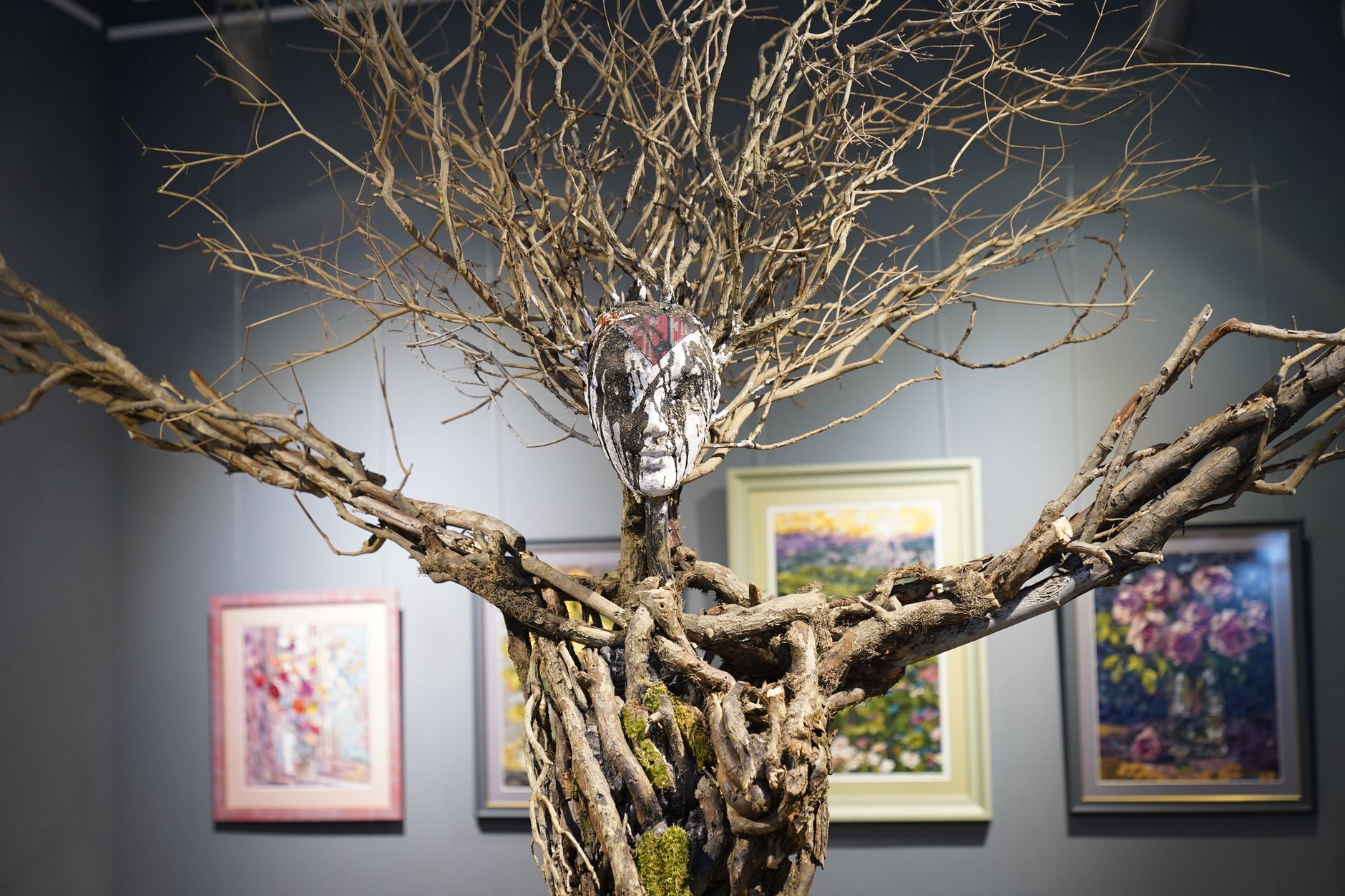
Starting November 12, 2026, the Raffaella De Chirico Arte Contemporanea gallery will host Il corpo negato, an exhibition dedicated to the work of Claudia Virginia Vitari. The event enters territory that has long traversed contemporary visual culture: the body as an exposed, represented, regulated, and at times erased presence from public space.
The available information clearly establishes the date, title, artist, and host venue, but does not yet allow for a detailed reconstruction of the curatorial project, the list of works, opening hours, the run of the exhibition, or any accompanying program of talks. These elements will shape how the exhibition is experienced in practice and will need to be communicated by the gallery ahead of the opening.
However, the title already points to a key axis of reflection for a city like Milano and, more broadly, for urban contexts where images, bodies, and behaviors are constantly curated. Denying the body can mean excluding it from visibility, disciplining its movements, turning it into a surface for consumption, or reducing it to data, an administrative identity, and a social category. In art, these tensions often find a form capable of making visible the rules that remain implicit in everyday life.
The body as the fabric of shared space
The city is not neutral toward the bodies that navigate it. Sidewalks, transit systems, workplaces, storefronts, cultural venues, and surveillance systems define vastly different ways of occupying space. Age, gender, disability, economic status, and background affect freedom of access and the degree of exposure to the gaze of others. An exhibition centered on the concept of the denied body thus inserts itself into a debate that concerns not just aesthetics, but also the tangible distribution of attention, safety, and recognition.
Private galleries occupy a distinct position within this dynamic. While they are venues for commerce and research, they can also act as spaces of mediation: creating opportunities to engage with contemporary artistic practices outside major institutions, often with faster turnarounds and more experimental programming. Their impact hinges on the quality of the work on display, the clarity with which it is presented, and their ability to reach audiences beyond collectors and industry insiders alone.
In this sense, the public value of Il corpo negato cannot be judged on the basis of its title alone. The mediums chosen by Claudia Virginia Vitari, the relationship between the works and the exhibition space, the accompanying texts, and the actual conditions of access will all be decisive. The gap between an urgent theme and a presentation that is genuinely readable for the public is measured precisely in these steps: mediation, practical information, critical apparatus, and the opportunity to spend time in front of the works without having to already know their codes.
A title that demands precision
In contemporary cultural debate, words like body, identity, vulnerability, and exclusion are frequently used. Precisely for this reason, they require precision. An exhibition can address the theme through figuration, installation, photography, sound, performance, or archival materials; it can focus on individual memory, social norms, health, labor, or media-generated imagery. Without further official materials, attributing any of these directions to Vitari would be improper.
The verifiable fact is that the project will be presented with a title that evokes subtraction and absence. It is a formulation that allows for diverse, even contradictory readings: a body prevented from showing itself, a body that escapes classification, a body expelled from the mainstream narrative or, conversely, a physicality rendered invisible by an excess of images. The exhibition will need to clarify which of these dimensions, or which combination of them, it intends to develop.
For those tracking transformations in urban culture, this caution is not a formal detail. The body has become one of the arenas where very tangible issues converge: accessibility of spaces, the right to mobility, housing, care work, commercial representation, and security management. Art does not replace public policy, but it can challenge the complacency with which those policies are perceived. It can make friction visible, give shape to a marginalized experience, and shift the vocabulary a community uses to talk about itself.
Information to await before the opening
Ahead of November 12, the most useful updates will primarily concern the exact venue of the initiative, opening hours and days, the closing date, and any booking requirements. It will also be important to see the curatorial statement, the number and type of works on display, as well as the availability of a catalogue, guided tours, or public talks. These details are essential both for the public and for understanding how the gallery intends to structure the project.
A public engagement programme, if planned, could extend the exhibition beyond individual visits alone. Talks with the artist, discussions with scholars, accessible pathways, or activities open to the neighbourhood are tools that transform the relationship between a gallery and the city. At the moment, however, there are no verifiable details regarding initiatives of this kind, and it is impossible to anticipate their existence.
Contemporary art programming also gains meaning through continuity. A single event can be an isolated episode or part of broader research pursued by the artist and the gallery. Determining this requires information on the exhibition's context and Claudia Virginia Vitari’s exhibition history: elements that do not emerge from the data currently available. It will therefore be advisable to interpret Il corpo negato starting from the works and materials accompanying the opening, avoiding readings built solely on the evocative power of the title.
For now, the news is the announcement of the exhibition and its opening date. In a city calendar often crowded with openings, the project signals the arrival of a body of work that addresses the relationship between visibility and erasure. Starting in November, it will be possible to see how Claudia Virginia Vitari translates this premise into an exhibition experience and what space she leaves for the public's gaze, presence, and discussion.