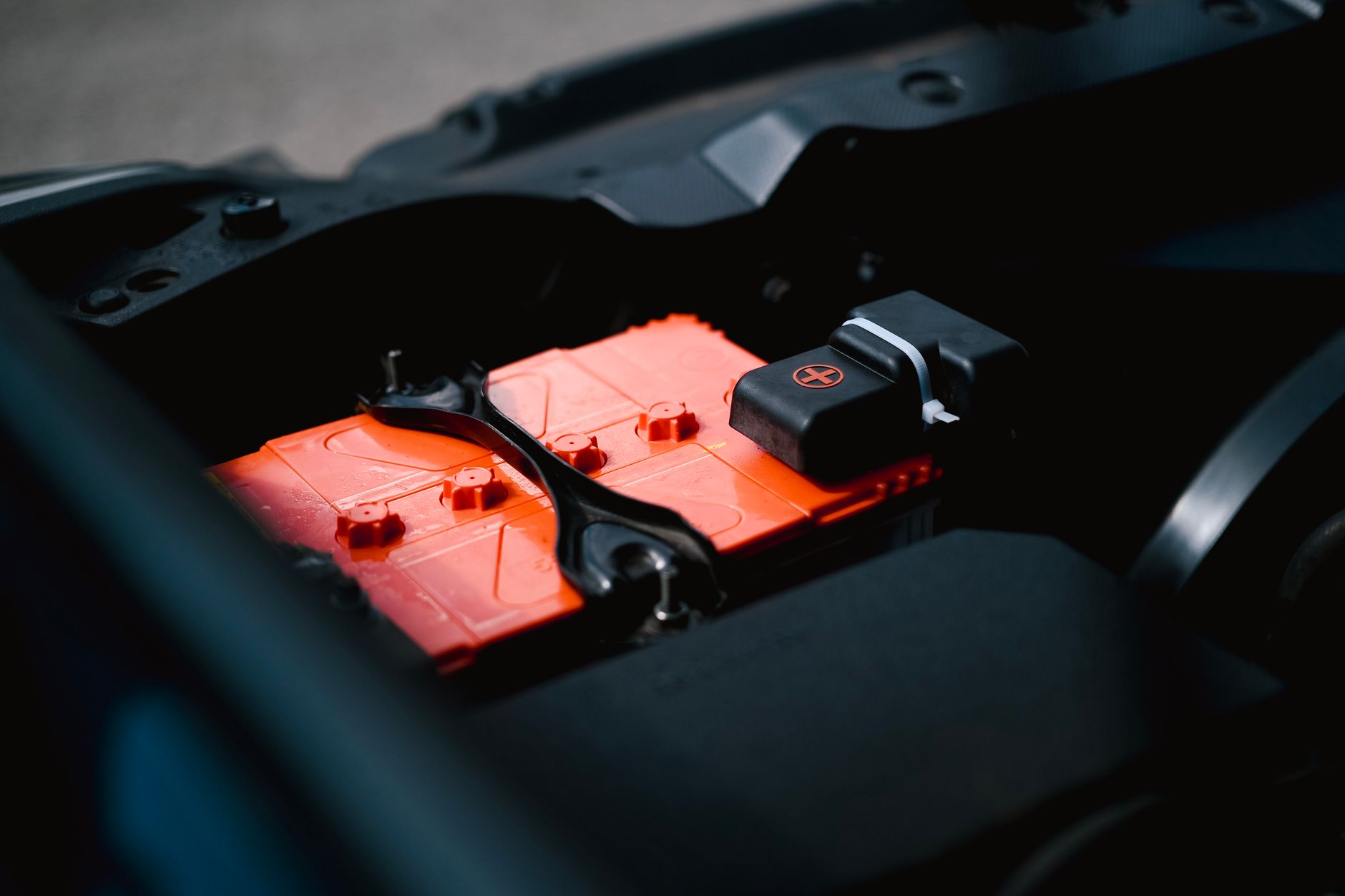
A battery can cease to be suitable for an automobile long before its working life is truly over. It is on this gap that Rebaba, a Swedish startup founded in 2023 by Paula Runsten and Felix Kruse, is building a piece of the new European storage economy. The company has raised $4.6 million, equivalent to 44.1 million Swedish kronor, in an oversubscribed seed round led by Sistafund and EIT Urban Mobility, with participation from existing and new European investors.
The idea is neither to produce a new chemistry nor to build a gigafactory, but to recover batteries retired from electric vehicles and turn them into storage systems for homes, businesses, industrial plants, charging infrastructure, and local grids. According to Rebaba, many batteries leave the automobile while still retaining around 70–80% of their useful life: too little, in some cases, to meet a vehicle’s range, weight, and performance requirements, but still plenty for stationary applications where volume and mass matter far less.
From the Northvolt crisis to an opposing model
The founders' background makes the project particularly compelling. Runsten and Kruse worked at Northvolt, one of the symbols of the European strategy to build a continental battery supply chain. However, the experience gained there led them toward an almost opposite thesis compared to the rush toward massive factories: producing new cells is not always necessary to increase available storage capacity, because part of that capacity is already embedded in the batteries coming out of electric cars and fleets every year.
Rebaba takes these packs, assesses their health, integrates them into cabinets or containers, connects them to inverters, and uses proprietary control software to manage different battery types. The technological complexity lies primarily here: a used battery is not a standard component. Each pack has a history shaped by charge cycles, temperatures, power output, degradation, and operating conditions. To turn heterogeneous hardware into a reliable product, one must determine the cells' state of health and be able to manage them safely over time.
Before recycling, make better use of what already exists
The European battery debate often focuses on recycling—namely, the recovery of lithium, nickel, and other strategic materials. It is inevitable: sooner or later, every battery will have to be dismantled and recovered. But recycling is not necessarily the immediate next step after an automotive lifecycle. If a battery still retains a significant portion of its capacity, extracting its materials immediately means giving up part of the energetic and industrial value it holds.
Second life therefore introduces an intermediate stage. For several years, the same battery can absorb energy generated by solar panels, shave peak consumption at an industrial plant, support a charging station, or participate in grid-balancing services. Only after this second cycle does actual recycling take place.
Storage is becoming infrastructure
The growth of renewables makes this opportunity increasingly relevant. Solar and wind generate energy when natural conditions allow, not necessarily when households and businesses consume it. Storing electricity allows it to be shifted across time, lowering peak demand and making the grid more flexible, where generation and consumption must remain constantly balanced.
Rebaba sells two main types of systems: Companion, a 40 kWh cabinet designed for smaller residential and commercial applications, and containerised solutions for larger commercial and industrial clients. The company is now aiming to expand its Stockholm CircularHub to an annual production capacity of 40 MWh and is preparing to open further hubs outside Sweden.
The real competitor is increasingly cheaper new batteries
The business is not without its hurdles. The price of new batteries, especially those manufactured in Asia, continues to drop, making it harder to economically justify repurposing used components. Rebaba claims it does not want to compete by relying on a “green premium,” but rather on price, performance, and warranties. This is arguably the model’s most crucial test: circularity only truly works at scale when it remains competitive without asking customers to pay extra for sustainability.
The company currently has 16 employees and plans to make new hires. According to the founder, already-installed systems are profitable and demand exceeds current production capacity. The fresh capital will therefore primarily serve to turn what is still a relatively small business into an industrial platform that can be replicated across other European markets.
An urban mine growing alongside electric vehicles
If the electric vehicle fleet continues to expand, the number of retired automotive batteries will inevitably rise as well. Not all of them will be suitable for a second life, but the aggregate volume could become a significant source of energy hardware. It is a kind of urban mine: rather than immediately extracting new raw materials, the goal is to squeeze additional years of service out of items that have already been manufactured.
For Europe, this also has a geopolitical dimension. The continent remains heavily dependent on external suppliers for cells and raw materials. Reusing batteries already on domestic soil does not eliminate that reliance, but it can reduce the amount of new capacity needed and foster a local supply chain spanning diagnostics, software, integration, maintenance, and energy services.
Second life must become an industry, not a niche
The most compelling aspect of Rebaba is that it aims to transform reuse from a bespoke project into an industrial process. The startup claims its software enables it to manage batteries from different origins while keeping the rest of the architecture standardized. If this promise holds up as the company scales, CircularHub locations could function as local nodes capable of taking in decommissioned batteries and converting them into usable energy products for the surrounding area.
The challenge is massive because the energy transition will demand ever-greater amounts of storage just as artificial intelligence, data centers, and the electrification of transport and heating drive up electricity demand. In this scenario, building every single new megawatt-hour of storage with freshly produced cells might not be the only rational path forward.
Rebaba stems from an insight less spectacular than a new gigafactory, but perhaps just as important: before asking how many new batteries we need to build, it is worth understanding how many of the batteries we have already produced can still work. It is an industrial, economic, and environmental question all at once. If the answer is substantial enough, the second life of batteries could become a structural part of European energy infrastructure.


