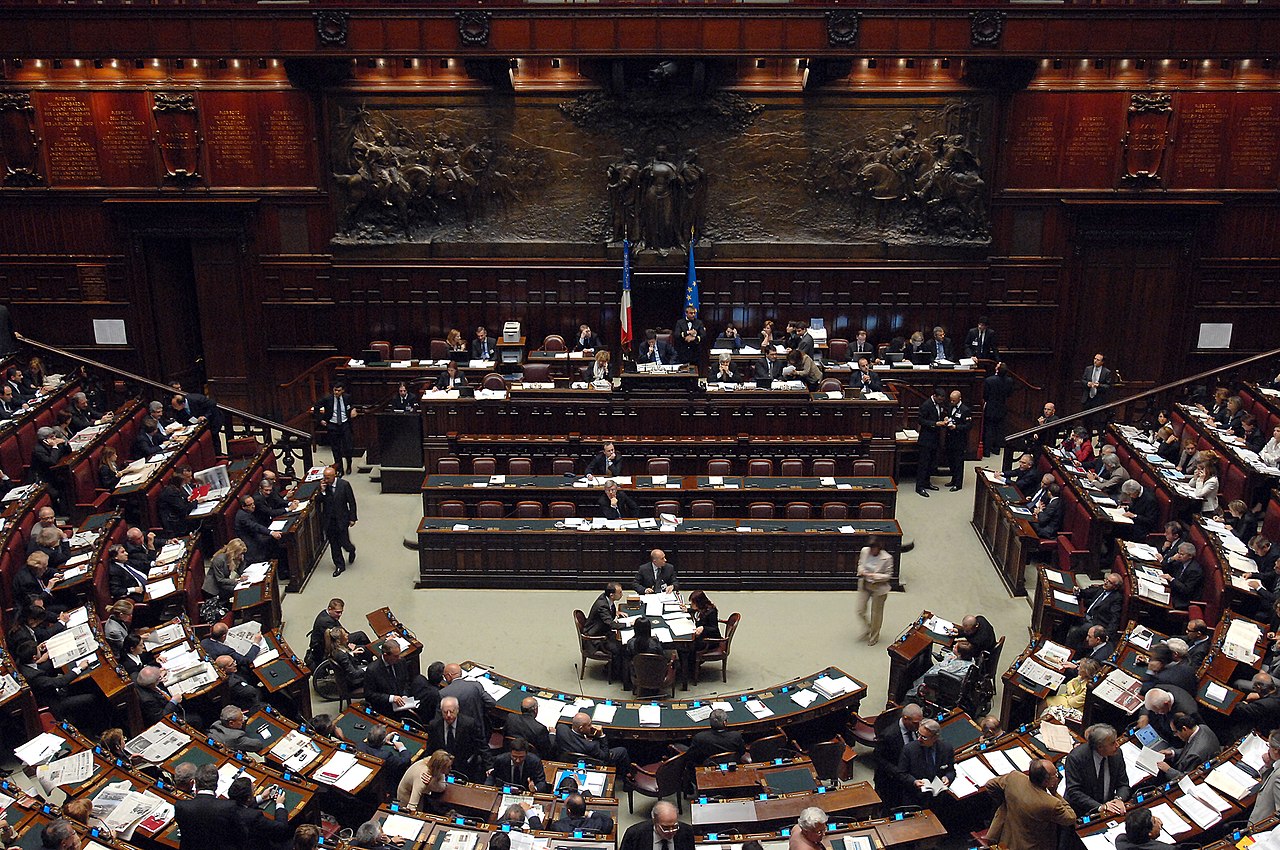
Italian politics keeps calling young people “the future”. Yet when parties decide who gets a chance to represent the country, that future is frequently left outside the room. Giovani Dentro (“Young People Inside”) wants to change the unwritten rules of political recruitment. The campaign led by Yari Russo is asking every party to allocate at least 20% of its candidates for the Chamber of Deputies to people under 35 ahead of Italy's expected 2027 general election.
What makes it a worthwhile campaign is its specificity. Instead of a vague appeal to “listen to young people”, it sets a measurable goal and pledges to check whether parties follow through. It also raises a wider question at the intersection of policy and technology: how can participation that increasingly begins online translate into actual decision-making power?
The numbers behind the representation gap
According to Giovani 2024: Il bilancio di una generazione, a report produced by Eures together with Italy's National Youth Council and Italian Youth Agency, the number of deputies elected aged 35 or younger dropped from 133 out of 630 in 2018 (21.1%) to 27 out of 400 in 2022 (6.8%). Parliament itself was reduced in size, but younger representation declined much more sharply: almost 80% fewer younger MPs.
This is not simply a question of birthdays. It is about which experiences shape decisions on work, housing, education, mobility, climate, innovation and artificial intelligence. Older lawmakers can certainly address those issues. But democratic debate benefits from including people with different life circumstances, priorities and time horizons.
In the same report, only 12% of young respondents expressed a positive view of how responsive institutions were to their generation's problems. When frustration meets recruitment processes perceived as closed, political disengagement can become self-reinforcing.
What Giovani Dentro is actually asking for
The target is clear: at least one in five candidates for the lower house should be under 35, with younger candidates spread across electoral districts and placed where they have a genuine prospect of election. The campaign is not currently proposing a legally compulsory quota, nor is it claiming that 20% of parliamentary seats would automatically go to younger MPs. It is asking party leaders to make a public political commitment and promising to scrutinise the candidate lists.
That distinction matters. Parties could meet a numerical target on paper while placing younger candidates in positions from which they are unlikely to win. A meaningful assessment would therefore consider not only how many younger people are nominated but where they stand and what happens at the ballot box. In a 3 November interview, Russo explained that the campaign intends to obtain formal pledges and then assess the actual lists.
Giovani Dentro is backed by a cross-party coalition of civic, youth and voluntary organisations. It is deliberately non-partisan: generational representation should not be the monopoly of any political camp.
Who is Yari Russo? From out-of-town voting to civic influence
Russo's experience extends well beyond social media. He is a campaigner with The Good Lobby and has represented the Rete Voto Fuorisede network, which advocates for people studying, working or receiving care away from their registered home town to be able to vote without travelling back.
That campaign combined civic organisations, digital news outlets, public mobilisation, petitions and direct dialogue with lawmakers. In an extensive interview with Giovani Reporter, Russo described an approach built on campaigning, coalition-building, research, media pressure and meetings with public officials. A related popular legislative initiative collected more than 53,000 signatures.
Alongside many other organisations and cross-party parliamentary work, that effort helped produce a tangible outcome: Law No. 180 of 9 October 2026 introduced a permanent framework for out-of-town voting in certain national elections. Eligibility limits and implementation challenges remain. The Good Lobby has already called for a broad information campaign to ensure that people can use their newly recognised rights. The lesson is that campaigning does not end when a post goes viral or even when a law passes. It continues until a public decision works in practice.
Politics now begins in communities — but cannot end with likes
Giovani Dentro also speaks directly to the issues BreakingTech covers. The European Parliament's youth survey found that 42% of respondents aged 16–30 identified social media as their main source of information on political and social issues. Among the platforms used for that information, Instagram ranked first (47%), followed by TikTok (39%) and YouTube (37%).
The digital sphere is also a space for participation. Eurostat reports that in 2025, 30.9% of Italians aged 16–29 used the internet to express opinions on civic or political matters or take part in online consultations or voting — a higher share than in the overall population.
Technology lowers the barrier to entry. An idea can emerge in an online community, become a campaign, attract supporters, bring together different organisations and reach lawmakers. But none of this is automatic. A viral video is not a reform. An engaged online audience is not necessarily an organisation capable of negotiating change. A hashtag cannot replace institutional work.
The out-of-town voting campaign suggests a more effective sequence: digital communication to make a problem visible, coalitions to build leverage, institutional dialogue to turn it into policy, and evidence to measure the results. Giovani Dentro has an opportunity to apply the same logic to parliamentary nominations.
The technology challenge: making party promises measurable
Perhaps the most interesting phase will come after party leaders make their pledges. Consider a public tracker for the 2027 candidate lists: the share of under-35 candidates by party and constituency, their position on lists, whether they are running in competitive districts, the actual number elected, and the differences between promises and outcomes. Giovani Dentro has not announced that it has built such a system. This is an example of how its stated monitoring objective could develop.
Open datasets, interactive visualisations and regularly updated public information can make electoral systems easier to understand. It is a similar philosophy to VotoLab, BreakingTech's electoral atlas, which makes official results and sources easier to explore. The two projects have no announced integration, but they address related questions: how can verified data make politics more transparent?
Artificial intelligence could help analyse public documents, summarise manifestos and compare promises with outcomes. Yet it must not become an opaque tool for manipulating opinion. Reliable sources, human oversight, privacy and methodological transparency are essential.
Digital campaigning only works when it earns trust
New political communication tools carry risks alongside opportunities. Social platforms make mobilisation faster, but can also accelerate disinformation and polarisation. Audience targeting may make communication more effective, but opaque targeting can undermine public trust. The EU's Regulation 2024/900 on political advertising, fully applicable since 10 October 2025, strengthens requirements to identify political ads and disclose how audiences are targeted.
For a civic effort such as Giovani Dentro, the opportunity is to create public pressure that can itself be scrutinised: clear goals, transparent backing, accessible evidence, open dialogue with all parties and regular reporting. Technology is not the goal; it is infrastructure for making participation easier and promises harder to forget.
Why Giovani Dentro deserves attention
Younger politics is not automatically better politics. Age is no substitute for competence, and no generation has a monopoly on good judgement. But appeals to merit should not become a permanent excuse for closed doors. Parties have a responsibility to identify, train and select capable younger people and give them a realistic chance to compete.
Giovani Dentro deserves support and attention because it tests a promise that nearly everyone makes in principle. Its strength is turning a generic ambition into a simple benchmark: one candidate in five, with a genuine opportunity to win. Russo's challenge is to show that a generation can organise through new communication channels, use digital tools to make itself heard and ultimately enter the rooms where decisions are made. The 2027 candidate lists will show whether Italy's parties are ready to respond.


