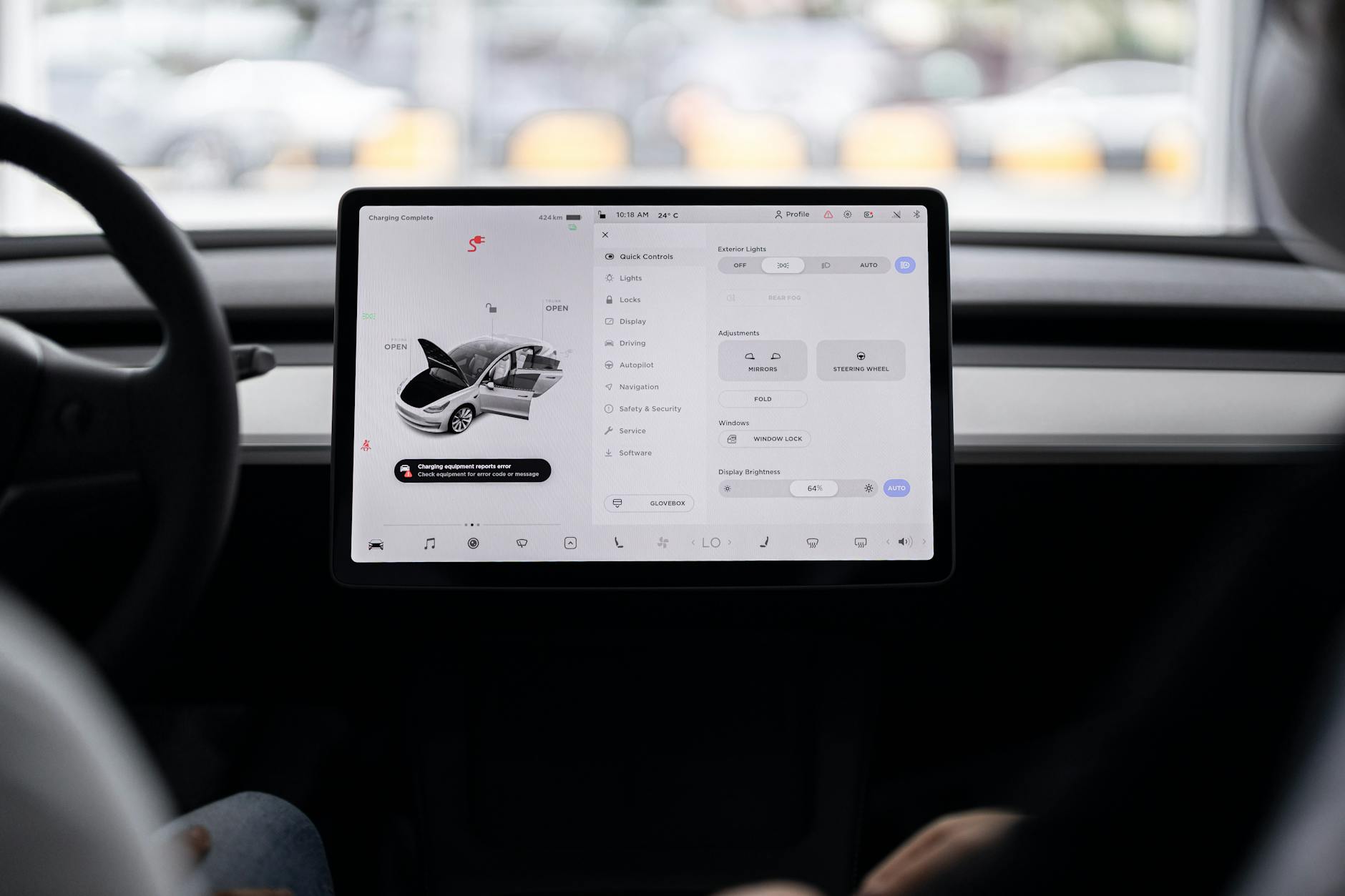
Google is preparing an update for the in-car app experience on vehicles equipped with Google built-in. At the center of the overhaul is the Play Store, which in the coming weeks will receive a redesigned interface for automotive screens, more direct tools for discovering content, and a streamlined installation process. The goal is to make a feature less cumbersome that, on infotainment systems, must contend with widely varying display formats and safety constraints far stricter than those on a smartphone.
The update comes as automakers are expanding the use of in-car integrated software capable of delivering Google services and Android applications directly from the vehicle. This is not, therefore, phone projection onto the display via Android Auto: apps run in the infotainment system's native environment and can be searched for and downloaded directly from the onboard system. This is an important distinction for understanding the scope of the update, as the Play Store becomes a core component of the connected car rather than just an accessory catalog tied to the driver's smartphone.
A store tailored to the car display
The redesign primarily aims to address one of the recurring challenges in digital dashboards: the lack of a single standard for screen size, aspect ratio, and orientation. The new Google Play interface will automatically adapt to the panel installed in the vehicle, including vertical displays. Navigation will also see a layout change: on horizontal screens, the main items will be located on the left, while on systems with vertical screens they will move to the top.
The planned sections include Apps, Games, Search, and More. Featured applications will be highlighted on the homepage, and downloads can be initiated with a single tap. These are seemingly ordinary changes for an app store, but in an automotive context they have a major impact on ease of use: the catalog of compatible software is growing, while browsing must remain readable and quick, particularly when the car is parked and occupants want to choose content without navigating menus designed for a home display.
Google points to an automatic rollout over the coming weeks. No detailed timeline by individual brand nor a complete list of models set to immediately receive the new Play Store has been provided. Actual availability will therefore depend on the vehicle, software configuration, and how each manufacturer has integrated Google built-in into its own system.
More parked entertainment, without turning the car into an unregulated screen
At the same time, new applications designed for use while the vehicle is parked will arrive. Among those mentioned by Google are STARZ, Firefox, Ludo King, and JioHotstar. The lineup clearly illustrates the platform’s direction: alongside games and video services, there is a browser and products tailored to specific markets. For those waiting inside, charging an EV, or traveling as passengers, the cabin is increasingly treated as a space for media consumption; for the driver, however, the line remains the blocking of visual features while driving.
The most interesting measure is built precisely around that boundary. YouTube can be watched on the in-car display while parked, and the moment the car shifts into drive, the video will seamlessly switch to audio only. Google restricts this continuity to YouTube Premium subscribers. Video playback while driving is therefore not being introduced: what changes is the handling of the transition between parking and driving, avoiding the need to stop and restart content just to keep listening to the audio track.
It is a functional choice, especially for podcasts, interviews, conferences, and other videos where audio stands on its own. At the same time, it highlights the model Google is building inside the cabin: visual entertainment remains tied to parked status, while listening can accompany driving under rules akin to those of an audio platform. The Premium requirement is a clear limitation, however: those using YouTube without a subscription will not get this transition mode.
The stakes for Google and manufacturers
Google built-in is the program through which automakers integrate services like Maps, Assistant — and now, on several supported models, Gemini — along with support for Android applications into the infotainment system. It is distinct from the Android Auto experience, where the phone powers the apps and the interface displayed by the car. Adoption of the platform started with models such as Polestar 2 and has since expanded to vehicles from Honda, Ford, General Motors, Nissan, Volvo, and other brands.
For Google, a simpler Play Store is a way to make that ecosystem more useful to users and more appealing to developers. An app available in the catalog means little if it is hard to discover or if its listing does not adapt to the car's display. For manufacturers, on the other hand, integration offers a shortcut to a suite of services, voice search, navigation, and content already familiar to the public, while also narrowing the gap between the vehicle's digital experience and Google's software infrastructure.
The update does not resolve all the open questions surrounding connected infotainment. Discrepancies between brands and models, uncertainty over rollout timelines, and an inevitably narrower app selection compared to a smartphone still remain. Above all, a richer interface does not change the core principle: features requiring visual attention must remain confined to when the vehicle is parked. New apps and adaptive design expand what can be done while spending time in the car, but they do not eliminate the restrictions imposed by driving.
Over the coming months, two aspects will be key to watch: which vehicles will be first to receive the new experience, and how quickly the catalog will be populated with software genuinely designed for the cabin rather than merely adapted. For now, Google is tackling the access point to apps and introducing a concrete solution for listening to YouTube after driving off. It is an update less flashy than a new voice assistant, yet crucial to turning the car screen into a platform with its own rules, services, and usage patterns.