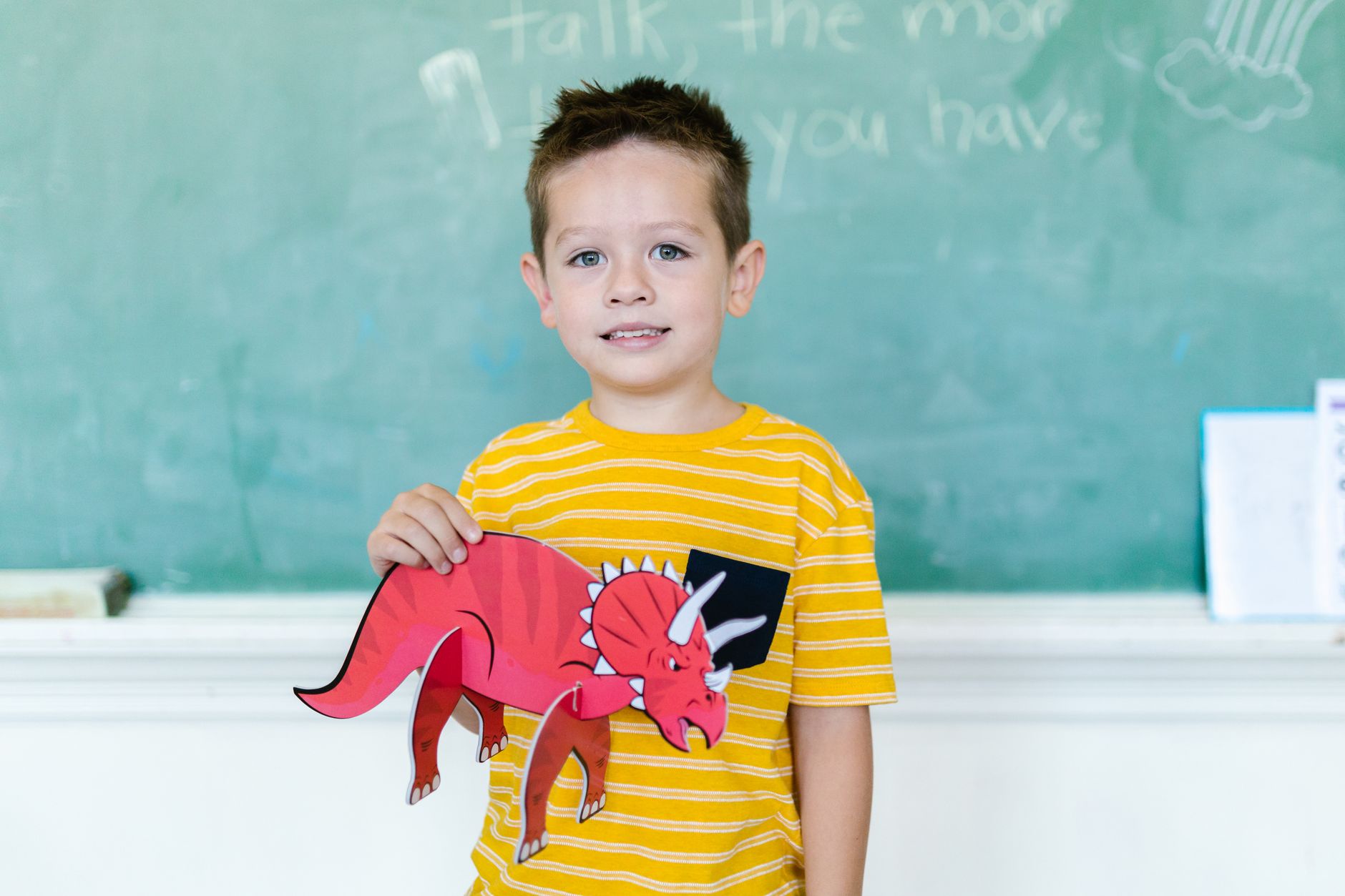
A small dinosaur sitting in a hot-air balloon has long accompanied the animations, LEGO models, and even the laptop stickers of the Hera team. Until now, however, it lacked an essential element: a name. The European Space Agency has therefore launched a public contest to name the mascot of its planetary defense mission, heading toward the binary asteroid system Didymos-Dimorphos.
The choice of animal is not accidental and, beyond the playful tone of the initiative, aims to make the mission's scientific theme immediately recognizable. The extinction of the dinosaurs is commonly associated with the massive impact that occurred about 66 million years ago, linked to the Chicxulub crater off the coast of Mexico. Humans, the ESA campaign implicitly reminds us, possess the scientific tools and space programs to detect, observe, and one day deflect potentially hazardous celestial bodies.
The contest offers an invitation to Berlin on November 25, for the event where the first images collected by Hera upon arriving at its targets will be presented. The selected proposal will be evaluated by an internal mission jury. To participate, entrants must provide the suggested name, an explanation supporting the choice, their contact details, and, optionally, a video: submissions can be sent via the form provided by ESA or to the dedicated email address. The initiative is open to citizens of Member, Participating, and Associate States of the Agency; the deadline is set for Friday, October 23.
A lighthearted character around a very concrete experiment
Hera is not a mission designed to search for extraterrestrial life or mine resources from asteroids. It is the European component of an experiment directly tied to the ability to respond to a potential impact threat. The spacecraft, roughly the size of a car, is headed to Dimorphos, a small asteroid moon orbiting the larger Didymos.
Dimorphos already made space exploration history in September 2022. On that occasion, NASA crashed the DART probe into it, aiming to verify whether a kinetic impactor could alter an asteroid's trajectory. The test achieved its primary objective: Earth-based observations detected a change in Dimorphos’s orbital period around Didymos, along with a noticeable increase in the system's brightness immediately following the collision.
What could not be fully reconstructed from a distance is the physical effect of the impact on the asteroid’s surface and internal structure. How much material was ejected? What were the characteristics of the crater? Is Dimorphos a solid monolith or a rubble pile held together primarily by gravity? These are crucial questions because the effectiveness of a deflection also depends on the nature of the target object, not just the probe’s speed or mass.
Hera will therefore carry out a close-up investigation of the impact site. The mission will measure and characterize Didymos and Dimorphos, focusing particularly on the aftermath left by DART. It also carries two CubeSats, small satellites that will contribute to observing the system. The expected outcome is not an off-the-shelf technique to be applied indiscriminately, but a more robust experimental foundation to understand under what conditions kinetic impact can become a reliable response to a real threat.
From animated story to on-board presence
The mascot was born out of an effort to tell the story of a complex mission without reducing it to a string of acronyms and orbital parameters. The animated series dedicated to Hera was developed by Portuguese company The Science Office, which created characters for the probe and its two CubeSats. During the planning of one of the early episodes, dinosaurs appeared supporting planetary defense; from that idea emerged the decision to permanently pair a dinosaur with the protagonist Hera.
The character has continued to appear in the mission's visual materials, suspended in his hot-air balloon. According to mission manager Ian Carnelli, the dinosaur will not remain merely a graphic element used for communications: a depiction of it is also aboard the spacecraft. ESA plans to reveal it around the time of arrival at the asteroids.
It is a symbolic detail, of course, but well-calibrated to the nature of the campaign. Planetary defense missions operate on very long time horizons and deal with low probabilities, often difficult to communicate without slipping into alarmism or science fiction. A mascot makes Hera recognizable to the public, while the reference to dinosaurs connects modern research to an event that profoundly shaped the history of life on Earth.
Planetary defense does not end with Hera
Hera's arrival at Didymos-Dimorphos represents one of the next visible milestones of ESA's Space Safety program, but work on asteroid risk is unfolding across multiple fronts. Operating in Frascati is the Near-Earth Object Coordination Centre, the facility that coordinates observations and analysis of small bodies approaching Earth, assessing and monitoring their potential hazard.
At the same time, the Agency is preparing other missions with different functions. Ramses is designed to rendezvous with Apophis during its close flyby of Earth in 2029, a rare opportunity to observe how an asteroid responds to an ultra-close planetary encounter. Neomir, on the other hand, is conceived to help detect from space asteroids that may prove difficult to spot through ground-based observations.
This network of activities clarifies an important distinction. Identifying an asteroid, calculating its orbit, and estimating a potential impact probability are entirely different steps from attempting to alter its trajectory. DART provided a practical demonstration of deflection; Hera will serve to interpret it with close-up data. Only by integrating surveillance, modeling capabilities, and experimentation will it be possible to evaluate which options make sense when facing a specific object.
The dinosaur's name will not change Dimorphos's measurements, but the contest comes at an opportune moment to draw attention back to a mission that is about to enter its most anticipated phase. On November 25, when ESA presents the first images from the Didymos and Dimorphos area in Berlin, focus will be on the landscape altered by DART's impact and the data Hera will begin sending back. Alongside the probe, at least in the mission's narrative, there will also be a mascot that has finally been named.


