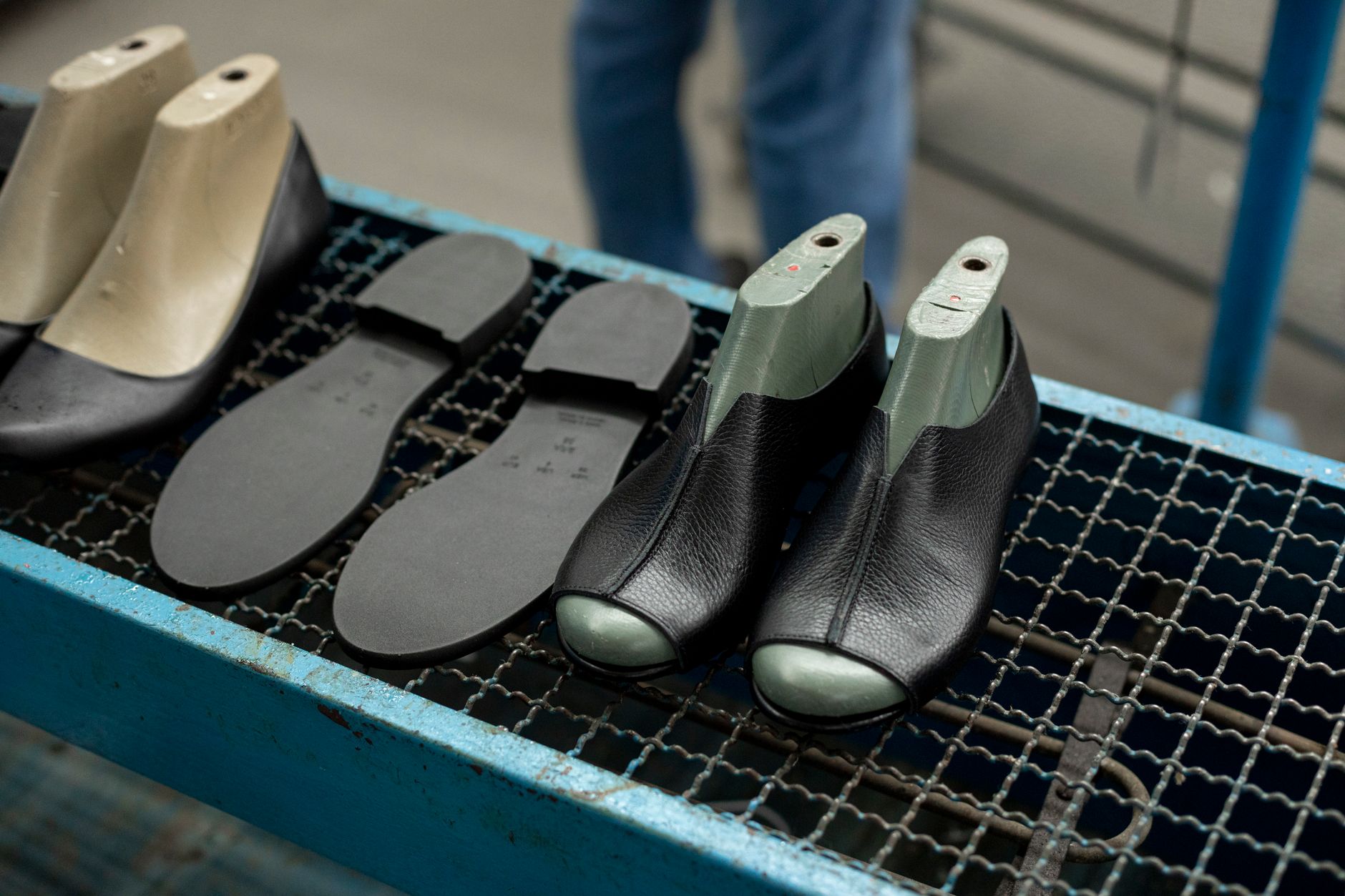
Luxury continues to measure itself against demand that goes beyond the finished product. Those who purchase a high-end accessory or garment pay attention to perceived quality, of course, but increasingly look also at what makes that quality credible: origin, craftsmanship, skills, and supply chain continuity. It is on this ground that Les Femmes built the discussion organized for its twenty-fifth anniversary, turning a corporate milestone into an opportunity to discuss the industrial weight of manufacturing districts and the people who keep them alive.
The Marche-based company, backed by Gruppo Prada and active in pattern development, industrialization, and production for international fashion houses, inaugurated an expansion of its production capacity and a company restaurant for its more than 200 employees on October 25. During the same event, it hosted a round table dedicated to the evolution of consumption in fashion luxury and the value of the local area. The debate, moderated by corporate advisor Cesare Tomassetti, was attended by the president of Regione Marche Francesco Acquaroli; Erika Andreetta, partner at PwC Italia and Emea Fashion Luxury Leader; sociologist Massimiliano Colombi, scientific director of Fondazione B.LIVE; and Les Femmes CEO Mascia Mandolesi.
The setting is as relevant as the speeches. For a manufacturer working behind the scenes for major labels, expanding the facility does not merely mean adding square meters or capacity: it means determining whether the local area can still provide skilled workers, whether young people find a career in manufacturing attractive, and whether technical expertise can remain competitive without losing precision and identity. In luxury, where lead times, materials, and details define product positioning, supply chain stability is part of the commercial value proposition.
The value of the product begins before the boutique
A shared perspective emerged from the discussion: authenticity and reputation are not built solely through brand storytelling. They depend on the concrete resilience of processes, the ability to trace and verify the production pathway, and the transmission of craftsmanship. Supply chain transparency, job quality, and training are therefore factors that directly concern supplier companies, as well as the fashion houses that entrust them with a substantial share of collection manufacturing.
This shift is reshaping the role of the contract manufacturer within the fashion system. The term may still evoke subordinate execution, but the complexity of luxury manufacturing often demands technical expertise that comes into play right from the development and industrialization phases. Les Femmes works with multiple brands and points to this multi-brand approach as a source of learning: each fashion house imposes distinct aesthetic codes, standards, materials, and challenges, while the manufacturer must provide an effective production response without homogenizing its clients' identities.
For Italian industrial districts, this specialization is an asset, but it also carries vulnerability. The hardest-to-find skills cannot be quickly acquired with a new machine or an occasional hire. They are cultivated over time through mentoring, hands-on practice, and the ability to interpret materials and patterns. If generational turnover falters, the chain weakens at the very point where Made in Italy claims its edge: execution.
The new company restaurant should also be viewed from this angle. It does not single-handedly solve the challenge of manufacturing jobs' appeal, but it signals an investment in the daily conditions of factory workers. Mandolesi linked the expansion to the desire to offer career opportunities to local youth and a safer, more stimulating environment for existing staff. At a time when many companies report difficulties finding technical profiles, corporate welfare and work organization become operational levers, not secondary perks.
Territory, but without nostalgia
References to local heritage sometimes risk being reduced to mere identity branding. In the case of luxury manufacturing, however, it has a precise economic dimension. A local ecosystem composed of suppliers, schools, generational know-how, and specialized craftsmanship makes it possible to tackle complex manufacturing processes, rapidly adjust a prototype, and maintain direct dialogue between design and production. When this network thins out, turnaround times, coordination costs, and the risk of standardization increase—clashing with the promises of high-end luxury.
Les Femmes was founded on March 8, 2001, a date chosen in reference to the female audience for whom its creations are designed. The business builds upon a family tradition launched over sixty years ago by Mascia Mandolesi and Fabrizio Sacchini. Alongside its work for leading fashion houses, the company produces the Mascia Mandolesi brand, focused on jewel sandals and bridal collections. This dual dimension—industrial manufacturing and proprietary brand—clarifies the type of expertise the company aims to preserve: not indistinct production capacity, but a cohesive set of techniques where design, pattern-making, industrialization, and finishing must remain closely aligned.
The debate in Marche has not framed the region as an insular enclave. Reaching out to diverse clients and integrating into international supply chains prove quite the opposite. The crux is keeping the core of competencies anchored locally, preventing the expansion of major luxury brands from turning into passive supplier dependency or dispersing hard-to-replace expertise. This is why training carries strategic weight: it develops workers, but it also determines whether an industrial district can continue to negotiate value within the global luxury chain.
Artificial intelligence remains a tool, not artisanal know-how
Technology, including artificial intelligence, also entered the discussion during the meeting. The stance that emerged was not one of rejection: digital tools are already reshaping work organization, analysis, and operational procedures. However, their introduction does not eliminate the role of people in luxury production. While AI adoption can support certain tasks, it does not automatically replace the judgment honed through hands-on craftsmanship, deep knowledge of materials, or the critical eye required to assess details that must meet exacting standards.
It is a useful distinction to avoid two opposing simplifications. On the one hand, thinking that handcrafted luxury can remain detached from innovation; on the other, imagining that digitalization transforms every step into a replicable function. The value of manufacturing also lies in its ability to integrate technology and manual skills, choosing where automation improves reliability and safety and where, instead, quality still requires direct experience.
Copies of the company's 2025 Sustainability Report, dedicated to environmental, social, and governance commitments, were distributed to the audience. Here too, the issue goes beyond mere reporting. In relationships between maisons, suppliers, and end clients, the availability of information regarding processes and social responsibilities is becoming an increasingly required element. For a manufacturing company, documenting its operations can help strengthen commercial relations and reputation, provided that declared commitments are reflected in day-to-day operations.
The twenty-fifth anniversary of Les Femmes thus sends a broader signal than a corporate celebration. The expansion of production facilities in Marche comes with a clear thesis: the future of fashion luxury will depend on the ability to combine scale, traceability, and the quality of work. Maisons will continue to seek creative expressions and new markets, but the credibility of many products still depends on supply chains that know how to produce, train, and retain talent. It is there that the local area ceases to be a mere backdrop and becomes an industrial infrastructure once again.