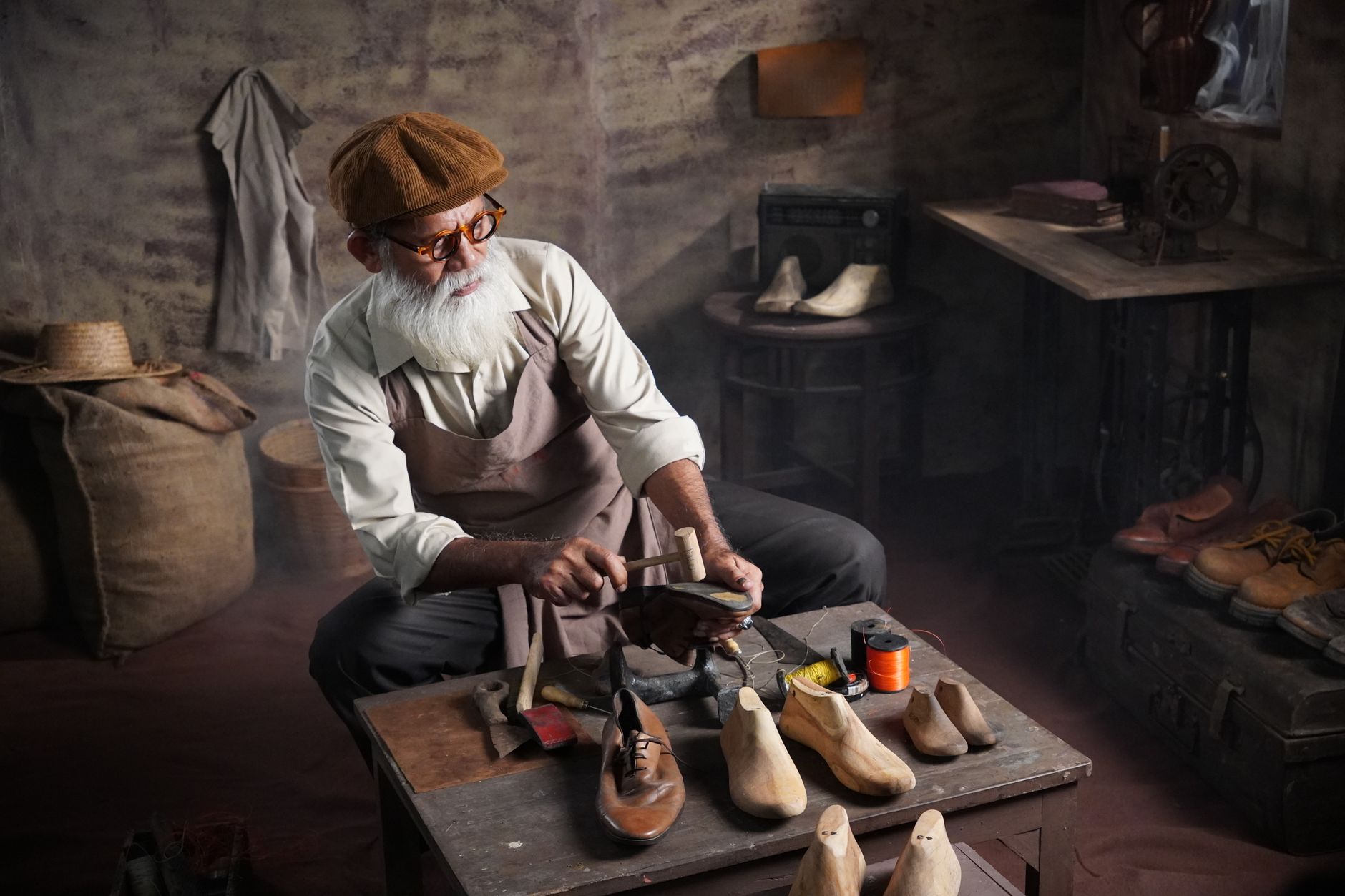
In a luxury sector seeking to interpret less predictable consumption habits and customers who are more mindful of provenance and quality, the local territory is not merely an identity backdrop. It is the place where skills, supply chain relationships, training opportunities, and production capacity converge. This perspective formed the starting point for the discussion organized by Les Femmes in Marche to celebrate the 25th anniversary of the company, which is co-owned by Gruppo Prada.
The panel discussion, focused on the relationship between the evolution of fashion luxury and territorial value, brought together the president of Regione Marche Francesco Acquaroli; Erika Andreetta, partner at PwC Italia and Emea Fashion Luxury Leader; sociologist Massimiliano Colombi, scientific director of Fondazione B.LIVE; and Les Femmes CEO Mascia Mandolesi. The meeting was moderated by corporate advisor Cesare Tomassetti.
The issue that emerged is concrete: for a manufacturing company, meeting the demand for authenticity associated with luxury means overseeing the way a product is designed, industrialized, and crafted. And it means being able to rely on people capable of carrying on that work. Process quality, supply chain transparency, and talent development were identified as inseparable elements, rather than distinct chapters of a corporate strategy.
A production expansion tied to work
The October 25 meeting coincided with the inauguration of an expansion of Les Femmes' production capacity and the opening of a company restaurant for its more than 200 employees. These two initiatives provide a practical dimension to the discussion on local roots: growing does not just mean having more space, but creating the conditions that make it possible to retain and develop expertise in the place where the business operates.
Mandolesi linked the new spaces to opportunities for young people trained in the local area, as well as to a safer and more stimulating work environment for current employees. In a supply chain reliant on specialized workmanship and lengthy learning curves, the availability of skilled labor cannot be taken for granted. The issue concerns the very continuity of know-how, often passed down through day-to-day experience on the shop floor, as well as through academic or vocational training pathways.
For the fashion system, this point carries particular weight. Brands can define visual languages and commercial strategies, but the promise of quality is also measured by the resilience of the supply chain that turns an idea into an object. An organized workshop or manufacturer must know how to translate creative requirements into replicable procedures, without losing precision and control. It is in this step, less visible than the runway or the boutique, that the local area can become a competitive asset or a constraint.
Manufacturing as a partner to the maisons
Les Femmes operates in pattern development, industrialization, and production for international maisons; alongside this activity, it runs the Mascia Mandolesi brand, dedicated to jewel sandals and bridal collections. The company was founded on March 8, 2001, carrying forward a family tradition started over sixty years ago and pursued by Mascia Mandolesi and Fabrizio Sacchini.
The multibrand model requires a delicate balance. Working with diverse clients can expand the company's technical know-how, as each maison presents its own aesthetic codes, materials, standards, and requirements. However, it also demands the ability to avoid indiscriminately standardizing the product: industrial solutions and skills must adapt to different identities. Mandolesi highlighted this very exchange as a source of continuous learning, which is then fed back into individual collections while respecting the authenticity of each brand.
The word authenticity, often used in luxury as a narrative lever, is in this case traced back to verifiable factors. A transparent supply chain makes it possible to track steps and responsibilities; controlled processes help maintain consistency; solid skills make it possible to handle complex materials and constructions. Territorial value, therefore, does not automatically coincide with a declared geographical origin. It depends on the presence of a manufacturing network capable of sustaining demand, quality, and organizational innovation.
This does not eliminate tensions across the sector. Making manufacturing trades attractive, ensuring generational turnover, and offering career prospects requires continuous investment. Les Femmes' expansion points to a strategic corporate direction, but does not single-handedly resolve an issue that concerns a broader ecosystem: businesses, institutions, education, and suppliers. The involvement of Regione Marche and figures from consulting and the social sector signals that the resilience of manufacturing is also a regional concern.
Technology remains a tool, not the end
Technological transformation, including artificial intelligence, also entered the debate. The takeaway was not one of pitting innovation against craftsmanship. Technologies are reshaping ways of working and can impact numerous steps in production management, but they do not replace the human role in defining the value of luxury. For Les Femmes, and more broadly for those working in fashion manufacturing, the core challenge is how to integrate new tools without hollowing out the expertise that sets the product apart.
This distinction is also critical on an industrial level. Process efficiency can drive competitiveness, while manual and design know-how remains essential for tasks that demand judgment, a feel for materials, and problem-solving abilities. In other words, innovation can reshape the infrastructure of work, but the continuity of luxury manufacturing depends on the ability to train people and entrust them with skilled responsibilities.
Guests at the anniversary event received the company's 2025 Sustainability Report, detailing its environmental, social, and governance commitments. This document follows the exact same trajectory: for a manufacturing business, sustainability is not confined to the environmental sphere, but encompasses working conditions, professional development, and supply chain relationships.
After twenty-five years, Les Femmes therefore chooses to combine a physical investment with a reflection on the future of the sector. The most significant takeaway is not the abstract idea of returning to the local roots, but rather a more operational thesis: if luxury wants to maintain credibility with consumers who are increasingly attentive to the story behind what they purchase, it must continue to make the professions that make its creation possible visible, solid, and desirable.