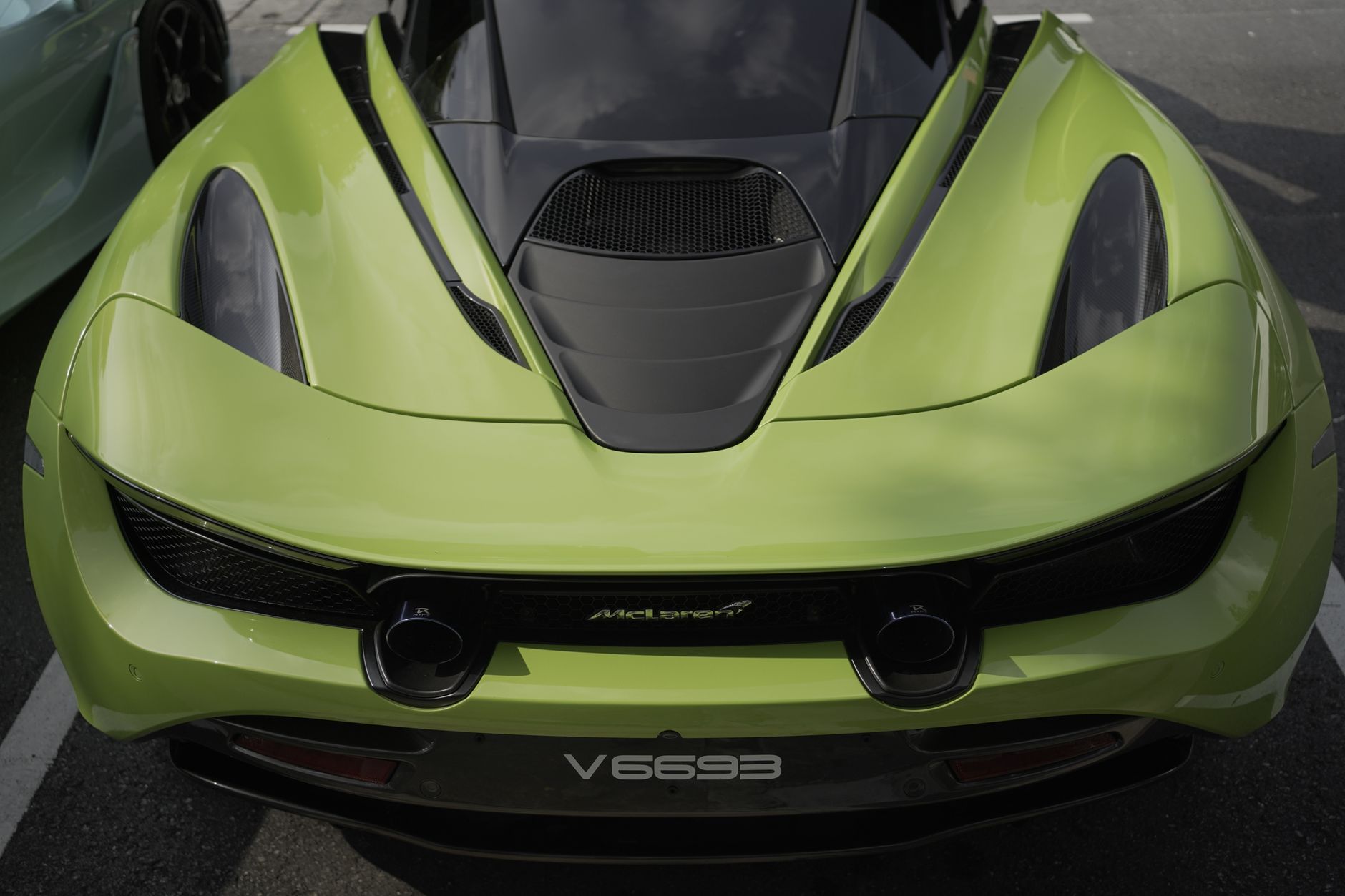
McLaren is reportedly preparing a new mid-engine coupé destined to join its lineup in 2027, occupying the space currently between Artura and 750S. The project, known internally under the codename P34, reportedly has a broader goal than simply boosting performance: offering the Woking manufacturer a model capable of sustaining higher prices and making the brand more competitive in terms of perceived quality and the on-board experience.
The information, reported by Automotive News and relayed by Car and Driver, stems from details shared with dealers during a private meeting. McLaren has therefore not released official specifications or a definitive commercial name. The emerging picture, however, outlines a car expected to arrive in the second half of summer 2027, with a combined output of around 810 CV and a starting price in the region of 315,000 dollars. Around one thousand units are reportedly planned for the first year.
At a time when the British manufacturer is navigating changes in ownership and its industrial strategy, the P34 seems to represent a significant milestone: maintaining its identity as a lightweight, mid-rear engine supercar, while steering it toward a more complete, less stripped-back proposition.
A new step between Artura and 750S
The anticipated positioning clarifies the project's role. Artura is currently the entry point into the electrified McLaren universe, while 750S defends more traditional territory focused on maximum performance via the V8. The new coupé is expected to slot in between them, but with figures that would already put it ahead of 750S in terms of declared power.
According to reports, the mechanical core will be a twin-turbo V6 paired with a hybrid system and an in-house developed transmission. McLaren would thus retain the mid-engine architecture, with the engine positioned behind the cockpit and ahead of the rear axle—a choice that remains central to weight distribution, dynamic response, and body proportions.
The 810 CV figure should be treated with caution, as it has not been confirmed by the manufacturer, and neither the battery capacity nor the type of electrification used is known. Therefore, it is not possible to determine the electric-only range, the power output of the electric motor, or whether external charging is supported. What appears more significant is McLaren's commitment to continuing to invest in combining a high-output internal combustion engine with electrification, rather than pursuing an immediate transition to an exclusively electric lineup.
Supercar design, a less spartan cabin
Dealers attending the meeting reportedly saw a car longer than the Artura, featuring a front end with a wedge profile reminiscent of the McLaren F1. The engine is said to be visible beneath a tempered glass engine cover: a dramatic solution, yet consistent with a segment where mechanical engineering is an integral part of perceived value.
More interesting, from a positioning perspective, is the description of the interior. The P34 is expected to feature leather seats, a large infotainment screen, and a digital instrument cluster with a more modern setup. These are not secondary details for McLaren. Over the years, the brand has built a solid reputation for driving dynamics and vehicle lightness, but has often yielded ground to German and Italian competitors when the conversation turned to fit and finish, digital interfaces, and everyday comfort.
A more upscale cabin does not necessarily mean sacrificing sports-car pedigree. Rather, it means recognizing that customers willing to spend over $300,000 are also looking for an environment that matches the price tag, alongside performance and road manners. It is a delicate balance: adding features, sound insulation, and materials can increase weight and complexity—elements McLaren has historically tried to contain. The P34 will therefore serve as a testbed to see how far the automaker intends to shift from functional minimalism toward a broader concept of luxury.
The turnaround hinges on product and brand perception
The new coupé is reportedly part of a series of launches expected by 2028. The plan comes as part of an effort to revitalize the global image of the brand led by CEO Nick Collins, who has emphasized the need to build excitement, engagement, and awareness around McLaren products, rather than simply chasing a short-term sales volume target.
It is a direction that has very tangible consequences in the luxury automotive sector. A manufacturer's value does not rely solely on peak horsepower or lap times: lineup recognition, dealer network quality, long-term desirability, and the ability to make each new model feel like a coherent step in the brand's evolution all play a role. A coupé slotted between two existing products can help fill a lineup gap, but above all, it can allow McLaren to capture customers looking for a supercar more exclusive than the Artura without stretching to flagship models or limited runs.
The outlook reported by sources also includes a future four-door McLaren model, expected after the P34 and aimed at super SUV territory. If confirmed, that project would expand the company's footprint even further. The P34 would then also serve to reinforce the brand's sports car core before entering a segment that promises higher volumes and margins, but demands vastly different compromises compared to a mid-engine berlinetta.
For now, the project remains shrouded in unverified details: official images, weight and performance figures, platform information, and specifics for European markets are all still missing. Even the dollar pricing should be seen as a benchmark for the US market, not a price list automatically applicable to Italy. However, the overarching strategy is already clear. McLaren seems intent on using hybrid power not merely to raise the horsepower bar, but to build a more profitable product that feels more mature in everyday use.
The transition from the private dealer presentation to the actual debut will still take months. The final specifications, the quality of execution, and the degree of differentiation from the Artura and 750S will determine whether the P34 can truly become the new cornerstone of the McLaren lineup. For Woking, meanwhile, the message is clear: the next product cycle does not just aim to go faster, but to make the brand more solid at the high end of the market.


