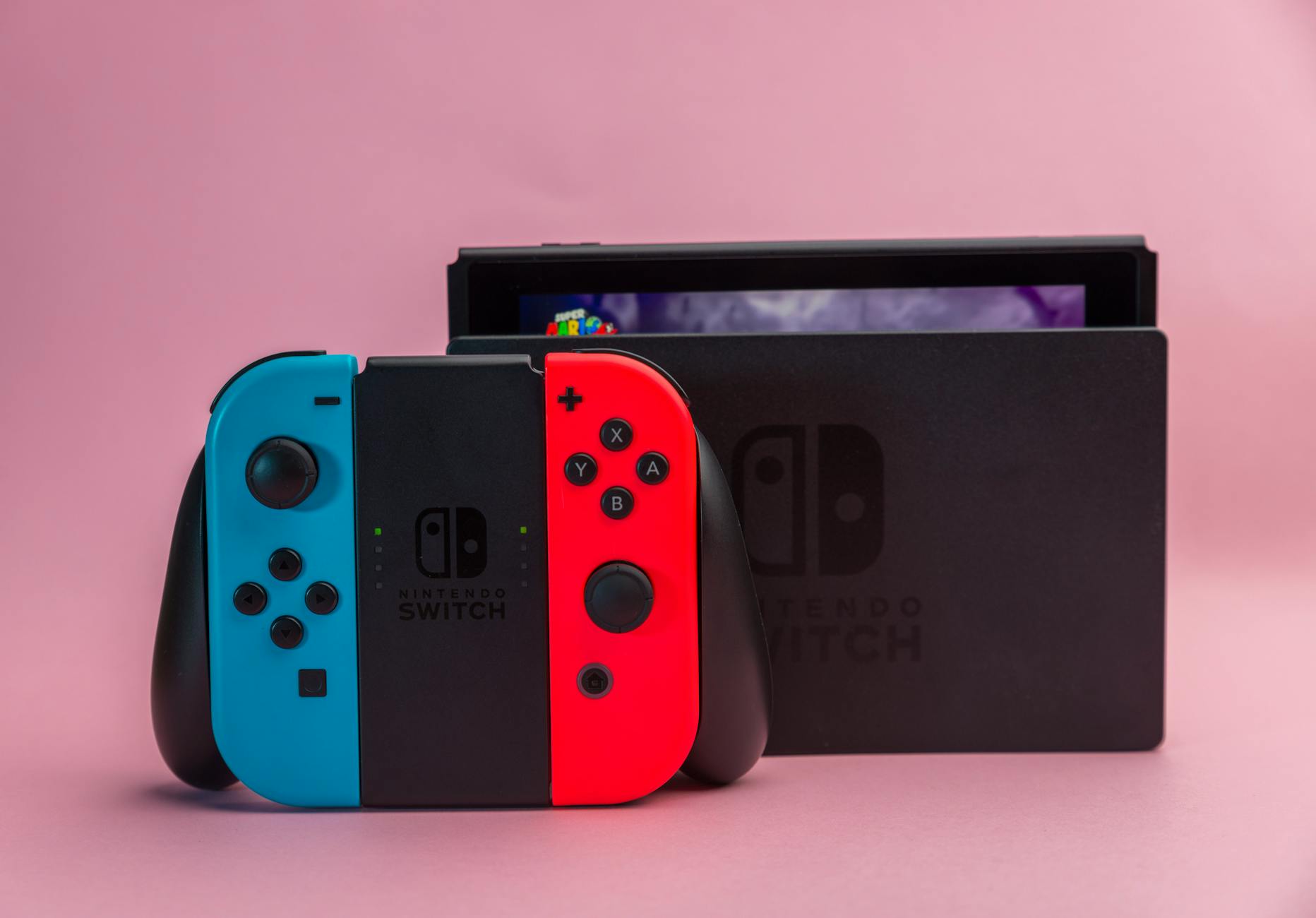
Nintendo does not currently foresee another price hike for Switch 2. President Shuntaro Furukawa clarified this during the company’s latest earnings call: the company is not considering further revisions to the console’s price list. It is a message directed at a market that has seen hardware prices climb in recent months and is watching memory and storage availability with growing scrutiny.
This stance comes after the price increase already applied to Switch 2 earlier in the year. In the United States, the starting price rose from 449 to 499 dollars, with increases taking effect on September 1 in other markets as well, including Canada, Japan, and Europe. Nintendo had also previously adjusted the prices of certain US accessories even before the console's launch, in the context of tariffs introduced by the Trump administration.
The issue today is not merely Nintendo's commercial strategy. Console manufacturers are grappling with a more expensive and contentious supply chain: memory is in high demand from data centers dedicated to artificial intelligence, which represent far more lucrative clients for component makers. In this scenario, a statement of price stability should primarily be read as an indication that Nintendo believes it can manage its supply in the short term.
Memory available, at least for now
Furukawa explained that the memory situation has not seen significant changes and that Nintendo is in a position to secure sufficient volume. This is not a long-term guarantee, nor is it a commitment to keep all prices unchanged under any circumstance, but it diminishes the likelihood of another imminent price revision for Switch 2.
The clarification is notable because component pressure is not theoretical. One of the suppliers tied to Switch 2 cartridges announced plans to halt production of ROM memory to pivot toward data center-related segments. ROM is used in physical cartridges, and while Nintendo has not commented directly on the matter, the supplier's decision illustrates just how much infrastructure demand is reshaping the semiconductor industry's priorities.
For a console manufacturer, being able to rely on adequate quantities of memory means avoiding two distinct risks. The first is operational: producing fewer units than expected or having to revise distribution plans. The second is financial: absorbing higher costs internally, squeezing margins, or passing part of them on to consumers through price list adjustments. Nintendo claims it is not currently in a position that requires the second scenario.
This does not mean the supply chain has returned to normal. The company spoke of its supplies being sufficient, not of widespread abundance. The distinction matters: conditions can change rapidly if chip prices rise further, if supply agreements shift, or if trade policies impact imports.
A market where price hikes have already arrived
Nintendo is operating in an industry where competitors have already updated their prices multiple times. Microsoft has pushed through several price increases for Xbox Series X and Series S; according to reports in the US market, the starting price of Series S has risen from the original $299 to $499. Sony has also raised prices on PlayStation 5 and PlayStation 5 Pro on multiple occasions, against a backdrop shaped by both component costs and market-to-market differences.
The comparison helps explain the Kyoto-based company's caution. A console is not purchased in isolation: consumers weigh the cost of the hardware alongside games, subscriptions, peripherals, and, in the case of Switch 2, compatibility with the ecosystem built over previous years. Following the move to $499 in the United States, a second price increase in quick succession would have made it harder to maintain a competitive perception of value, especially for those who have not yet made the leap from the original Switch.
Pricing strategy can also affect a product's commercial lifespan. Console platforms are planned around multi-year cycles and cannot track component fluctuations with the same immediacy typical of the PC market. Gaming hardware buyers expect a degree of predictability; frequent list price changes instead risk pushing part of the demand toward waiting, promotions, or the second-hand market.
Sales down compared to launch, but an already large install base
The announcement comes alongside earnings that show an expected loss of momentum compared to the launch phase. In its quarterly report, Nintendo reported a 37.4% year-over-year drop in Switch 2 hardware sales. However, this figure must be seen in the context of the console’s debut in 2025: comparing subsequent periods to an exceptionally strong launch window can yield sharp declines without fully capturing the platform’s overall trajectory on its own.
According to data reported following the release of the earnings, Switch 2 has reached approximately 26 million units sold. The new generation also continues to track ahead of the original Switch’s pace, despite hardware sales declining over several quarters from their initial peak. For Nintendo, the priority is therefore not just expanding the install base, but backing it with a lineup capable of sustaining software sales and keeping players engaged over time.
Price stability can help during this phase. If the price tag remains steady, retailers and consumers have a clearer benchmark, allowing Nintendo to focus on availability, games, and bundles rather than having to justify another price hike. On the other hand, the absence of increases does not amount to a price cut: those hoping for a near-term reduction will find no hint of one in Furukawa's comments.
What to watch in the coming months
The key factor to watch remains the trajectory of memory costs. The rush toward data centers is absorbing manufacturing capacity and affecting not only smartphones and PCs, but also consoles, storage, and physical media. Nintendo claims to have sufficient coverage, a condition that allows it for now to avoid another price adjustment for Switch 2. However, it provided no details regarding contracts, procured volumes, or the timeline of that coverage.
A second element will be consumer response following the previously introduced price increase. While Switch 2 sales launched from a very solid foundation, the hardware slowdown makes it increasingly crucial to gauge demand elasticity at the $499 price point in the United States and equivalent pricing in other countries. The next financial update will provide clearer insights on this matter.
For now, Nintendo's message is limited but significant: despite component strain and the price hikes already seen across the console sector, Switch 2 will not see another immediate increase. It is a truce contingent on the company's ability to maintain access to the necessary memory, not proof that the wave of gaming hardware price hikes is over.