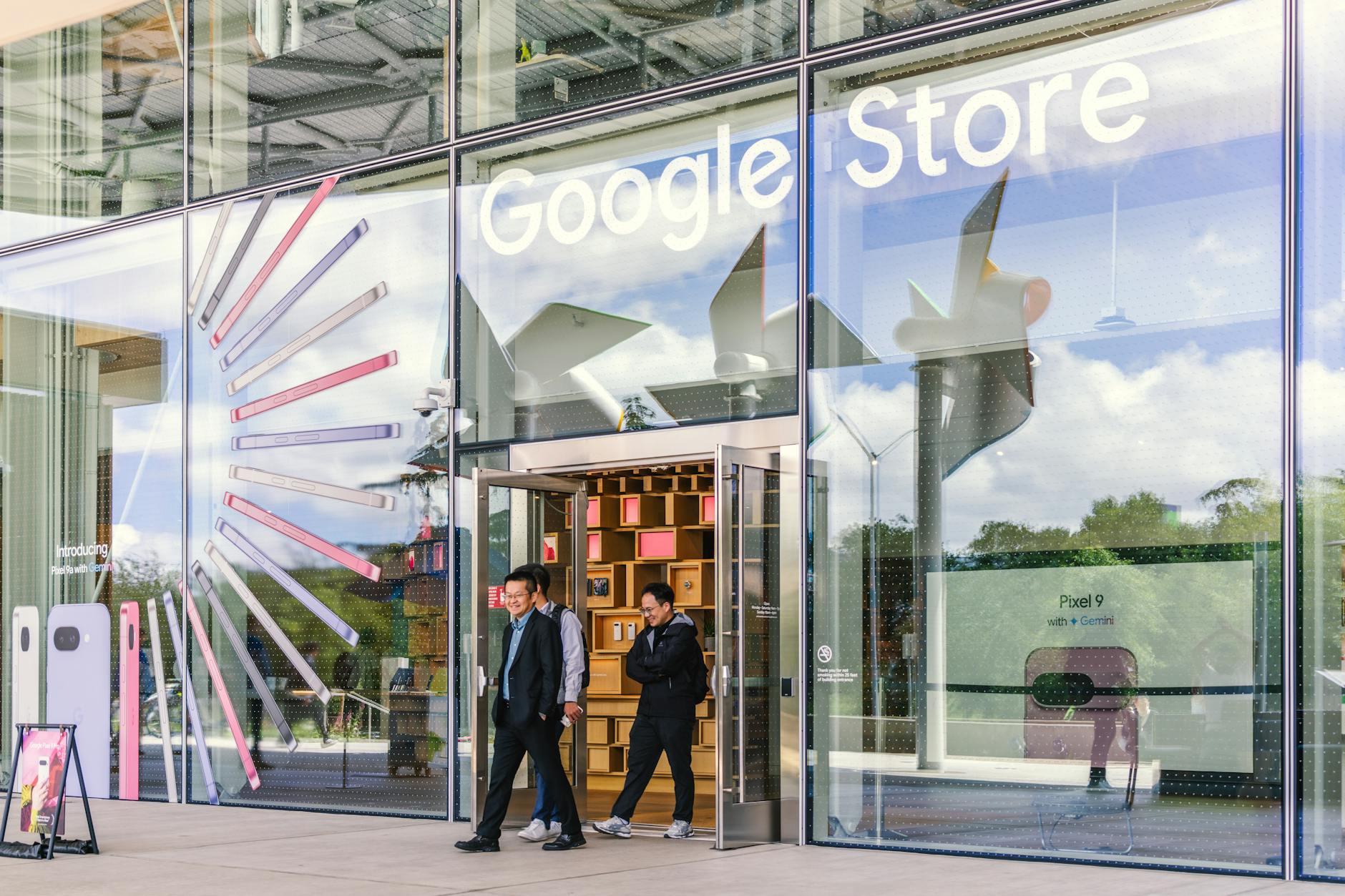
Google is entering the personal tracker market directly with Pixel Tag, now available for purchase following its announcement last August. The device costs $29.99 for a single pack, while the four-pack is priced at $99.99. It is a product designed for everyday situations — keys, backpack, wallet, or suitcase — but its arrival marks, above all, a significant milestone for Android: the platform no longer has to rely solely on offerings from Samsung, Motorola, Pebblebee, and other manufacturers to provide a tracker integrated into the Google ecosystem.
At the core of the product is Find Hub, the service Google renamed last year that brings together tools to find smartphones, accessories, and items associated with your account. Pixel Tag leverages the crowdsourced network formed by over a billion Android devices: when the lost tracker passes near one of these devices, its location can be updated on the Find Hub map and made available to the owner. The principle is now familiar, as it is the very one that turned Apple's AirTag into the category benchmark, but for Google, offering it with an in-house designed accessory is what truly counts.
Close-range search and the Android network
Tracking capabilities vary depending on distance and the smartphone used. If the item is nearby, Pixel Tag can play a sound through its built-in speaker; inside the Find Hub app, users can choose from three volume levels, with a peak rated at around 80 decibels. The tag's physical button also serves a reverse function: double-pressing it can ring the phone it is paired with. It is a minor functional difference compared to AirTag, which focuses interaction on the smartphone, and it can prove practical when it is the phone itself that has slipped between couch cushions or been left in another room.
To pinpoint the tracker with precision, Google combines two technologies. Android smartphones compatible with Ultra Wideband (UWB) can display distance and direction toward Pixel Tag in the app, guiding the user through the final meters of the search. The device also supports Channel Sounding via Bluetooth 6.0, which provides an estimated distance but no directional guidance. The distinction is important: general compatibility starts with Android 9, but precision finding is not guaranteed on every Android phone. In fact, a UWB chip or specific support for Bluetooth 6.0 is required, depending on the desired feature.
Without these requirements, the tag continues to work via Bluetooth and the Find Hub network, but the close-range experience will be less detailed. It is the typical trade-off of a vast and fragmented Android ecosystem: Google can broaden the potential base of supported devices, but cannot promise the same hardware capabilities to every user. The availability and density of devices participating in the network also remain critical when an item is lost far from its owner.
A slim form factor, but accessories are needed
Pixel Tag does not adopt the circular shape of AirTag. Google opted for a slim, oval body measuring 1.1 inches wide, 1.8 inches tall, and 0.2 inches thick, weighing 0.4 ounces including the battery. It is therefore more elongated than the Apple tracker, but also thinner. It comes in silver and light green colorways, featuring a stainless steel shell and IP67 certification against dust and water: it can withstand immersion in up to one meter of water for 30 minutes.
Its slim profile can help when slipping it into an inner pocket or a small accessory, but Pixel Tag lacks a built-in key ring hole. Attaching it to keys, zippers, or luggage therefore requires a dedicated case or mount. Alongside the product, Bellroy launched a lineup of compatible key rings, also sold on the Google Store. It is a choice that offers flexibility in how it is attached, but introduces an extra cost for what will likely be its most common use case.
Power is provided by a user-replaceable CR2032 coin cell battery. Google claims a battery life of over a year per battery, a figure that will need to be verified in real-world use and may vary depending on sound alerts and how frequently the tracker communicates with the network. The replaceable battery prevents the product from becoming disposable after the first cycle—a feature now expected in the category and useful for anyone looking to deploy multiple tags across different items.
Sharing and Lost Mode
Pixel Tag pairs via Fast Pair with devices running Android 9 or later. Once set up, it can be shared with up to ten people in Find Hub. The feature is well suited for shared items, from family car keys to a work bag or equipment that frequently passes between users. When the tracker comes back within range of the owner's phone, the item is automatically marked as found.
If the tag is lost out of range, users can activate Lost Mode and choose to display an email address, phone number, and a short message to whoever retrieves it. Pixel Tag also supports NFC, but tapping the tracker does not open a public page with the owner's contact details as AirTag does; instead, it is used to access device settings. The actual process for returning an item will therefore continue to rely on Lost Mode and the willingness of the person who finds it to reach out to the owner.
There remains, of course, the issue of misuse. Trackers connected to large smartphone networks are useful for locating luggage, but they can also be exploited to track individuals without consent. Google built Find Hub in a context where Android and Apple have already adopted standards and alerts against unwanted tracking; however, launch sources do not detail the specific measures implemented on Pixel Tag. For prospective buyers, the stated capabilities should not be mistaken for a surveillance tool: the product is strictly intended for locating personal belongings.
The value of the first Google-branded tracker
The price places Pixel Tag in the same segment as Apple's AirTag: $29.99 per unit and $99.99 for a four-pack. It is neither an aggressive cost-based offering, nor does it introduce a feature that revolutionizes the industry. Instead, its significance is strategic. Until now, Android users had trackers from various brands at their disposal—often solid, but fragmented in terms of design, distribution, and positioning. With Pixel Tag, Google puts its own name, sales channel, and the Find Hub app at the center of the experience.
This could make it easier to explain to Android users how to use the tracking network, in addition to creating a benchmark for third-party accessories. The presence of UWB, Bluetooth 6.0, a replaceable battery, and multi-user sharing indicates that Google has chosen to enter the fully featured tier of the market, rather than settling for an essential Bluetooth gadget. At the same time, the device does not eliminate the platform's structural limitations: directional tracking requires recent hardware, remote finding relies on a network that is actually present in the areas where the item is lost, and attaching it to keys requires purchasing an accessory.
Pixel Tag's debut will therefore be a concrete test for Find Hub. Google will need to prove that the Android network can deliver reliable, timely location data even outside heavily populated areas, and that setup remains clear for users with phones across very different price tiers and ages. For those who already own a compatible Android smartphone, the new tag adds an official and relatively straightforward option; for Google, it is a key piece in transforming a software service into an ecosystem of everyday objects.