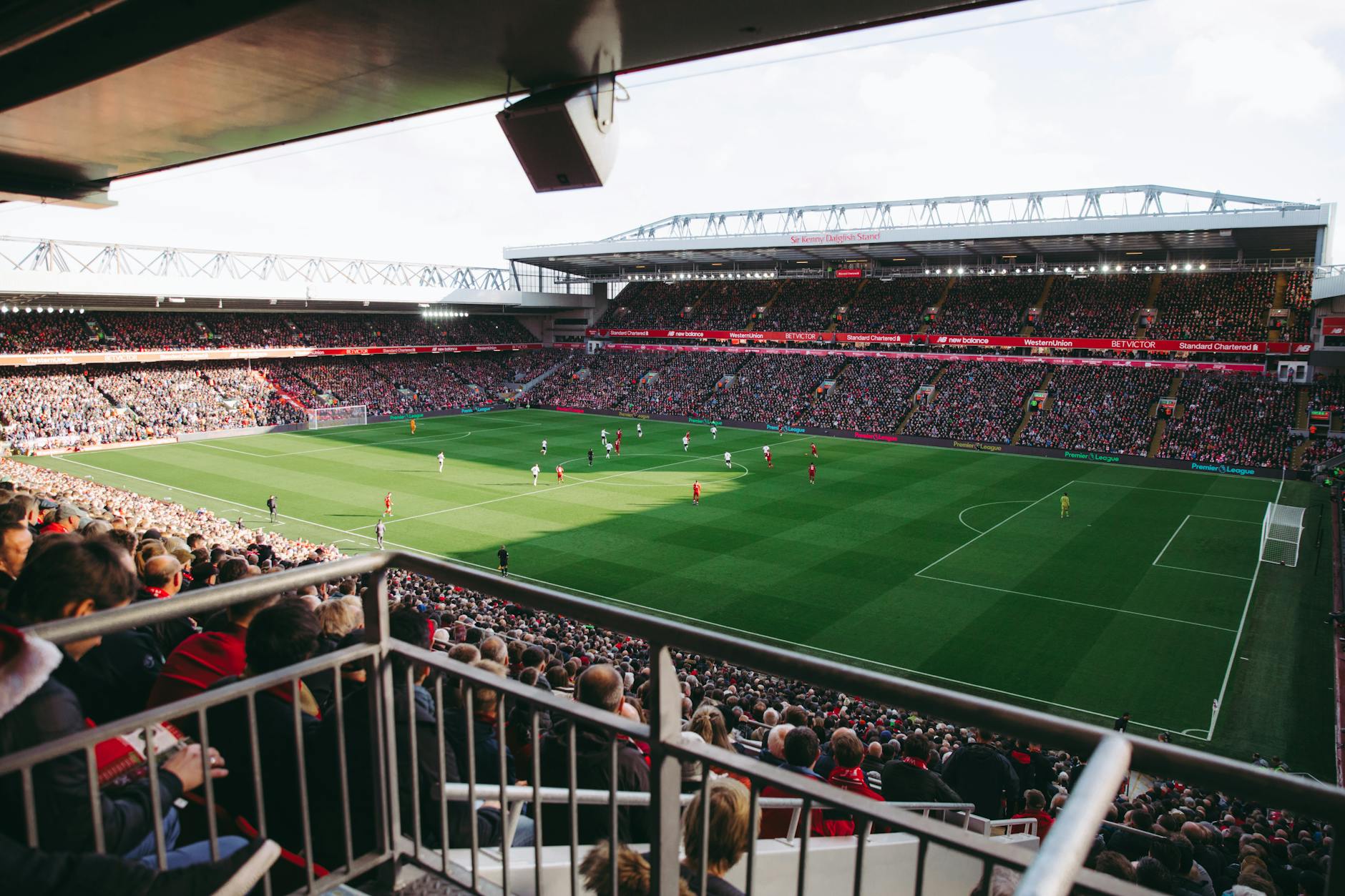
Saturday's English football action resumes with clear pressure already mounting on Chelsea and Everton, while Manchester City prepares to take the pitch in the rest of the schedule. The Premier League matchday comes after a week of anticipation and debate, but the first concrete question is tactical: how quickly can Chelsea transform its attacking potential into a more controlled and less exposed team?
The away fixture at Everton, scheduled for 12:30 local time at Hill Dickinson, offers Xabi Alonso an immediate test. Chelsea has conceded 13 goals since the start of the season: more than double their opponents on the day. Comparing the two figures alone does not establish an absolute measure of the teams, but it highlights an issue that, for a club of this stature, cannot remain in the background for too long.
The 5-1 victory over Bournemouth in the previous round provided Chelsea with a significant response in terms of attacking output. Now, however, the next step required of the manager is different: making that performance viable in matches where simply scoring a lot is not enough. Alonso emphasized the need to keep clean sheets and find a stable balance between the defensive phase, possession quality, and attacking ability.
A test for Chelsea's development
In top-flight football, the margin between a developing team and an inconsistent one is often visible far from the opposition penalty area. The number of goals conceded does not depend solely on the defensive line's performance: it involves the protection provided by the midfield, spacing after losing possession, and managing the moments to accelerate or slow down the tempo. It is on this consistency that Chelsea must work, rather than a single lineup adjustment.
Alonso urged caution regarding definitive assessments, noting that the season is still in an early stage. It is an understandable stance, but the English schedule allows little time to turn principles into second nature. Every league match contributes both to the standings and to the external perception of the project: a victory with an orderly performance at Everton would carry a different weight than a win forged purely in an open, chaotic match.
The manager will also have to do without Reece James for about three months. The captain underwent knee surgery following an injury sustained in training. His absence weighs heavily for reasons that extend beyond his position: James combines experience, leadership, and playmaking quality—elements that are particularly valuable for a team seeking reliable focal points within its tactical setup. For Chelsea, managing the flank and internal leadership therefore becomes an integral part of the challenge over the coming months.
Everton represents the kind of opponent that can expose every imperfection. The team's defensive statistics indicate a greater ability to limit goals conceded, and a home fixture can amplify the importance of intensity, second balls, and patience. For Chelsea, simply matching the attacking volume produced against Bournemouth will not be enough: they must prevent the match from breaking down into constant transitions, the very scenario where an already vulnerable backline faces the greatest risk.
Manchester City in a matchday to decipher
Manchester City is one of the headline names on today's schedule. When the team is in action, attention extends far beyond just the afternoon's result: City remains a benchmark for competitors chasing consistency, pressure management, and squad depth. In such a demanding league, fixtures spread across Saturday often shape a provisional table that alters the tone of subsequent matches.
This is why the build-up is far from a trivial exercise. The early kick-offs define the psychological and competitive context for those taking the pitch later: an away win, an unexpected slip-up, or a hard-fought victory can instantly shift the level of urgency. City approaches its fixture with the customary focus expected of a side capable of influencing the race at the top of the table, but only the pitch will decide whether the day brings confirmation or reveals new cracks.
The English league continues to thrive on this narrative density as well. Big teams are forced to deliver answers consistently, while any opponent can capitalize on an adjustment phase, a key absence, or a poorly managed match. For clubs, staff, and players, the cost of a run of negative results is not merely sporting: transfer market decisions, media exposure, and the margin for working over the long term all change.
A lesson in resilience from Friday
The English fixture list had already sent a signal on Friday evening, with Wolves' 2-1 victory away at Burnley. Jamie Vardy had put the hosts ahead by scoring his first goal of the season, but Fernando Lopez and Tawanda Chirewa turned the result around. For Burnley, the defeat extends their wait for a home win to a full year; for Wolves, however, the three points secure a place in the playoff spots.
It is an outcome that highlights how thin the line is between a turning point and a self-perpetuating crisis. Burnley found a positive individual sign in Vardy, yet failed to convert it into a result capable of breaking the negative run in front of their home supporters. Wolves, by contrast, showed the ability to stay in the match after falling behind—an essential asset across long and competitive campaigns.
These situations are not directly comparable to the Premier League, nor should they be. Yet the entire English Saturday revolves around the same principle: results have broader consequences than the final scoreline. Chelsea are seeking a more dependable structure without Reece James; Everton want to make their defensive solidity count; Manchester City enter a matchday where every performance is also interpreted in terms of the overall title race.
The coming hours will make clear whether Alonso's remarks on balance will find their first translation onto the pitch. For Chelsea, the most telling metric will not solely be the number of goals scored or the result on Merseyside, but how the team manages to control the match. That is where credibility lies for a process that, by the coach's own admission, is still in its early stages.