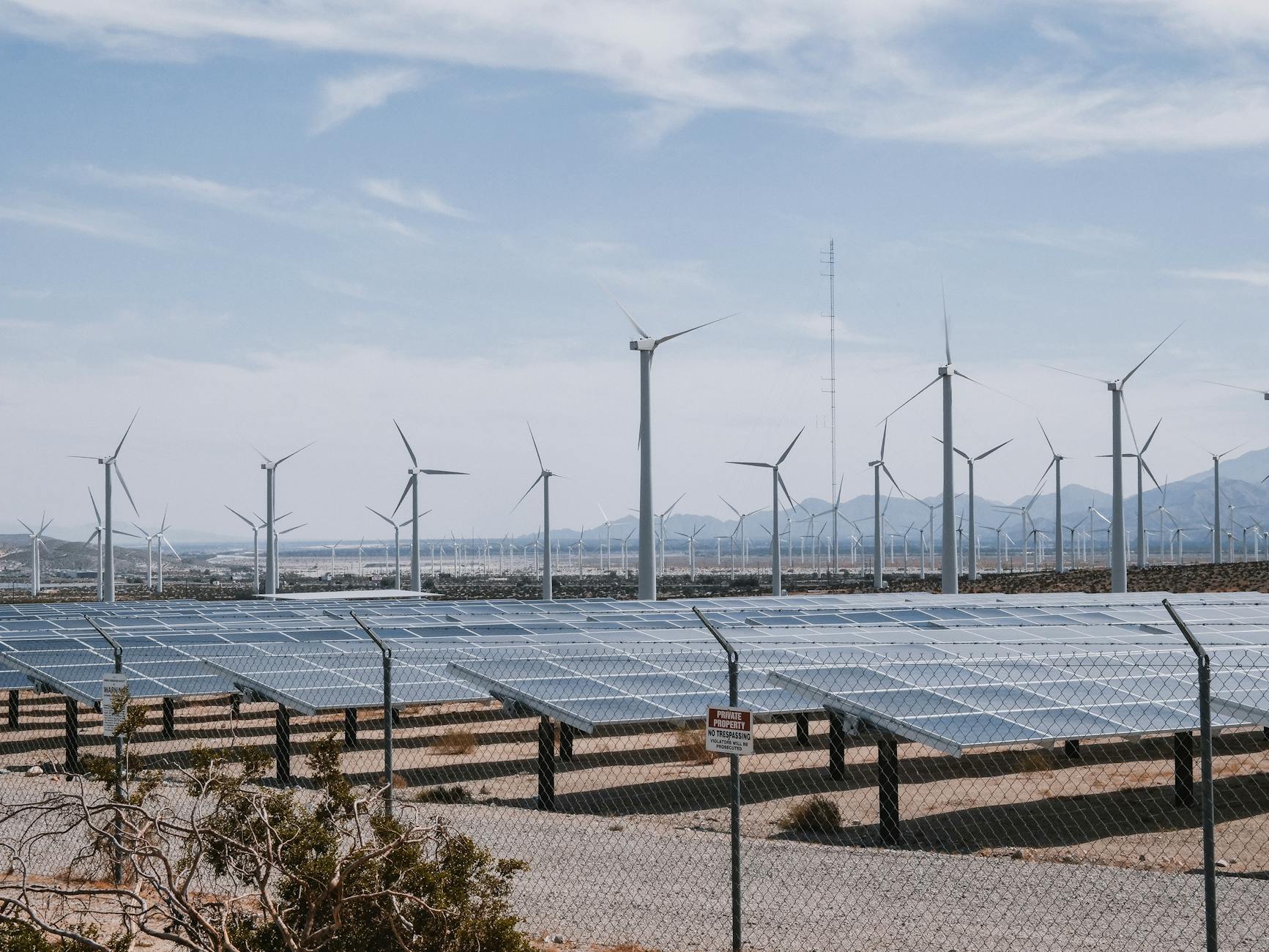
2024 was a record year for renewables in the European electricity system. According to European Commission quarterly reports published in March 2025, renewable sources reached 47% of the EU power mix, with renewable generation increasing by 93 TWh year on year.
The increase came alongside lower fossil generation and lower average wholesale prices than in 2023. It points to structural change in the power market, although the outcome also reflected hydrological conditions, gas prices, demand and nuclear availability.
Solar and hydro drive the record
EU solar generation increased by 19% in 2024, adding about 38 TWh. Hydropower rose by 13%, around 43 TWh. The system also added 59 GW of new renewable capacity during the year.
In April, renewables reached a monthly record share of 54%. That shows how quickly the mix can shift in favourable periods, while also highlighting the effect of seasonal variability.
Fossil generation declines
Annual fossil generation fell by 10%. Coal-fired output decreased by 27%, while gas generation fell by 25%. The change reflected a combination of more renewables, stronger hydro and nuclear output and moderate demand.
Gas still provides flexibility during many hours and in many countries. Replacing more of that role requires storage, demand response, interconnection and other balancing resources.
Lower prices, but not because of one factor
The European wholesale electricity benchmark averaged €74/MWh in 2024, 22% lower than the previous year. Average retail prices in EU capital cities also fell.
It would be simplistic to attribute the entire decline to renewables. Electricity prices are also shaped by gas, demand, plant availability, interconnectors and market rules. Low-marginal-cost renewables can push prices down in many hours, but grid congestion or insufficient storage can limit that benefit.
The next phase is integration
When almost half of electricity generation comes from renewable sources, the challenge is no longer only how much capacity to build. Peak management, flexible demand and the ability to move electricity across regions become increasingly important.
The 2024 record shows that Europe’s transition has entered a more mature phase. The next leap will depend less on any single technology and more on how generation, grids, storage and electrified demand work together.